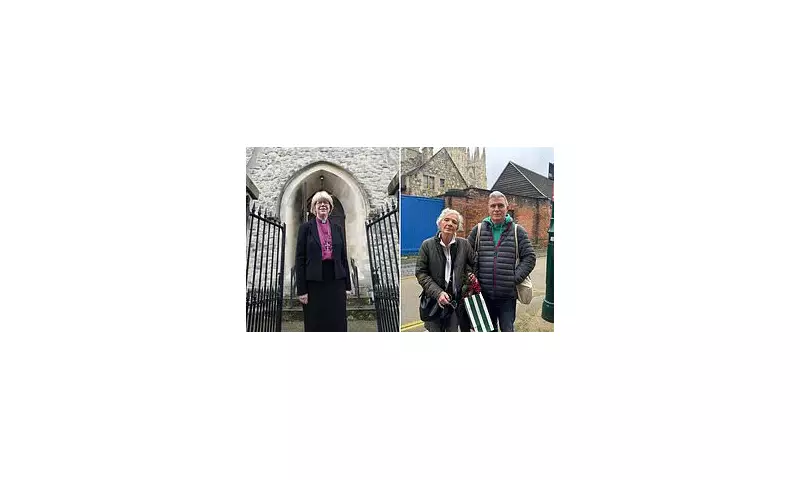
Proposals to fit solar panels and modernise the official residence of the incoming Archbishop of Canterbury have been condemned as a "complete disgrace" by local residents and heritage campaigners.
Modernisation Meets Medieval History
The controversy centres on Old Palace in Canterbury, the Grade I listed official home soon to be occupied by Dame Sarah Mullally. She is set to become the first female principal leader of the Church of England and will be installed in a ceremony in January next year. However, the Church Commissioners have submitted two sets of renovation plans that have caused significant upset.
The proposed works for the historic building, which sits adjacent to Canterbury Cathedral, include installing solar panels on the roof, adding a new bathroom and toilet, and fitting several stairlifts. Additional upgrades involve installing fire alarms, smoke detectors, and reworking a commercial kitchen. Exterior repairs to the roof, stonework, and rainwater systems are also planned.

Local Outcry Over 'Ruined' Heritage
The reaction from the Kent city's community has been fiercely negative. Roger Collingwood, 73, a retired engineer and 30-year resident, labelled the plans "very poor." He stated, "It'll ruin the building... It's a complete disgrace to want to tamper with the building to such an extent." While not opposed to solar energy in principle, he argued it should be directed at new builds, not historic landmarks.
Janet Wood, 67, who has lived in Canterbury for four decades, echoed the sentiment, saying the panels would "look terrible" and "ruin it forever." She expressed dismay, emphasising the need to protect the area's centuries-old history.
Regular visitors Wendy and Sean Larkin also opposed the changes. Wendy questioned the necessity, arguing the building "can operate and run without solar energy." Sean added, "You don't come to Canterbury to see solar panels. We need to keep as much tradition and heritage as we can."
Conservation Concerns and a Lone Voice of Support
The Canterbury Heritage Design Forum (CHDF) formally criticised the plans as "not aesthetically pleasing," though acknowledged some changes were necessary for access and sustainability. The Canterbury District Swifts group raised an ecological concern, noting that the endangered swift bird species could be nesting in the building's eaves.
Despite the overwhelming criticism, one local resident, Mark Bateson, 66, offered support. Having lived in the area for 30 years, he said he was "okay with these plans" and did not believe they would have a significant impact.
In a statement, property agents Savills, representing the Church Commissioners, defended the proposals. They asserted the works were designed to improve functionality while respecting the building's historic character, were fully reversible, and would cause "no harm" in heritage terms.
A spokesman for the Church Commissioners explained the building required routine maintenance and that the solar panels were part of the Church of England's net zero by 2030 ambition, approved by the Synod in 2022. They aim to "future-proof" the site, cut emissions, and reduce long-term running costs, while promising to minimise disruption to locals and wildlife.