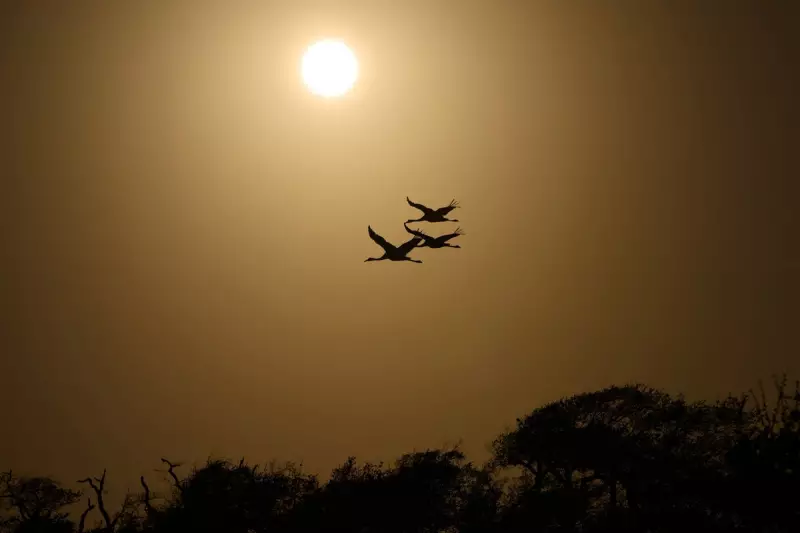
A significant new sanctuary has been established along the Texas coast, offering a permanent safe haven for the critically endangered whooping crane. Announced on Thursday 18 December 2025, the project secures the future of more than 3,300 acres of high-priority wintering grounds near Port Aransas.
A Lifeline for North America's Tallest Bird
The whooping crane, a majestic white bird standing up to five feet tall, is one of the rarest in North America. Named for its distinctive call, it was among the first species protected under the Endangered Species Act. From a perilous low of just 16 individuals in Texas during the 1940s, the last self-sustaining wild flock has rebounded to over 550 birds.
This flock undertakes an epic annual migration, travelling 2,500 miles from breeding grounds in Canada's Wood Buffalo National Park to winter in the coastal marshes of Texas. The newly protected land, acquired for just over $8.4 million, provides essential habitat for these birds to forage and roost.

Confronting Modern Threats to Survival
Despite the remarkable recovery, whooping cranes face a barrage of modern threats. Urban development, climate change, and energy infrastructure continue to encroach on their habitat. Sea-level rise poses a direct risk to their low-lying Texas wetlands, while changing weather patterns affect water availability across their range.
"They’re a really long-lived group of birds, so they’re pretty sensitive to some of these threats that we’re throwing at them," explained Carter Crouch, Director of Gulf Coast Programs for the International Crane Foundation. The foundation partnered with The Conservation Fund and the Coastal Bend Bays & Estuaries Program on this landmark acquisition.
Restoring a Sanctuary for Generations
The sanctuary comprises two properties. One, named the Wolfberry Whooping Crane Sanctuary after a favoured crane food source, will be managed by the International Crane Foundation. The other will be held by The Conservation Fund until transferred to the Coastal Bend Bays & Estuaries Program.
Conservationists have substantial restoration work planned, including prescribed burns to manage prairie land and planting smooth cordgrass to bolster marshes and prevent shoreline erosion. Once established, the sanctuary aims to offer guided tours and educational events, building on its role as a global birding destination that supports local economies in towns like Rockport.
For Julie Shackelford, Texas Director for The Conservation Fund, protecting this land is "super gratifying." It ensures the only reliable place in the United States to see wild whooping cranes remains intact for future generations. As conservation photographer Mike Forsberg, a self-described 'craniac', asserts: "Of course they can [survive]. They’re resilient. But it’s up to us."