Four decades after her tragic death, the pioneering conservation work of Dian Fossey is yielding extraordinary results, with the population of rare mountain gorillas showing a sustained and significant increase.
A Legacy Forged in Courage and Tragedy
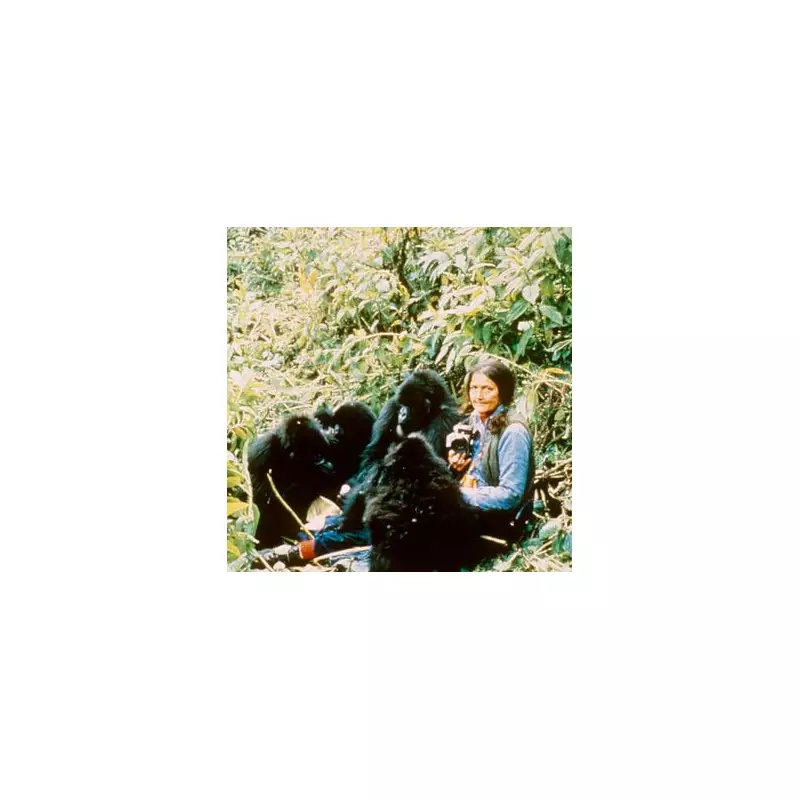
The world was captivated by the story of Dian Fossey, the American primatologist immortalised by Sigourney Weaver in the 1988 Oscar-nominated film Gorillas in the Mist. Her life's mission, studying and protecting mountain gorillas in Rwanda, ended brutally on Boxing Day 1985, when she was found hacked to death with a machete in her cabin at the Karisoke Research Centre. She was 53 years old.
While a research assistant was convicted, it is widely believed she was killed by those angered by her vigorous anti-poaching activism. Following her murder, Fossey was laid to rest in a cemetery alongside some of the very gorillas she had fought to protect.

From Brink of Extinction to a Conservation Success
Today, the charity established in her name, the Dian Fossey Gorilla Fund, reports a remarkable turnaround. When Fossey was alive, only around 400 mountain gorillas remained in the wild. Thanks to the intensive protection methods she pioneered, that number has risen to an estimated 1,000 individuals.
Felix Ndagijimana, the Fund's Country Director in Rwanda, stated: "She would be amazed to see that the mountain gorilla is the only non-human great ape population in the world whose numbers in the wild are increasing." He also highlighted how the small research centre she founded in 1967 has grown into a world-class institution employing over 200 Rwandan staff.
Principles of Patience and Perseverance
Fossey's groundbreaking research was built on immense patience and a unique approach to integration. She famously mimicked gorilla behaviour to gain their trust, such as chewing on celery stalks and scratching herself. In a 1984 BBC Woman's Hour interview, she explained learning to avoid alarm signals like chest-beating, which she initially misunderstood.
Dr Tara Stoinski, President of the Fossey Fund, emphasised the enduring relevance of Fossey's core belief: "One of the basic steps in saving a threatened species is to learn more about it." Stoinski added, "We have now studied six generations of mountain gorilla families... Much of what is scientifically known about mountain gorillas is built on the long-term research database Fossey began nearly 60 years ago."
The charity spokesman confirmed that the population Fossey defended is not just surviving but thriving, calling her work "a remarkable outlier" when over a million species face extinction.
Her final diary entry poignantly captures her forward-looking spirit: "When you realise the value of all life, you dwell less on what is past and concentrate more on the preservation of the future." Forty years on, that future for the mountain gorillas is brighter than ever, a living testament to her courage and sacrifice.