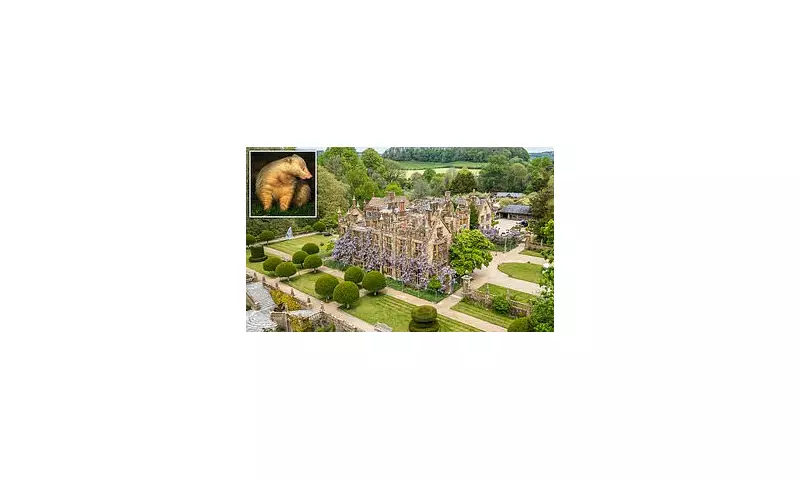
A rare albino badger named Alberto is at the centre of a fierce conservation battle that could derail ambitious £25 million plans to restore a fire-ravaged 16th-century stately home in Dorset.
Clash Between Heritage and Habitat
Major proposals to revive the historic, Grade I-listed Parnham House near Beaminster are facing intense opposition. Conservationists fear the project would wipe out the protected wildlife habitat of Alberto and his growing family of albino badgers. The striking white badger has lived peacefully in the riverside Millground Meadow for almost a decade.
In 2020, entrepreneur James Perkins bought the blackened shell of the 500-year-old Elizabethan manor, which was gutted by a huge blaze in 2017. He vowed to restore it to its former glory, proposing to build 82 luxury homes on the sprawling estate to fund the £25m restoration, making it financially sustainable.

A Fragile Ecosystem Under Threat
However, plans unveiled last week have sparked great concern. The development would involve 'bulldozing' the meadow to erect a dozen £1.25 million townhouses and a £2 million road bridge across the River Brit. Campaigners argue this would destroy a fragile environment crucial for one of Britain's rarest animal populations.
A spokesperson for the Dorset Natural Heritage Initiative stated: 'Millground Meadow isn't just a green space - it's home to one of the UK's rarest sights: a regular population of albino badgers.' They noted that these pale, pink-eyed badgers rely on the meadow's quiet, undisturbed habitat, a peace that 'could be shattered forever' by the development.
Local resident and nature lover Colin Varndell called the plans 'catastrophic' for nature. He highlighted the meadow's role as a haven for barn owls, otters, grass snakes, and dormice. 'Destroying the natural environment and the nature and character of Beaminster would be inexcusable,' he said, arguing the estate would primarily benefit wealthy buyers.
The Developer's Vision for Sustainability
Mr Perkins' planning agents have defended the scheme, stating the scale of enabling development is necessary to close a 'viability gap' and secure the heritage asset's future. The design and access statement says the housing estate would replicate aspects of nearby Poundbury, King Charles III's model town.
The proposed two and three-storey homes would incorporate design features from Parnham House. The developers insist the design is 'sympathetic' and carefully sited to minimise impact on the house's setting and the surrounding landscape. Their overriding aim is to conserve and restore the house to a standard where it is financially sustainable and can once again be at the heart of the local community.
As the planning process unfolds, the future of both a significant piece of Dorset's architectural heritage and a unique population of protected wildlife now hangs in the balance.