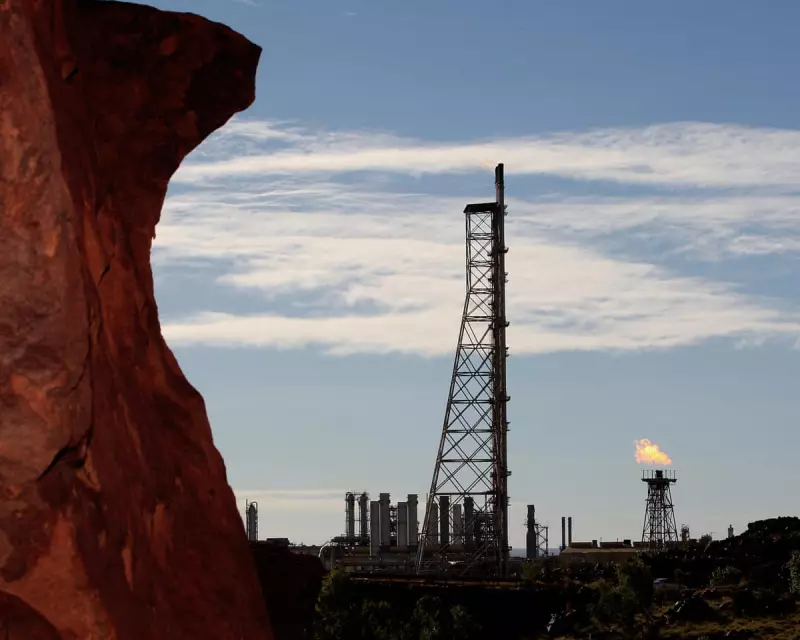
Woodside Energy's ambitious plan to extend the life of its massive North West Shelf gas project is facing significant legal hurdles as Indigenous communities and environmental groups mount a coordinated legal offensive.
Double Legal Blow to Australia's Premier Gas Project
The energy giant's proposal to continue operations at Australia's largest liquefied natural gas facility until 2070 has been hit with two separate legal challenges filed simultaneously. The cases target both federal environmental approvals and state-level cultural heritage protections.
At the heart of the dispute lies what critics describe as the project's "catastrophic" climate impact and its threat to sacred Indigenous sites along Western Australia's Burrup Peninsula.
Environmental Groups Sound Climate Alarm
The first challenge, brought by the Conservation Council of Western Australia, contests the federal environment minister's approval under national environmental laws. Environmental advocates argue the extension would generate approximately 4.3 billion tonnes of greenhouse gas emissions over its lifetime - equivalent to eight years of Australia's entire domestic emissions.
"This isn't just another industrial project - it's a climate time bomb that threatens to undermine Australia's commitment to net-zero emissions," stated one environmental representative involved in the case.
Indigenous Communities Fight for Cultural Survival
The second legal action, filed by the Aboriginal group Murujuga Aboriginal Corporation, challenges the Western Australian government's approval under the state's Aboriginal Heritage Act. The case focuses on the project's potential impact on the Murujuga cultural landscape, home to ancient rock art estimated to be over 50,000 years old.
Traditional custodians describe the area as containing "the world's largest and oldest outdoor art gallery," with profound spiritual significance that they say is being jeopardised by industrial expansion.
Broader Implications for Australia's Energy Future
The coordinated legal challenges represent a significant test case for fossil fuel projects in Australia, coming amid growing pressure to transition toward renewable energy sources. The cases could establish important precedents for how climate impacts and Indigenous cultural heritage are considered in major project approvals.
Woodside maintains that the project extension is crucial for energy security and has highlighted its economic importance, including thousands of jobs and substantial government revenues. However, opponents argue that continuing fossil fuel investments locks in emissions that are incompatible with climate targets.
The legal battles are expected to unfold over coming months, with hearings anticipated in both the Federal Court and Western Australia's Supreme Court. The outcomes could reshape Australia's energy landscape and set new standards for corporate accountability on environmental and cultural matters.