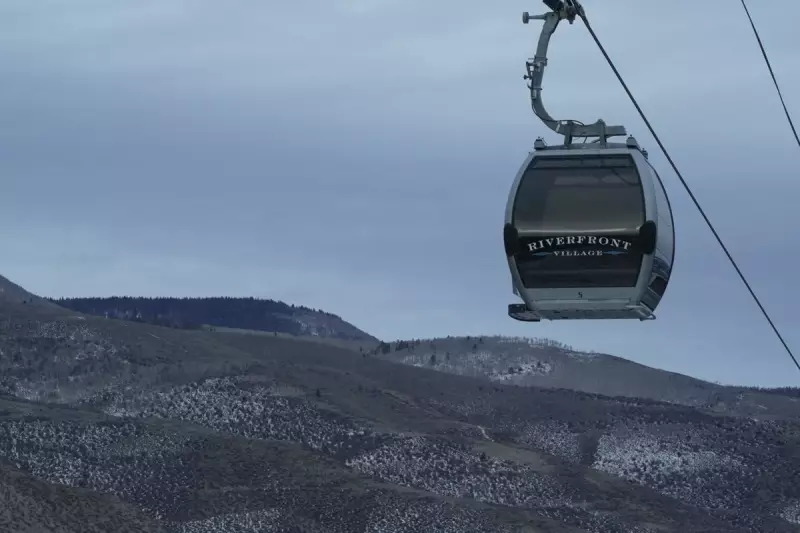
A severe lack of snow is crippling ski resorts and businesses across the Western United States, as unseasonably warm temperatures prevent the vital winter snowpack from forming. This stands in stark contrast to record December snowfall blanketing the Midwest and Northeast.
A Winter of Discontent in the West
From the Rocky Mountains to the Sierra Nevada, the landscape tells a worrying story. Ski resorts are struggling to open runs, with only a small percentage of lifts operational in areas like Lake Tahoe on the California-Nevada border. Snow depths there are well below average, a situation mirrored across almost the entire Western region.
Kevin Cooper, president of the Kirkwood Ski Education Foundation, summed up the challenge, stating, "Mother Nature has been dealing a really hard deck." The consequences extend beyond skiing. In Utah, the anticipated Midway Ice Castles attraction, requiring sustained freezing temperatures, has been postponed indefinitely. The area, set to host part of the 2034 Winter Olympics, has seen temperatures 7-10 degrees Fahrenheit (3-5 degrees Celsius) above normal in recent weeks.

Businesses Adapt and Water Worries Mount
Local enterprises are being forced to innovate. Near Vail, Colorado, Nicole Godley, owner of Bearcat Stables, now offers horse-drawn wagon rides instead of the traditional sleighs due to minimal snow cover. "It's the same experience, the same ride, the same horses," she said, emphasising the rustic appeal remains.
The implications are far graver than tourism. Snowpack in the Western mountains acts as a natural reservoir, providing crucial water for agriculture and tens of millions of people. Jason Gerlich, a NOAA drought information coordinator, warned that while precipitation has been decent in much of the region, it has fallen as rain, not snow. "That snowpack is one of our largest reservoirs for water supply across the West," he explained. Rain runs off quickly, failing to replenish groundwater and raising the spectre of another year of drought and wildfires.
Climate scientists point to this snow-to-rain trend as a direct consequence of a warming planet. Oregon, Idaho, and western Colorado experienced their warmest Novembers on record, with temperatures 6-8.5 degrees Fahrenheit (2-4 degrees Celsius) warmer than average.
Snow Boom in the Northeast, Hope Lingers Out West
While the West suffers, the Northeast is reveling in a snowy bonanza. Parts of Vermont have almost triple, and Ohio double, the snowfall compared to last December. Vermont's Killington Resort reported about 100 trails open, with a spokesman calling it "by far the best conditions I have ever seen for this time of year."
Back out West, it is still too early to abandon all hope. Experts note a single major storm could rapidly improve conditions. Kevin Cooper in Lake Tahoe is eyeing forecasts predicting potentially several feet of snow. "That would be so cool!" he remarked. However, for now, businesses, communities, and ecosystems wait anxiously for a winter that has yet to properly arrive.