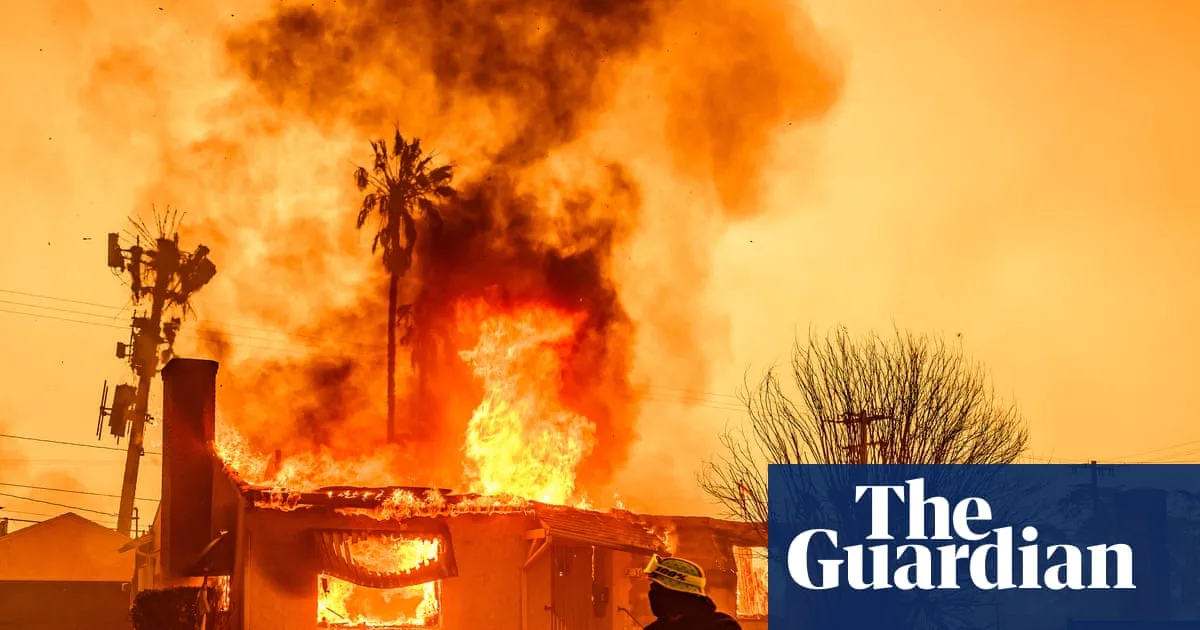
Emergency management experts have issued a stark warning, stating that the United States has become significantly less prepared to face natural disasters during Donald Trump's second term as president. They describe a "perfect storm" where escalating climate threats are being met with a crumbling federal safety net.
A System Gutted: Cuts to Core Agencies
The first year of Trump's return to office saw deep budget cuts and widespread firings at frontline agencies critical for disaster response. The Federal Emergency Management Agency (FEMA), which coordinates national efforts, and the National Oceanic and Atmospheric Administration (NOAA), a world leader in climate science, were particularly hard hit.
FEMA entered the 2025 hurricane season without a concrete plan, grappling with low morale and a workforce reduced by roughly a third. Leadership was unstable, with the agency on its third acting administrator in less than a year, none of whom were confirmed by Congress. The administration also clawed back funding for climate-resilience initiatives and cancelled vital research contracts.
The consequences were not merely theoretical. In July, administration officials took more than 72 hours to authorise federal search-and-rescue teams after catastrophic flooding on the Guadalupe River in Texas, an event that killed over 135 people. A gutted weather-balloon network in Alaska failed to provide adequate warning for one of the state's most destructive storms.
Soaring Costs Amidst Dismantled Defences
Even as federal capacity shrank, the financial toll of disasters skyrocketed. According to Dr Adam Smith, formerly of NOAA, damage from weather and climate disasters exceeded $101bn in just the first half of 2025—the most costly first half of any year on record since 1980. This data is now tracked by the non-profit Climate Central after the federal database was discontinued in May.
"We are in the perfect storm," said Monica Medina, a former NOAA deputy administrator. "Ever-escalating threats are being met with a crumbling safety net."
Trump's approach marked a sharp departure from the previous administration. While investments under President Biden had aimed to build resilience, particularly in vulnerable communities, Trump publicly questioned FEMA's efficacy. In June, he stated a desire to "wean off of FEMA" and devolve responsibility to states, calling the agency an unsuccessful experiment.
Broken Foundations: From Wildfires to Weather Forecasting
The problems extended far beyond FEMA. Despite Trump's vocal support for firefighters, hazardous fuels reduction work fell by roughly 38% in 2025 after job cuts at land management agencies. Fire crews reported chaos, with late pay, extra non-firefighting duties, and critical maintenance left undone.
NOAA, the backbone of US weather forecasting, was hollowed out. Thousands of staff, including hurricane hunters and researchers, departed. Weather balloon launches were reduced, and at one point, a quarter of National Weather Service offices lacked a chief meteorologist. Although some jobs were later reopened, the agency lost an estimated 27,000 years of collective experience.
The administration also cancelled national climate assessments, pulled public climate data portals, and defunded key monitoring stations, including nine that track tsunami-causing earthquakes. "You can’t just buy the data you never collected," Medina lamented.
A Global Repercussion and an Uncertain Future
The erosion of US capability has international implications. Scientists worldwide depend on US satellites and data for tracking severe weather in Europe, coordinating Caribbean disaster response, and monitoring the Amazon rainforest.
With Earth expected to surpass the critical 1.5C warming threshold in the next decade, making extremes exponentially worse, emergency managers are urging the public to adjust expectations. "We are trying to break down that misconception that after a major disaster, the state or federal government will be able to come in and make you whole," said Bill Turner of the National Emergency Management Association.
Experts warn that rebuilding the dismantled systems will take years, leaving the nation increasingly vulnerable as the climate crisis intensifies. "This is what it looks like when things fall apart," said Shana Udvardy of the Union of Concerned Scientists, "and it’s going to take years to build it all back up."




