
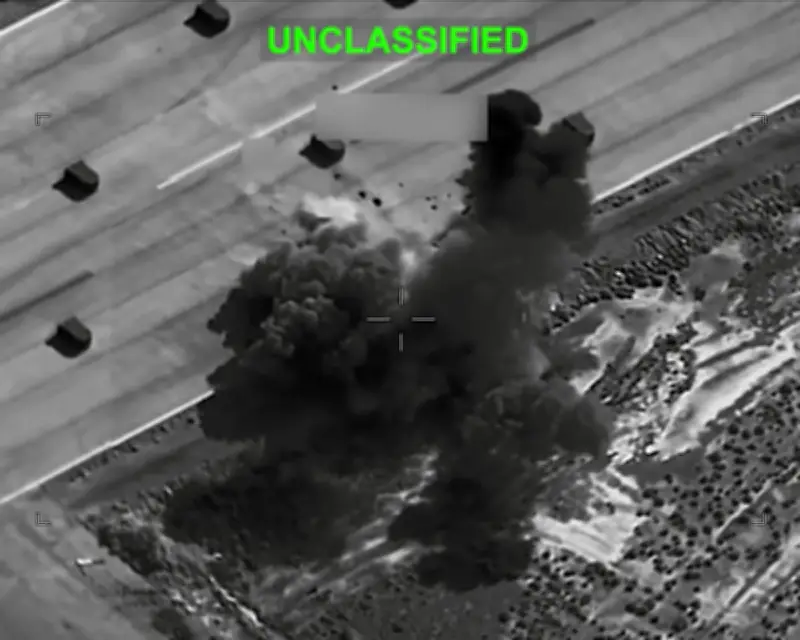
At least 17 people were killed in Iran during overnight US strikes on Thursday, as Tehran launched retaliatory attacks against American bases in the region, marking the most intense exchange of fire since the extension of the ceasefire in June. The strikes occurred hours before the burial of Iran's late supreme leader Ayatollah Ali Khamenei.
Details of the Strikes
The US military reported hitting approximately 90 targets in Iran, including missile launchers and a runway, releasing footage of the strikes. The attacks were aimed at degrading Iran's capacity to threaten freedom of navigation in the Strait of Hormuz, a critical choke point for about 20% of the world's oil and gas, according to the US military. In Iran, officials confirmed that strikes targeted the perimeter of the Bushehr nuclear power plant, Iran's only civilian nuclear facility, as well as a military base in Choghadak and a fishing pier in southern Bushehr province. Ehsan Jahanian, deputy governor of Bushehr, stated that there were no immediate reports of casualties at the nuclear site.
Iran's Islamic Revolutionary Guard Corps fired 10 ballistic missiles at Jordan's Azraq military base, used by the US Air Force, and sirens sounded at least three times in Bahrain, where the US Navy's Fifth Fleet is headquartered. Iranian missiles also targeted Kuwait and Qatar, though no damage was reported in those countries.
Political Fallout and Ceasefire Strain
The attacks came after US President Donald Trump declared the memorandum of understanding (MoU) signed on 17 June to extend the ceasefire as "over," citing Iranian attacks on ships in the Strait of Hormuz. Trump posted videos of explosions in Iran on Truth Social, stating, "This is in retribution for yesterday's bombing of ships by Iran. If it happens again, it will get much worse!" The exchange of fire has raised concerns about the breakdown of the ceasefire and the long-term prospects of negotiations, which were intended to begin after Khamenei's funeral.
Significant gaps remain between the two countries over issues such as Iran's control over the Strait of Hormuz and inspections of nuclear facilities. Iran stopped virtually all shipping through the strait during the war, sending global energy prices soaring and putting pressure on Trump domestically before midterm elections. The MoU calls for the reopening of the strait to commercial shipping for 60 days, but Iran wants to charge fees for transit, conflicting with the US position that it is an international waterway.
Casualties and Infrastructure Damage
Iranian state media reported explosions in several cities, including Bushehr. At least three people were killed in Khuzestan province, a firefighter was killed at an airport in Iranshahr, and nine members of Iran's military died in strikes on Wednesday. Iran accused the US of war crimes after two bridges in eastern provinces leading to Mashhad were targeted, which are key infrastructure for cross-border trade with China. Trump has repeatedly threatened to hit bridges, power plants, and other civilian infrastructure, which could amount to a war crime if not military objectives.
Reactions and Mediation Efforts
Mohammad Bagher Ghalibaf, a senior Iranian negotiator and parliament speaker, said US pressure would not lead anywhere, stating on X, "America still hasn't learned that bullying and breaking promises are no longer cost-free. Let me put it plainly: If you strike, you'll get hit." Qatari Prime Minister Sheikh Mohammed bin Abdulrahman Al Thani, a key intermediary, spoke to Iran's Foreign Minister Abbas Araghchi on Thursday, condemning Tehran's strikes on ships in the strait and stressing that such actions undermine trust and threaten regional stability.
Iran's Deputy Foreign Minister Kazem Gharibabadi responded to Trump's comments, calling them "a confession to the failure of a policy that has been based on force, sanctions and threats for years and could not bring the Iranian nation to its knees." He added on X, "With the criminal and the murderer Trump, one must speak his own language, apparently understands the language of force better!"
Khamenei's Burial and Succession
The strikes occurred as Iran prepared to bury Khamenei in his hometown of Mashhad. A fighter jet escorted the plane carrying his coffin amid heightened security. Crowds gathered, some holding banners promising vengeance against the US. Observers awaited whether Iran's new supreme leader, Mojtaba Khamenei, would attend the burial; he was wounded in the same strikes that killed his father and has since communicated only through written statements.




