
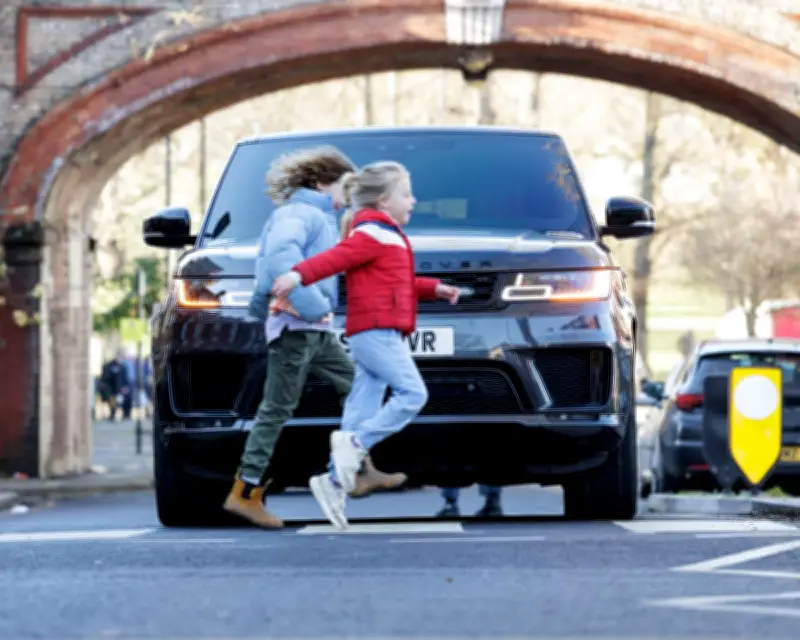
Britain's cars and SUVs are growing wider at an alarming rate, a phenomenon dubbed 'carspreading' that poses a heightened danger to pedestrians, especially children, according to transport commentator Christian Wolmar. New research reported by the Guardian reveals that cars in Europe are expanding by an average of one centimetre in width every year, with fewer than half of new cars in the UK now fitting into standard parking spaces.
SUV Proliferation and Danger to Children
SUVs now account for 30% of cars in England's cities, a dramatic increase from just 3% two decades ago. This surge is linked to aggressive marketing by manufacturers, who profit more from larger vehicles. However, research conducted for Clean Cities shows that a 10cm increase in bonnet height from 80cm to 90cm results in a 27% greater chance of death for pedestrians struck by a vehicle. For children, the risk of death is three times higher if hit by an SUV compared to a conventional car. The elevated driving position in SUVs also makes it harder for drivers to see small children in front of the vehicle, increasing the likelihood of collisions.
Impact on Parking and Road Space
The expansion of vehicles is reducing parking capacity. In Hove, the Norton Road car park saw its capacity drop from 290 to 180 spaces to accommodate larger cars. Unlike heavy goods vehicles, which are restricted to a maximum width of 2.55 metres, there is no width restriction for cars, allowing unchecked growth.
Historical Precedents for Reversal
Wolmar draws parallels to successful campaigns against bull bars and leaded petrol. In the 1990s, his articles highlighted how bull bars, positioned at head height for primary school children, caused several deaths. Legislation eventually limited their use. Similarly, a campaign by Des Wilson led to the removal of lead from petrol. Ken Livingstone's congestion charge in London, introduced nearly 25 years ago, is now widely accepted. These examples demonstrate that carspreading can be reversed.
Government Response and Local Action
The UK government's national road safety strategy, published in January, acknowledged the extra risk from SUVs but proposed no concrete action beyond discussions with the industry. A similarly cautious approach was taken on pavement parking. Wolmar argues that local initiatives may be more effective. London Mayor Sadiq Khan has announced plans to explore new levies and extra parking charges for large vehicles, and has personally indicated he hopes to replace his own armour-protected SUV. In Paris, weight-based parking surcharges have been introduced, reflecting the greater road damage caused by heavier vehicles.
Tax Disparities and Advertising Restrictions
Oliver Lord, strategy director of Clean Cities, notes that the UK is a 'tax haven' for large vehicles. Research by the Transport and Environment Network shows that buyers in the UK pay up to 20 times less for the biggest models than in other European countries. For example, a BMW X5 faces a tax of £66,000 in France but only £3,200 in the UK. Wolmar suggests restricting advertising of dangerous vehicles, similar to tobacco regulations, as the car industry resists inevitable changes.
Call for Action
Wolmar concludes that without a 'weight-loss pill for cars', measures such as weight-based parking fees, tax changes, and advertising restrictions are needed. He warns that as more people are killed and roads become more crowded, a backlash is inevitable, but it will come after significant damage has already been done to urban environments.




