
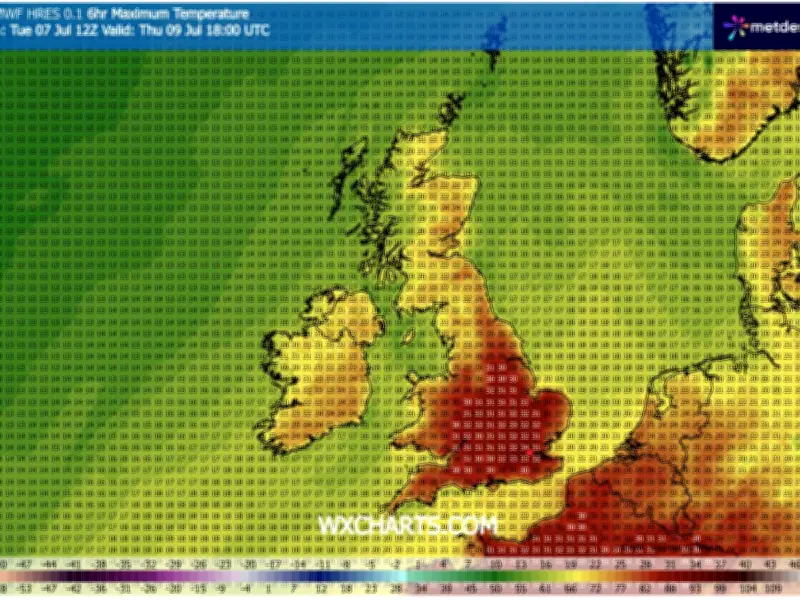
Britain is bracing for its third heatwave of the summer this week, with meteorologists predicting highs of 34C on Wednesday, July 8. According to forecasters at MetDesk, at least 10 areas of the country will see temperatures of 30C or higher at 6pm.
Regional Temperature Breakdown
Southern England is expected to experience the warmest conditions, with 34C forecast in the southeast. However, the mercury will also climb past 30C in central England and parts of the Midlands. The 10 counties and regions set to exceed 30C include the West Midlands, Lincolnshire, Cambridgeshire, Bedfordshire, Northamptonshire, Buckinghamshire, Oxfordshire, Hertfordshire, Greater London, and Essex.
The Met Office predicts London will be Britain's hottest major city, with a high of 32C from 3pm to 8pm. Birmingham will also see temperatures above 30C during the same period, peaking at 32C at 5pm. Cardiff and Manchester are forecast to reach 29C, while Edinburgh, Glasgow, and Belfast will see highs in the mid-20s.
Duration and Comparison to Previous Heatwaves
Met Office Deputy Chief Forecaster Steven Keates commented: "Temperatures this week are not expected to reach the highs we witnessed last month, though parts of southern England in particular are likely to see several days in the low 30s Celsius, and a few places could reach 34-35°C later this week." He added that nighttime temperatures will be lower than in June, though larger urban areas may remain in the high teens Celsius overnight, with a possibility of tropical nights (temperatures not falling below 20°C) in a few locations.
The current heatwave is set to last until Sunday evening, July 12. While it is not expected to produce the extreme temperatures seen in late June—when Lingwood in Norfolk recorded 37.7C—it still poses risks.
Health Warnings and Impacts
The UK Health Security Agency (UKHSA) has issued an amber health alert for heat, in effect from 6pm on Wednesday, July 8, to 6am on Monday, July 13. The alert warns of "significant impacts" likely across health and social care services due to the high temperatures. These include a rise in deaths, particularly among those aged 65 and over or with health conditions, as well as potential impacts on younger age groups.
The UKHSA warning notice states: "Significant impacts are likely across health and social care services due to the high temperatures, including: A rise in deaths, particularly among those aged 65 and over or with health conditions. There may also be impacts on younger age groups. Likely increased demand on all health and social care services. Internal temperatures in care settings (hospitals and care homes) may exceed the recommended threshold for clinical risk assessment. The heat affecting the ability of the workforce to deliver services. Indoor environments overheating increasing the risk to vulnerable people living independently in community and care settings. Issues managing medicines. Staffing issues due to external factors (for example, affecting transport). Increased demand for power exceeding capacity. Other sectors starting to observe impacts (for example, travel delays). Water-related incidents may increase, including risks from cold-water shock and drowning."
Keates also urged caution: "With high UV and high temperatures, people should take the usual precautions with the heat and the sun."




