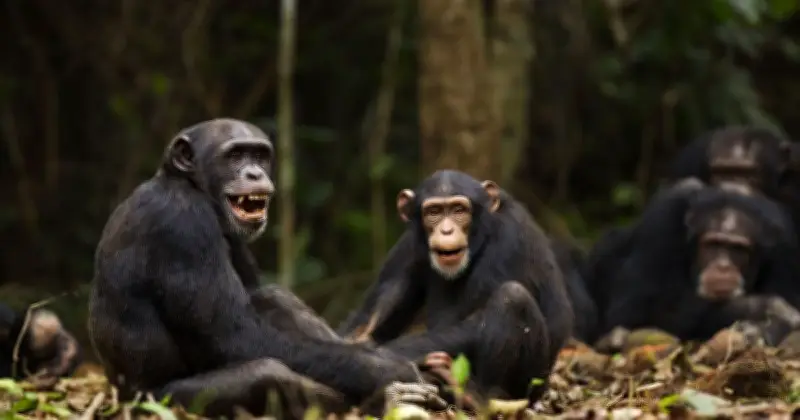
At least 80 children have been attacked by chimpanzees in the Ugandan town of Muhorro over recent years, with six confirmed deaths, according to local reports. Conservationists attribute the surge in attacks to deforestation, which has destroyed the apes' natural habitat and forced them to venture into human settlements in search of food.
Surge in Attacks on Children
Muhorro, located in Buyaga county, has seen chimpanzee attacks escalate dramatically. In June 2022, five-year-old Mugabe Bikahwa was seriously injured while fetching water with other children. In 2023, two-month-old Aroho Ahumuza died after being snatched from her mother. The most recent fatal attack occurred in October 2024, when a five-month-old baby boy was killed by a group of chimpanzees after being snatched from his mother's back.
Deforestation Blamed
Ben Wabyona, a local resident, said: 'We cannot continue losing our children. Government should consider relocating these animals to places like Kibale National Park.' Conservationists point to deforestation as the root cause. According to the United Nations, Uganda loses forest cover at an alarming rate due to shifting agriculture, illegal logging, and charcoal production. Nearly 95% of households rely on wood fuel for cooking.
Government and Conservation Efforts
The Ugandan government is working with conservation groups on restoration programs, including community-led tree planting and stricter forest crime monitoring. Kuteesa Swaleh Kadoma, executive director of Friends of Chimpanzees, said: 'Chimpanzees were not aggressive in the past because they had enough food and space. But with deforestation, they are now forced into communities.' He added: 'When people throw stones at chimpanzees or attempt to chase them, the animals perceive it as a threat. They may retreat, but later return to retaliate.'
Local Fear and Risk to Children
In Muhorro, locals live in fear as chimpanzees move closer to communities. Children, who often walk alone to collect water or play near forest edges, are most at risk. Kadoma emphasized: 'We are encouraging communities to protect chimpanzees because harming them can lead to legal consequences. At the same time, we are offering practical solutions to improve livelihoods.'