
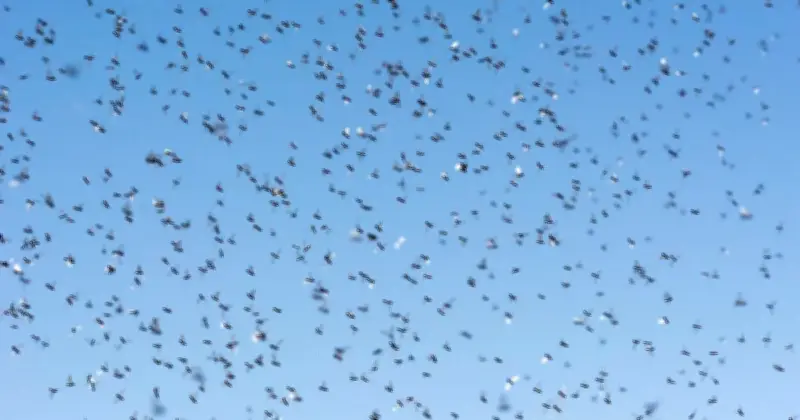
Flying Ant Day has arrived once more, and this year it is expected to come earlier due to the recent heatwave and scorching temperatures. While the phenomenon does not occur over a single day but typically spans several weeks, specialists forecast it will commence in the second or third week of July, with a possible surge as late as early August.
Why Flying Ants Swarm
The spectacle happens when ants release their winged males and queens to mate and establish new colonies. They employ the swarming strategy to shield themselves from predators. While flying ants are not entirely without benefits—as they consume other pests—there is a straightforward method to discourage them from your garden.
Experts endorse a simple trick that costs less than £1, and many households likely already have the ingredient in their kitchens. The product in question is cinnamon, which can be bought in powder form for as little as 85p in some supermarkets.
How Cinnamon Works Against Ants
According to Diamond Pest Control, cinnamon appears to work fairly well at deterring ants. All you have to do is sprinkle it along their trails or near where they emerge from cracks and crevices. There are two reasons why this works: first, it is theorised that ants cannot tolerate the smell of cinnamon; second, when ants inhale this spice, it causes them to suffocate.
Beyond the lawn, there are several spots where you can apply cinnamon to deter ants from taking up residence. These locations include external windowsills and frames, exterior door thresholds, around air bricks and external vents, patio dining areas, and in and around flower pots.
Cinnamon as a Potent Remedy
Cinnamon is described as 'the first and most potent remedy for an ant issue' by essential oil company Edens Garden. They explain that if you are trying to clear an ant infestation, placing cinnamon sticks near windows or sprinkling cinnamon near doorways can help. Cinnamon has ant-repelling properties, and at high concentrations, it is also an insecticide. Furthermore, cinnamon can interrupt ants' pheromone trail, preventing them from communicating with each other.
What Not to Do When You See Ants
According to Good Housekeeping, there is one thing that people should absolutely avoid doing upon discovering ants in their home or garden: squashing them. Tempting as it may be, crushing an ant releases a warning pheromone that draws further ants to the area to investigate. The publication instead advises hoovering them up as a far more effective solution.
Flying Ant Day 2026 Timing
Adam Juson, founder of Merlin Environmental, told Good Housekeeping: 'For 2026, the timing looks set to be earlier than usual. The most statistically likely window for Flying Ant Day 2026 is between 7 July and 20 July, with the peak most often falling in the second or third week of July. Expect flying ants from mid-July, sooner in cities and southern regions, and prepare accordingly.'
The UK witnessed an unprecedented heatwave in June, recording a peak temperature of 37.7°C, and the country is currently enduring yet another sweltering period, which has contributed to the earlier emergence of flying ants.




