
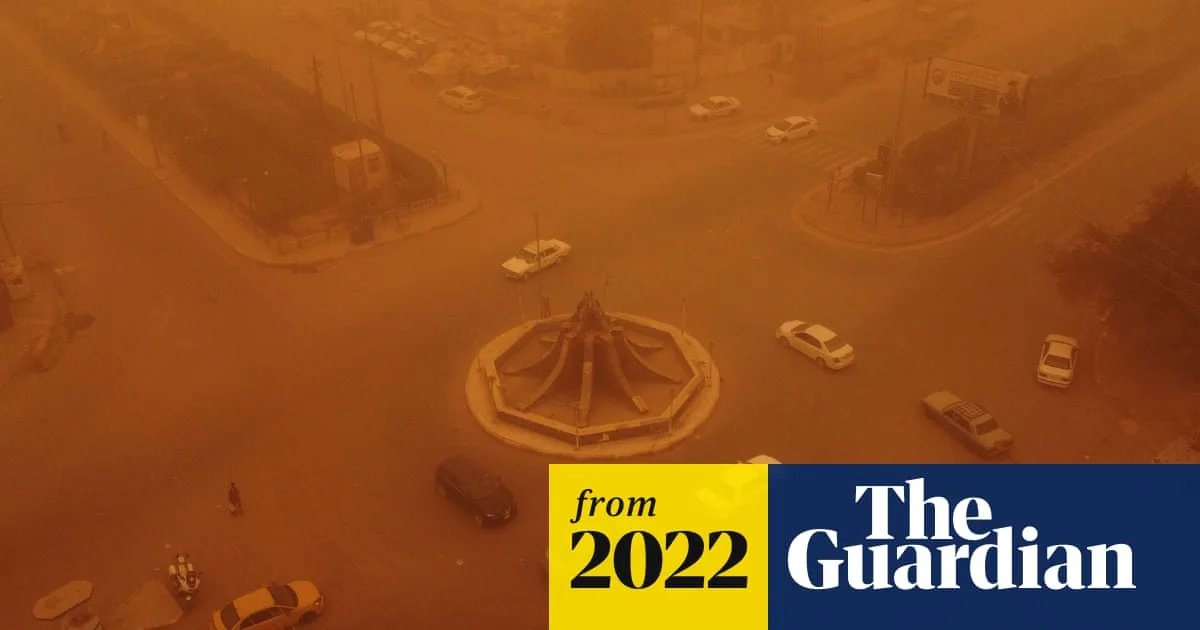
Hundreds of Iraqis have been taken to hospital with breathing difficulties after a thick sandstorm blanketed the country, the fifth such storm in a month. Authorities urged residents to stay indoors and flights at Baghdad airport were suspended for several hours.
Iraqi state media reported that most patients suffered from respiratory issues, with clinics in the north and west struggling to cope with the influx. The dust turned the sky ochre and covered roads and buildings with an orange film, reducing visibility and forcing drivers to use headlights.
Flights scheduled overnight and on Thursday morning were postponed but resumed by the afternoon as the dust began to clear. Iraq is prone to seasonal sandstorms, but experts say their frequency has increased due to record-low rainfall, desertification and climate change.
Azzam Alwash, head of the non-profit organisation Nature Iraq, warned that climate change alone does not explain the problem. He cited inappropriate farming practices and water mismanagement over the past 20 to 40 years as key factors, adding that officials often use climate change as an excuse to avoid responsibility.
The World Bank has warned that Iraq could see a 20% drop in water resources by 2050. Issa al-Fayad, an environment ministry official, said the country could face 272 days of sandstorms annually in the coming decades.
At least 700 people sought medical care in Anbar province, with dozens more in Kirkuk, Salahaddin and Najaf. At Baghdad's Sheikh Zayed hospital, staff stocked up on drugs as forecasts predicted storms would continue through May. Nurse Ayat Haitham reassured patients that drugs for breathing difficulties and oxygen were available in large quantities.




