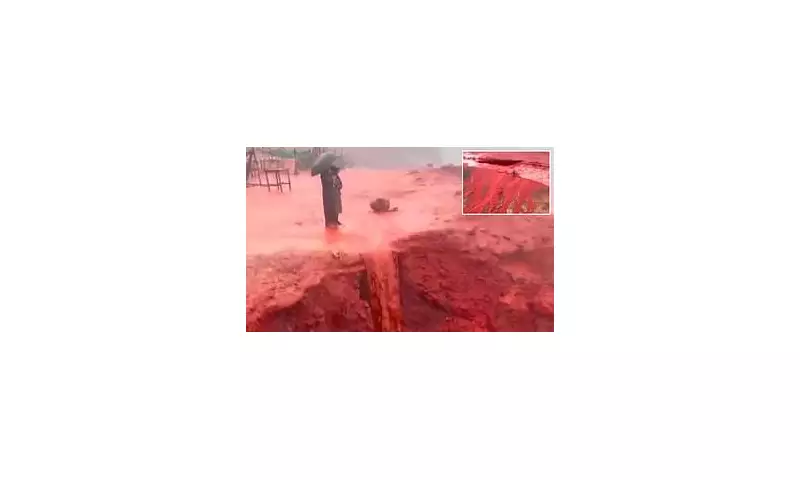
A startling natural event in the Middle East this week saw the waters of the Persian Gulf turn a deep, blood-like crimson, creating a scene that many likened to apocalyptic biblical prophecies.
The Viral Phenomenon on Rainbow Island
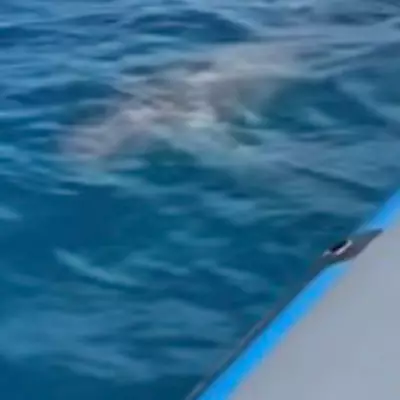
On Tuesday, viral videos emerging from Iran's Hormuz Island captured the dramatic moment. Torrential rain interacted with the island's distinctive red soil, creating waterfalls and streams of reddish water that cascaded over cliffs and flooded into the ocean, transforming the seawater's colour for all to see.
The spectacle immediately drew parallels to descriptions in the Bible, where turning water to blood is depicted as a divine sign. The first of the ten plagues in the Book of Exodus began with the Nile River turning to blood. Furthermore, apocalyptic passages in the Book of Revelation, such as the sounding of the second trumpet and the pouring of the third bowl of wrath, describe seas and rivers becoming blood red.

A Geological Explanation for the Crimson Tide
Despite the ominous theological connections, scientists and locals have a clear explanation for the event. The phenomenon is attributed to the island's unique geology. Hormuz Island, often nicknamed 'Rainbow Island' for its multicoloured mineral soils, is rich in iron oxide, also known as hematite.
Heavy rains in the region wash this iron-rich red soil, known locally as 'golak,' into the surrounding water. In its powdered form, hematite absorbs shorter wavelengths of green and blue light and reflects longer red wavelengths, causing the water to take on a vivid crimson hue. This runoff effect is a regular, though dramatic, occurrence during significant rainstorms on the island.
The island's complex chemical makeup, formed over millions of years, includes layers of shale, clay, volcanic rocks, and over 70 different minerals, with the red iron oxide being dominant.
Regional Context and Prophetic Interpretations
While Hormuz Island itself is not mentioned in the Bible, the broader region of ancient Persia, modern-day Iran, features in scripture. Some biblical scholars point to references like Revelation 16:12, where the sixth bowl of wrath is poured on the Euphrates River, roughly 500 miles from Hormuz Island.
This End Time prophecy speaks of drying up the river to prepare the way for 'kings from the east,' which some interpret as potentially involving modern Iran in a future apocalyptic coalition.
This is not the only recent incident of red water in the Middle East. In August, Israel's Sea of Galilee also turned a vivid red, alarming locals. However, that event was caused by a bloom of a harmless green algae, *Botryococcus braunii*, which produces a red pigment under intense sunlight, and posed no health risk.
The transformation in Iran, while visually staggering and theologically evocative, remains a powerful reminder of the intersection between natural geology and human interpretation.