
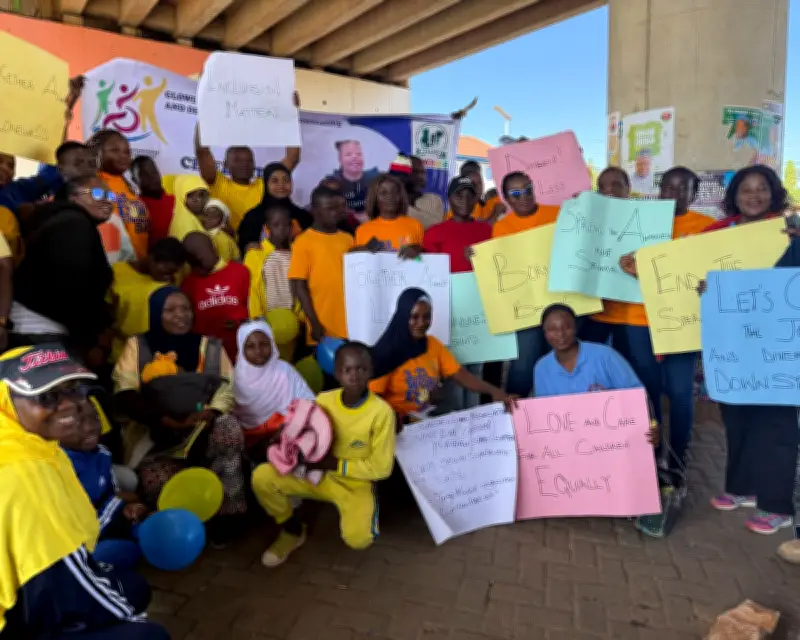
More than 100 people in Jos, central Nigeria, marked World Down Syndrome Day in March this year. The march, led by 60-year-old Safiya Atta Mansoor, aimed to combat deep-rooted stigma and superstition surrounding disabilities such as Down's syndrome and cerebral palsy.
Stigma and Superstition Persist
Fatima Muhammad, mother of Alameen, who was born with Down's syndrome in 2015, was told to drown her infant son or abandon him in the forest. People ran away screaming profanities at the sight of him. Outside her home, Muhammad endures stares and insults. Down's syndrome occurs in Nigeria at an estimated rate of 1 in 865 live births, according to studies. The country's first national assessment of disability inclusion in 2024 noted that persons with disabilities face systemic barriers limiting their full participation in national life.
A Mother's Advocacy
Muhammad walked publicly for her son for the first time in the World Down Syndrome Day march, joining over 100 people from Plateau State. Handmade signs read, “Spread awareness, not stigma” and “Inclusion matters.” “I was happy to see people step up and try to end the stigma surrounding this,” Muhammad said.
Leading the march, Mansoor's encounter with disability within her family reshaped her life. Eleven years ago, her niece Naseerah was diagnosed with cerebral palsy after failing to hit developmental milestones. Mansoor struggled to find a school for her; when she finally enrolled Naseerah, it closed without warning. This galvanized Mansoor to set up GlowingStar Empowerment Initiative and Development in March 2025 to support children with Down's syndrome and other neurodevelopmental conditions.
Building Support Networks
Through GlowingStar, Mansoor builds spaces for families to discuss mental health and inclusion without stigma. For families like Muhammad's, the GlowingStar WhatsApp community is the only peer network many caregivers have ever had. Muhammad now joins Mansoor on radio and television programs across Plateau State to challenge myths of disability. “I feel better now that I can speak about my struggles and encourage other families facing this,” Muhammad said.
Mansoor partners with donors to fund individual rehabilitation plans covering physiotherapy, education, speech therapy, and nutritional support. “There have been efforts by spirited individuals for people living with physical disabilities, but funding for neurodevelopmental ones is harder to come by,” she explained, because progress is slow and difficult to measure. “These kinds of disabilities are often treated like a curse, a contagious disease or a result of witchcraft. This is what I am fighting against.”
Families Face Daily Hostility
Naseerah's mother, Halima Ovosi, said, “When I go out, people throw jabs at us, avoid my daughter and call me a bad mother.” In southern Nigeria, particularly Lagos, families have greater access to specialized schools and advocacy groups, but “we have little to none.” Mansoor wants government policies for inclusion in schools, subsidized healthcare, employment pathways, and counseling for caregivers. Her personal measure of success is simpler: Naseerah is now 11, and Mansoor thinks about her navigating adulthood. “We want a situation where they can take care of themselves by themselves, to whatever extent they can.”
“If we can keep going out like this, and our voices are being heard, we change the narrative. Then the stigma and myth about Down's syndrome and other disabilities being a result of witchcraft will not only stop but will die completely,” Mansoor said.




