New Zealand Confronts Escalating Landslide Danger Amid Climate Emergency
New Zealand could experience a significant increase in deadly landslides as the global climate crisis triggers more frequent and intense storms, according to expert warnings issued following two tragic events on the North Island. Landslides represent the country's most lethal natural hazard, having claimed more than 1,800 lives since written records began – a death toll surpassing those from earthquakes and volcanoes combined.
Recent Tragedies Highlight Immediate Risks
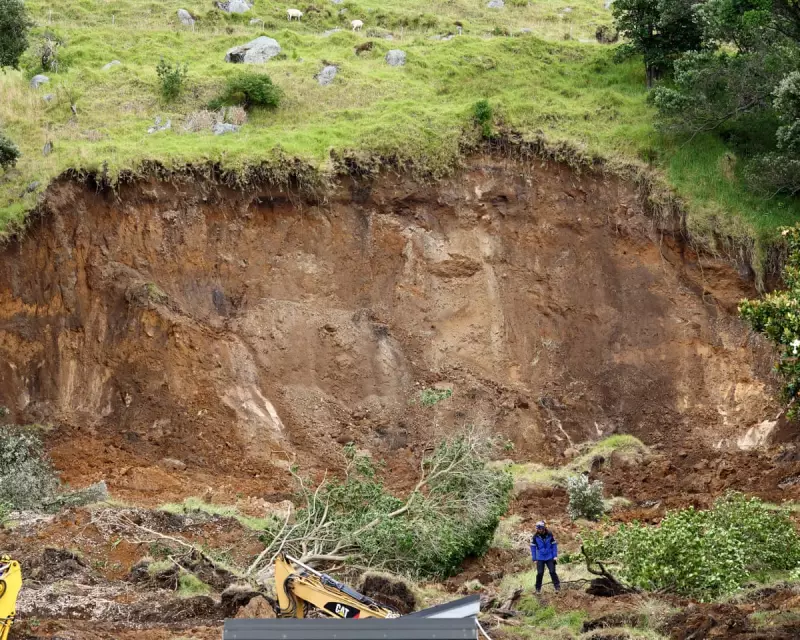
In January, a series of tropical storms battered the North Island, bringing torrential rainfall that triggered two fatal landslides. On Thursday morning, a devastating landslide crashed into a holiday park at Mount Maunganui in the eastern city of Tauranga, burying six people beneath debris. Authorities have confirmed that these individuals are unlikely to be found alive. Earlier that same morning, another landslide tore through a residential property south of the city, resulting in two fatalities.
The Tauranga City Council evacuated approximately 150 residents from 30 homes on Wednesday to assess a new slip posing what officials described as a "risk to life." These consecutive incidents have prompted urgent questions about how New Zealand can better protect its population from landslides and the increasingly extreme weather conditions that trigger them.

Geological and Climatic Factors Create Perfect Storm
New Zealand's unique geographical position contributes significantly to its landslide susceptibility. The nation sits directly on a tectonic boundary that continuously pushes up land and creates steep slopes, while its maritime climate delivers consistently high rainfall levels. These combined factors create ideal conditions for slope instability and ground failure.
Human activity has further exacerbated these natural vulnerabilities. Professor Martin Brook, an applied geology expert at the University of Auckland, explains that landscape alterations including deforestation and slope cutting for transportation networks and housing developments have dramatically reduced natural resilience.
"Land use change has been so profound that we just aren't resilient," Professor Brook stated, noting that while landslide susceptibility mapping has improved in recent years, the crucial next step involves using this data to inform better planning decisions and development restrictions.
Climate Crisis Amplifies Existing Threats
Global warming is already intensifying the tropical storms that frequently trigger landslides across New Zealand. Dr Thomas Robinson, a senior lecturer in disaster risk and resilience at the University of Canterbury who specialises in landslide research, warns that this trend will likely continue.
"The more we have intense storms, the more frequently they occur, the more landslides we're going to have, and then the more impacts we're going to experience," Dr Robinson explained.
Recent weather events demonstrate this escalating pattern. In 2023, Cyclone Gabrielle triggered approximately 800,000 landslides across New Zealand, making it one of the most extreme landslide-triggering events ever recorded globally according to Earth Sciences New Zealand.
"The losses and the impacts are increasing," Dr Robinson observed. "We need to have a really serious conversation nationally and internationally about how we're going to manage the risks we're faced with."
Political Debate Intensifies Over Climate Response
The recent tragedies have ignited political controversy surrounding New Zealand's climate change policies. The coalition government has faced criticism for slashing emissions reduction targets and scrapping a NZ$6 billion resilience fund established by the previous Labour government following Cyclone Gabrielle.
Labour leader Chris Hipkins accused the government of dragging its heels on climate issues, stating that "almost every major action New Zealand was taking to really tackle the challenge of climate change has been wound back under their leadership."

Finance Minister Nicola Willis countered that Hipkins was politicising the tragedy and emphasised that the government had made "significant allocations of funding towards infrastructure, flood resilience and roading repair needed to respond to the effects of climate change."
Calls for Systemic Change and Better Preparedness
Professor James Renwick, a climate science expert at Victoria University of Wellington, emphasised that increasingly severe storms are causing "devastation and misery" across the country. He stressed that preventing these events from overwhelming adaptation capabilities requires immediate action to reduce greenhouse gas emissions.
"To stop such events becoming worse, to stop them overwhelming our abilities to adapt, we must stop adding carbon dioxide and other greenhouse gases to the air," Professor Renwick asserted, calling on government and business leaders to accelerate decarbonisation efforts.
Meanwhile, investigations are underway into the Mount Maunganui tragedy. The Tauranga City Council has ordered a local inquiry, while Prime Minister Christopher Luxon is seeking advice about a potential government investigation. Questions have emerged about whether local authorities could have taken preventative measures, particularly given that members of the public reportedly alerted emergency services to potential threats before the landslide occurred and the mountain's documented history of slope instability.
Changing Public Perception of Landslide Risks
Despite their deadly history, landslides have not captured public attention in the same way as earthquakes, according to Dr Robinson. "They don't stick in our psyche in the same way earthquakes might," he noted, suggesting that recent tragedies might help shift this perception.
"If anything good can come out of this, then having a better and broader understanding of landslide risk and how to prepare for them is a positive," Dr Robinson concluded, highlighting the urgent need for improved public awareness and preparedness measures as New Zealand faces an increasingly hazardous future shaped by climate change.