Ministers on Wednesday finally admitted that chief constables were wrong to say white people should be treated differently from other races. Successive Home Secretaries had previously dismissed concerns about the controversial Anti-Racism Commitment – first revealed by the Daily Mail more than a year ago – which tells officers they should not be 'colour blind'.
But amid growing fury at the police's treatment of Henry Nowak and fears over two-tier justice, a Home Office minister and Downing Street agreed with demands for it to be rewritten. Asked about the guidance from the National Police Chiefs Council (NPCC), policing minister Sarah Jones told GB News: 'It's definitely clumsy. I think it's wrong. It gives the wrong impression.' She stressed that 'everyone is equal under the law', and added: 'We have to make sure that is always the case, and I think in the vast majority of cases the police respond in the right way.'
Sir Keir Starmer's spokesman told reporters: 'The NPCC is rightly reviewing the document to ensure there's no ambiguity in their guidance. We don't think that language is right.' It came a day after Home Secretary Shabana Mahmood failed to agree in the Commons that the Anti-Racism Commitment should be withdrawn.
Henry Nowak, 18, was a finance student at the University of Southampton and was described as 'kind and talented' by his family. Police bodycam footage shows innocent victim Henry Nowak being forced into handcuffs by officers after he was stabbed repeatedly by a knife-obsessed Sikh man.
Her predecessor had rejected criticism of the pledge when it was first published as part of the NPCC's Police Race Action Plan. Asked in the Commons last March if she agreed that 'this two-tier approach to policing is totally unacceptable', Yvette Cooper replied: 'The police operate without fear or favour, and they respond to the crimes they face across the country and to the perpetrators of those crimes, whosoever they should be and wheresoever they are.'
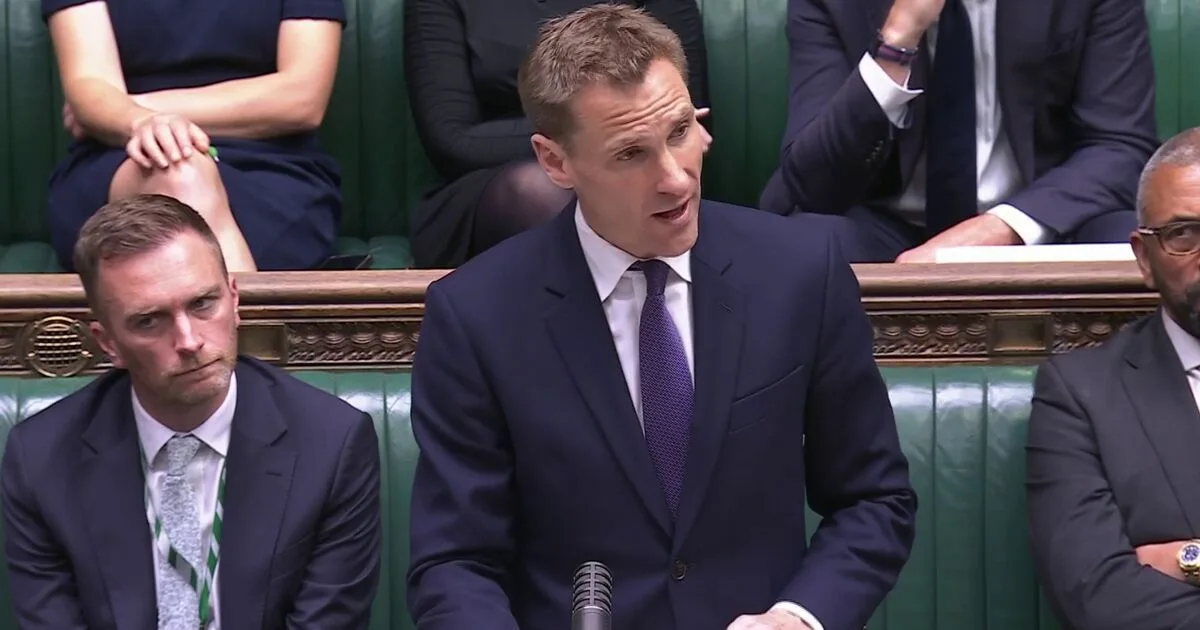
Last night Shadow Home Secretary Chris Philp, who first exposed the document, said: 'The police Anti-Racism Commitment is immoral and dangerous and is itself racist. It expressly calls for different ethnic groups to be treated different to artificially engineer the same arrest rates. I have been calling out this nonsense for the last year, and the Home Secretary repeatedly ignored me – including yesterday in Parliament. And yesterday No 10 were still denying there is two-tier policing. Now we are witnessing yet another screeching U-turn from this weak Government.' Mr Philp added: 'It should not have taken the tragic death of Henry Nowak to make Labour finally see sense. But given Keir Starmer's enthusiasm for taking the knee, it is not surprising.'
In the wake of the row, the NPCC has confirmed that it is reviewing the wording of the Anti-Racism Commitment, which said that 'racial equity' should not mean 'treating everyone the same or being colour blind'. Murderer Digwa lied to police at the scene, telling officers Mr Nowak had not been stabbed and had instead attacked him. An image issued by the Crown Prosecution Service shows the eight-inch ceremonial dagger used by Digwa.
But a former senior officer continued to defend its approach, claiming it also meant that police should give more support to people with disabilities. Parm Sandhu, director of the London Policing College and a former chief superintendent in Scotland Yard, told BBC Radio 4's Today programme: 'I do not accept that there is two-tier policing in this country. I do not accept that police officers go to work thinking I am going to watch a young person bleed out, and I do not accept that police officers go there and treat people differently based on their skin colour.' Asked about the contentious guidance, Ms Sandhu said: 'It doesn't say you treat people differently, it says take into account different cultures. If you're dealing with somebody who's deaf or blind, what is the point of either shouting louder or showing them something that's written down? You have to cater for that individual's needs, and that's what the equality and race training is about.' When asked about the argument that police should simply treat everyone equally, Ms Sandhu said: 'You have to treat people according to their needs. If you've got somebody in a wheelchair, you wouldn't ask them to stand up and be searched.'