
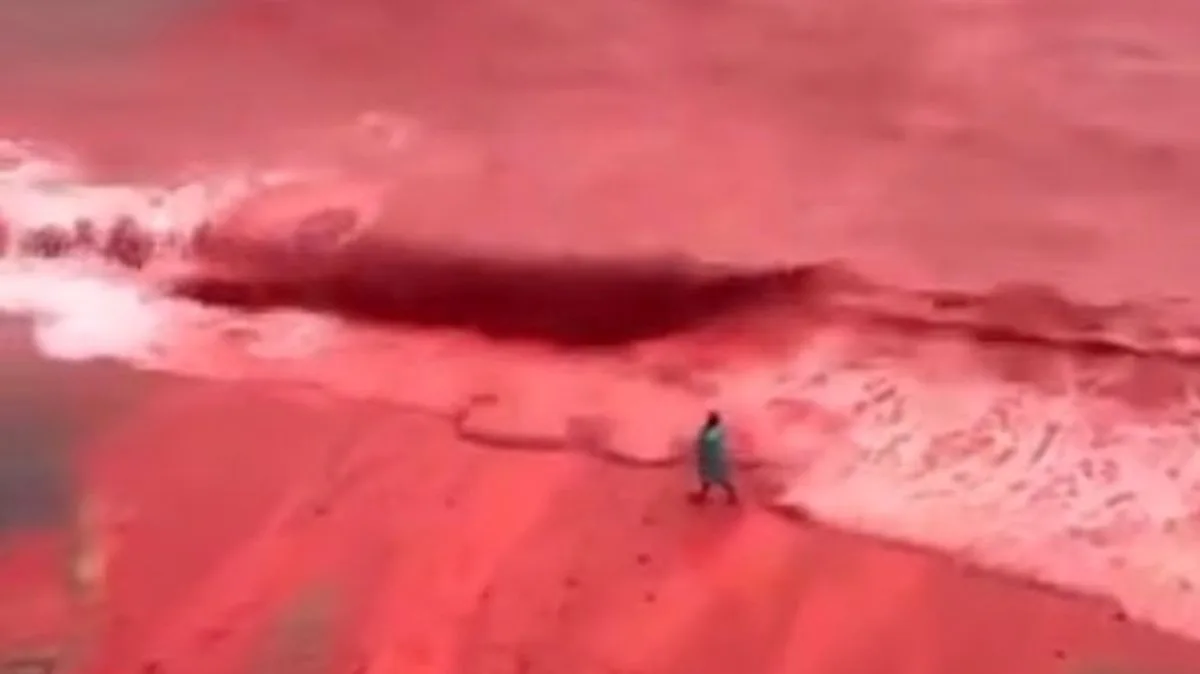
Stunning footage from Iran’s Hormuz Island shows the coastline turned a deep crimson after heavy rainfall, prompting comparisons to the Book of Revelation.
The phenomenon occurred at the island’s famous Red Beach, where red soil – high in iron oxide – flowed into the sea, turning the water a sinister shade of red. Some social media users likened it to the biblical 'End Time' prophecy of seas turning to blood.
However, scientists explain that the colour change is natural. The beach is known for its vivid red sand and cliffs, and during torrential rain, streams of red soil wash towards the shoreline, creating a stark contrast with the blue waters of the Persian Gulf.
NASA researchers have studied the island, describing it as a salt dome composed of rock salt, gypsum, and other evaporites. The red soil, locally called gelak, is exported for use in cosmetics and pigments.
Hormuz Island lies in the Strait of Hormuz, about 670 miles south of Tehran. Rainfall is rare and occurs mainly in winter and early spring. The island attracts tourists and photographers attracted to its unusual landscapes.
While parts of Iran welcomed the downpours after months of drought – the country has seen 89% less rainfall than average – flooding in Hormozgan province forced road closures. President Masoud Pezeshkian warned that if significant rain does not come by year's end, the government may be forced to leave Tehran.




