
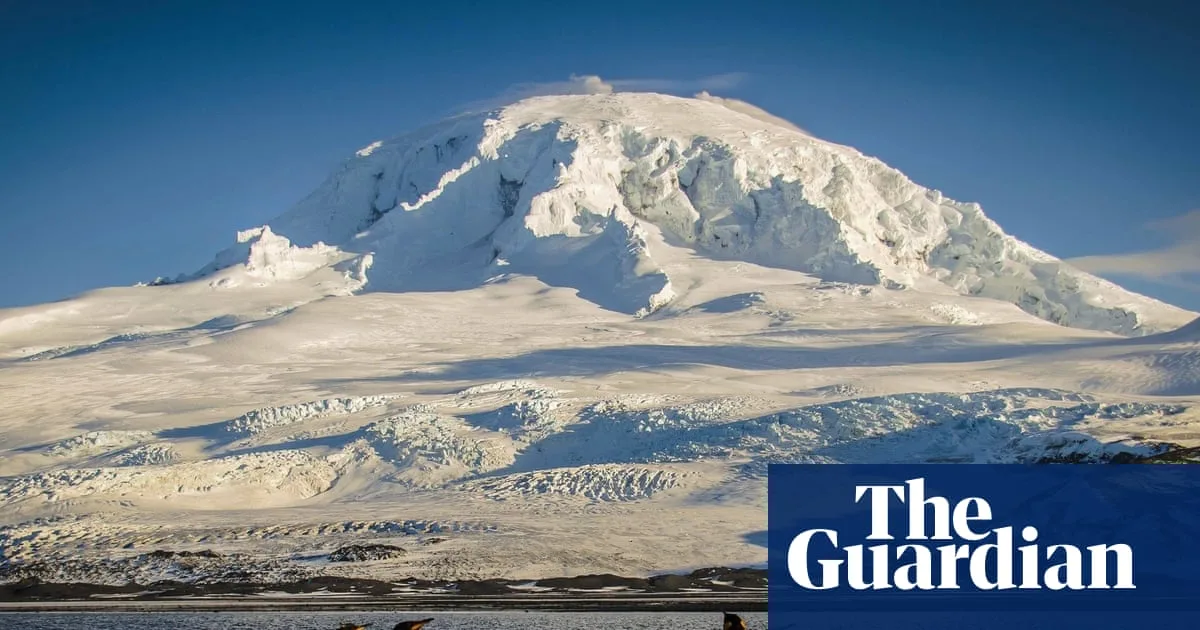
Glaciers on the remote Australian subantarctic Heard Island have lost nearly a quarter of their ice cover since 1947, according to a new study. Researchers combined aerial photographs, maps and satellite data to track the retreat of 29 glaciers on the uninhabited, world heritage-listed island, located 4,100km south-west of Perth.
The study, published in the journal the Cryosphere, found that the area covered by glacial ice fell from 289 sq km to 225 sq km between 1947 and 2019, a period during which the island warmed by 0.7C. The most dramatic changes occurred on the eastern side, with Stephenson glacier retreating almost 6km since 1947 and averaging 178 metres a year over the past two decades.
“Glaciers are extremely sensitive to small changes in temperature,” said Prof Andrew Mackintosh, an author of the paper and chief investigator at Monash University’s Securing Antarctica’s Environmental Future (SAEF). “I’ve got no doubt the increase in temperature is primarily responsible for driving the glacier retreat. This shows that no place is free from the influence of climate change.”
On the neighbouring Laurens peninsula, losses were even more severe, with ice cover dropping from 10.5 sq km in 1947 to just 2.2 sq km in 2019. Lead author Dr Levan Tielidze warned that one or two of the 11 small glaciers there may have already vanished. “They are small glaciers, but it’s a sign of what will happen in the future to the larger glaciers on Heard. These findings are a bellwether of change for our global climate system,” he said.
The retreat poses risks to the island’s unique biodiversity, including seabirds, elephant seals and slow-growing cushion plants. Dr Justine Shaw, an associate professor at SAEF, noted that exposed bare ground could allow invasive plants to take hold, while a growing lagoon at the base of Stephenson glacier may destabilise bird nesting sites. The Australian Antarctic Program has announced two scientific visits to the island to further study the changes.




