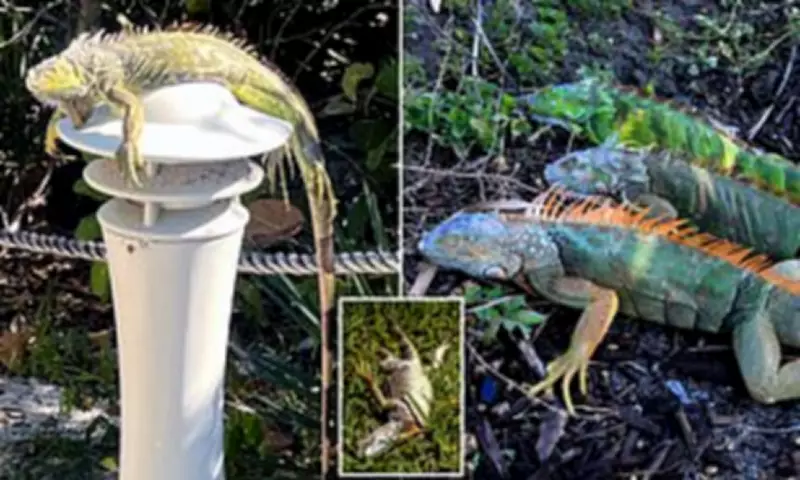
Residents across South Florida experienced an extraordinary and unsettling spectacle over the weekend as unusually frigid conditions led to iguanas tumbling from trees. The Sunshine State, typically known for its warmth, faced temperatures dipping into the mid-30s Fahrenheit on Sunday, triggering a biological response in these cold-blooded creatures.
The Science Behind the Frozen Reptiles
When exposed to freezing or near-freezing temperatures, iguanas enter a state known as 'torpor.' This temporary condition causes them to lose muscle control, rendering them immobile and appearing frozen solid. Meteorologist Brantly Keiek highlighted on social media that if left in the cold for prolonged periods, these reptiles could perish.
Jessica Kilgore of Iguana Solutions described the scene vividly to Local 10 News, noting, 'They're like little bags of ice.' With temperatures hovering just above freezing, she explained that people could easily collect the normally swift creatures, comparing it to picking up Easter eggs from the ground.

Emergency Measures by Wildlife Authorities
In response to the cold snap, the Florida Fish and Wildlife Commission implemented temporary measures. Typically, Floridians are prohibited from handling iguanas, but the commission allowed residents to bring the frozen iguanas to designated collection sites. At these locations, the animals are either humanely euthanized or transferred to licensed permit holders for sale outside the state.
Kilgore advised residents on their options: 'If you want to allow him to defrost, go ahead and move him to the sun and he'll go ahead and scramble right up the trees. But if you want to help the environment and remove him, you need to call [the Fish and Wildlife Commission] and find a drop-off site, and they'll be able to take care of him humanely for you.'
Residents React to the Bizarre Phenomenon
At one drop-off site, a local resident expressed astonishment at the ease of spotting the frozen iguanas. He told news channels, 'Got out there, found them. Like we've seen them in the summer and they are fast and then you see them right now and they just don't move. They're just so slow.' This stark contrast highlights the dramatic impact of the cold on these invasive species, which are considered a nuisance in Florida's ecosystem.
Broader Weather Context and Warnings
This unusual event occurred amid a severe bomb cyclone affecting the Southeast, bringing record-breaking snow, powerful winds, and dangerous ice. The National Weather Service issued warnings of a 'hard freeze' from Sunday night through Monday morning, with forecasts suggesting temperatures in Florida could drop lower than those in Iceland.
Low temperatures were expected to reach the upper teens, with highs only in the 20s. The NWS urged residents to take protective actions: 'Ensure you take actions to protect people, pipes, and plants. To prevent water pipes from freezing; wrap or drain or allow them to drip slowly.' In areas like Tampa Bay, temperatures were predicted to fall below freezing again, prompting wind advisories and cautions for high-profile vehicles.
Orlando faced particularly harsh conditions, with forecasts of a 'dangerously cold' low of 29 degrees overnight on Sunday, potentially breaking a record set in 1980. This cold snap not only disrupted daily life but also brought to light the vulnerabilities of invasive species like iguanas to extreme weather events.