Spencer Pratt's LA Mayoral Run: Reality Star vs. Karen Bass
Spencer Pratt vs. Karen Bass: LA Mayoral Race Heats Up

A flawed mayor, a broken city and an imperfect underdog trying to save his hometown. It is the newest Los Angeles reality show, on a limited run through November.

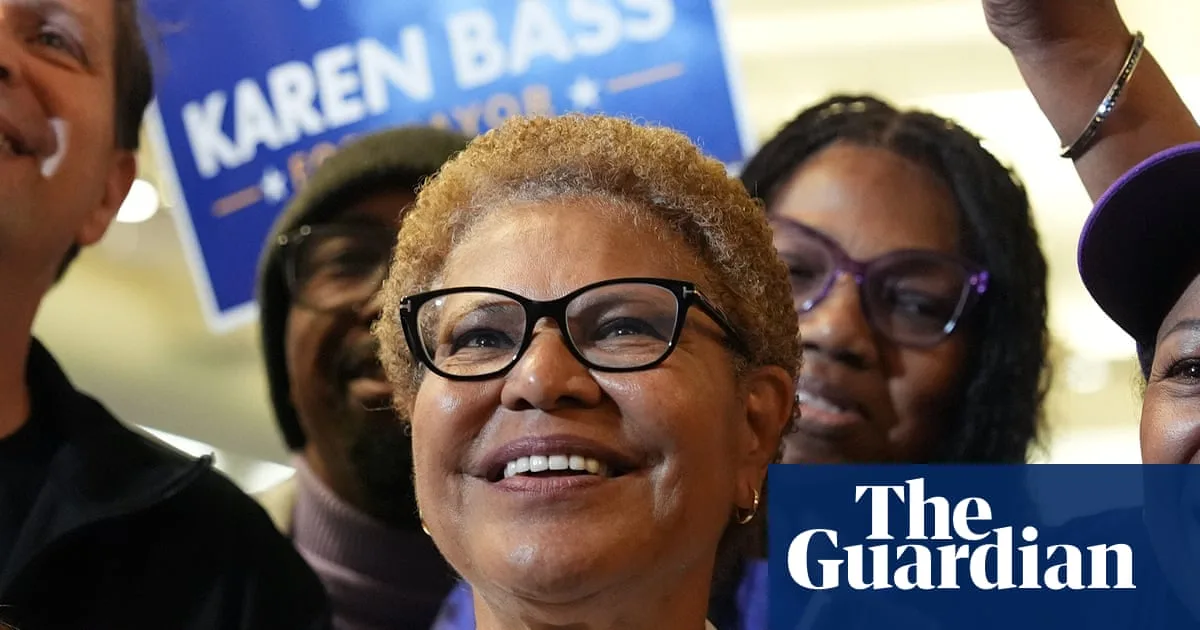
Assuming unscripted veteran Spencer Pratt qualifies under California's 'top two' jungle primary system after all votes are counted (he is currently in second, ahead of Democratic Socialist city councilwoman Nithya Raman), his coming clashes with incumbent Mayor Karen Bass will make for must-see TV.

For one, Pratt seems to have solved a problem that Republicans have grappled with for decades: how to put the spotlight on the failure of Democratic governance in nearly every big city in America.

Wide Pickt banner — collaborative shopping lists app for Telegram, phone mockup with grocery list

It helps that LA is legitimately a mess. Crime, homelessness, soul-crushing bureaucracy and a feeble recovery after fires that destroyed whole communities provide an environment for the 'change versus more of the same' and 'outsider versus insider' message that drives Pratt's campaign.

Voters, regardless of political affiliations, are frustrated with institutions, so Pratt has the chance to build a coalition that would not necessarily be ideological. (With no help from President Donald Trump, who recently offered kind words about the ex-'The Hills' star. The MAGA label is not a plus in the City of Angels.)

Pratt's electoral tent could house Republicans, independents, frustrated Democrats, younger voters, politically disengaged voters, and those who rarely vote but are dissatisfied with the status quo. That advantage will only be boosted if he has a chance to debate Bass in public again. (He ran circles around her in a May faceoff and polls deemed him the winner.)

The strengths of Bass, a 72-year-old lifelong cog in the Democratic machine, are coalition-building and establishment savvy. Pratt's strength is performance. Debate audiences often reward the latter more than political professionals would like to admit.

A candidate who can turn a mayoral race into entertainment has at least some chance of changing who shows up to vote, remaking the electorate to his advantage. And Pratt will have months to do it.

He is, of course, a celebrity (of sorts) in a city where fame is the coin of the realm. Unlike most candidates, he knows how to attract attention, create viral moments and generate coverage. His supporters understand influencer culture, social media, AI-generated content and the modern attention economy better than many professional political operatives, so he starts with an earned-media advantage that most mayoral candidates could never hope to match.

He has virtually no downside for being unconventional. While traditional politicians are punished for saying unusual things, Pratt built his entire public persona around unpredictability. What might be a contretemps for another candidate often becomes content for him.

He also projects a kind of authenticity that many modern politicians struggle to match. Whether voters agree with him or not, many perceive him as saying exactly what he thinks rather than delivering carefully focus-grouped talking points. That will contrast with Bass, whose rhetoric leading up to the first round of voting reached for populist notes that sounded inauthentic to many ears.

Finally, Pratt's advancement to the November run-off is also likely to set off a fundraising spectacle. Instead of relying primarily on traditional donor networks, he could potentially raise meaningful sums through livestreams, merchandise, celebrity connections and small-dollar online donations gambits. He is already capturing the hearts and wallets of some of LA's most powerful music executives - Universal Music Group's chairman and chief executive Lucian Grainge and his son, CEO of Atlantic Records, Elliot Grainge.

Pratt has a chance to make the November election less about governance and more about culture, energy, relevance and whether Los Angeles feels like it is moving in the right direction. Bass wants voters to judge managerial competence. Pratt wants voters judging the status quo itself – and that may be the most important advantage of all.

But here is – what they call in the reality TV show business – the pivot. Given all these advantages, Pratt is still unlikely to beat Bass in the general election given the city's overwhelmingly Democratic voting population.

Pickt after-article banner — collaborative shopping lists app with family illustration

The strongest argument against him is that generating attention and running a city are not the same thing. The history of celebrity candidates is mixed. For every Arnold Schwarzenegger, there are many more entertainers and minor celebrities who have attracted enormous publicity but failed to persuade voters they could actually govern.

The real question is not whether Pratt can dominate the conversation. He almost certainly can. The question is whether he can convince enough Los Angeles voters, including a significant number of Democrats, that City Hall needs disruption more than experience. Set your DVRs.




