Britons facing a daunting Christmas food shop this year are encountering a harsh reality: the era of supermarket abundance is ending. The price of ingredients for a traditional festive meal has risen sharply, with cranberry sauce alone seeing a 25% price increase compared to last year. This surge is a symptom of a far deeper malaise, linking volatile weather, fragile global supply chains, and the escalating climate crisis directly to the nation's dinner tables.
The Cranberry Conundrum: A Festive Bellwether
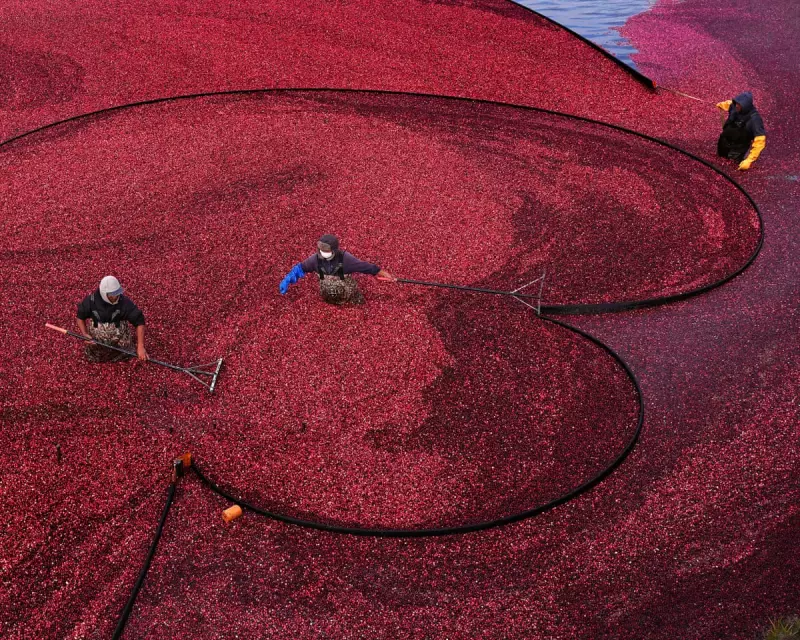
While cranberry sauce might divide opinion at the Christmas table, its journey to the UK is a revealing case study. Almost all cranberries consumed in Britain are imported, primarily from the US and Canada, making prices acutely sensitive to disruptions abroad. A Guardian analysis previously found own-brand cranberry sauce prices leapt 37% in a single year, driven by the war in Ukraine, energy costs, and supply chain issues.
Professor Sarah Bridle, a food, climate and society expert at the University of York, explains that this year's 25% hike may partly reflect a market correction after supermarkets slashed prices to compete with discounters. However, the underlying vulnerability remains. Cranberries need specific conditions—cold weather and abundant water—to thrive. Heatwaves can damage the fruit, while droughts force reliance on intensive irrigation, highlighting the crop's susceptibility to a changing climate.

Wheat Woes: The Staple Under Threat
Professor Bridle argues that the greater long-term threat to UK food security isn't the festive berry, but a staple: wheat. Used in everything from Christmas cake to daily bread, British wheat harvests are failing. Government figures show total wheat output decreased by 20% between 2023 and 2024, following the wettest 18 months on record which left crops rotting in waterlogged fields.
The situation has worsened. By 2025, heat and drought had carved more than £800m from production value, resulting in one of the worst harvests on record. Notably, three of the five worst UK wheat harvests have now occurred since 2020. For consumers, this translates directly to higher prices and potential scarcity. The average cost of an 800g branded loaf has risen to £1.43, up almost a third from £1.10 in April 2021.
Expert Warnings: Shortages and Social Unrest
The implications extend far beyond the weekly shop. Professor Bridle's recent research, surveying 58 UK food system experts, delivered a sobering forecast: 80% believed civil unrest due to food crises in the UK is likely within the next 50 years. This stark prediction underscores how central food security is to social stability, a lesson underscored by empty supermarket shelves during the Covid pandemic.
Bridle suggests the immediate risk in the coming decade is not an overall food shortage, but a breakdown in distribution. The UK may produce enough, but lack the resilient systems to get it to everyone. This challenges the modern British diet's 'decadence'—the expectation that any food is available year-round, grown somewhere else in the world.
She emphasises that responsibility cannot rest solely with consumers. Instead, she calls for systemic change in the 'food environment', supported by policy. Pointing to the success of the sugary drinks tax, Bridle, who sits on a Defra advisory group, advocates for standardised climate impact labelling on food as a potential first step. The goal is to re-connect people with where their food comes from and reduce waste—one climate action most can agree on.
As Britons sit down to Christmas dinner, the cranberry sauce, the bread, and the festive cake are more than just meal components. They are tangible links in a global chain that is growing increasingly fragile, offering a direct, personal taste of the profound challenges posed by the climate crisis.