Wealthy Connecticut Community Mobilises Against $272 Million Gas Pipeline Project
Affluent residents of Brookfield, Connecticut, are mounting fierce opposition to a proposed $272 million gas pipeline expansion, citing grave concerns over health risks, environmental pollution, and the project's alarming proximity to a local middle school. The Iroquois Gas Transmission System's plan to install two new compressors at an existing station has sparked widespread outrage in this prosperous suburb, where median household incomes exceed $142,000.
Health and Safety Fears Dominate Community Concerns
Local officials have voiced strong objections to the expansion, which would increase daily gas flow by 125 million cubic feet. State Senate Minority Leader Stephen Harding, who lives just miles from the proposed site, emphasised the dangers during a recent public hearing. 'This is being put up literally yards away from a school, a middle school, which my children are going to be attending,' Harding declared. 'There are health risks for our kids, for our families, there are environmental risks for everyone in our community. This should not be approved in any circumstance.'
State Representative Martin Foncello echoed these warnings, highlighting specific operational hazards. 'Compressor stations emit pollutants during normal operations that can affect respiratory health, especially in children,' Foncello explained. 'These industrial facilities also come with inherent mechanical and operational hazards.' He detailed risks including blowdowns, equipment failures, and emergency shutdowns that could release large gas volumes while creating significant noise and pressure concerns.

Political Unity in Opposition Despite Conservative Leanings
Interestingly, this opposition transcends traditional political boundaries in a community that typically supports conservative policies. Brookfield First Selectman Steve Dunn noted 'opposition to this runs across all party lines—unaffiliated, Democrat, Republican.' This unity reflects how local consequences can override broader political agendas, even putting residents at odds with former President Donald Trump's national gas infrastructure expansion goals.
Democratic candidate Aaron Zimmer captured the sentiment on social media: 'Nobody in Brookfield wants the pipeline expansion, especially knowing that Connecticut doesn't even use the gas. It goes to New York, and we're left with the health and safety risks.'
Community Mobilisation and Environmental Justice Arguments
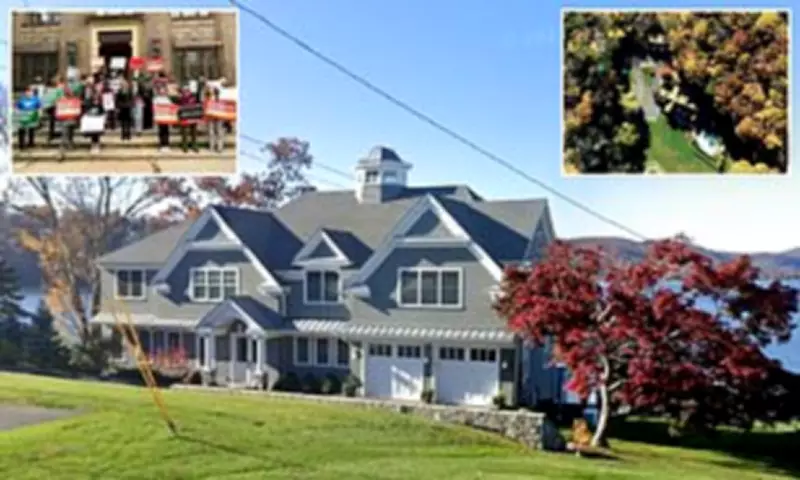
The resistance has manifested visibly throughout Brookfield, with protest signs dotting lawns and multiple climate demonstrations organised. A petition sponsored by the Connecticut Citizen Action Group describes the expansion as a 'direct threat to our community's health and safety,' citing pipeline operators' past safety violations and numerous gas explosions nationwide.
Opponents operating under the name '1900 Feet'—referencing the proposed distance between compressors and the middle school—argue the project offers no local benefits while creating substantial risks. 'Worse, this project won't lower our energy costs, provide significant tax revenue or create job opportunities for Brookfield,' their statement asserts.
Company Response and Regulatory Process
Iroquois spokesperson Ruth Parkins defended the project, stating it would 'enhance the reliability and availability of natural gas supplies for Connecticut's natural gas consumers and power generation fleet.' Operations Director Michael Kinik noted the five-year review process involving multiple agencies, with designs revised and additional emissions controls implemented.
However, critics question the transparency of this process. Harding complained that 'the company has not been transparent, has not really listened to the public at all,' while Foncello urged Connecticut's Department of Energy and Environmental Protection to thoroughly consider community concerns, especially since the expansion primarily benefits New York customers.

Broader Environmental Context and Pending Decisions
The controversy unfolds against a troubling environmental backdrop. Fairfield County, where Brookfield is located, has been designated in 'severe nonattainment' of air quality standards by the Environmental Protection Agency, suffering from pollution drifting from western regions.
Currently, the project has received tentative support from Democratic Governor Ned Lamont, but final approval on air quality permits remains pending. As Brookfield's 17,500 residents await the outcome, their battle exemplifies how even wealthy, politically conservative communities will mobilise against industrial projects perceived as threatening their health, safety, and quality of life.