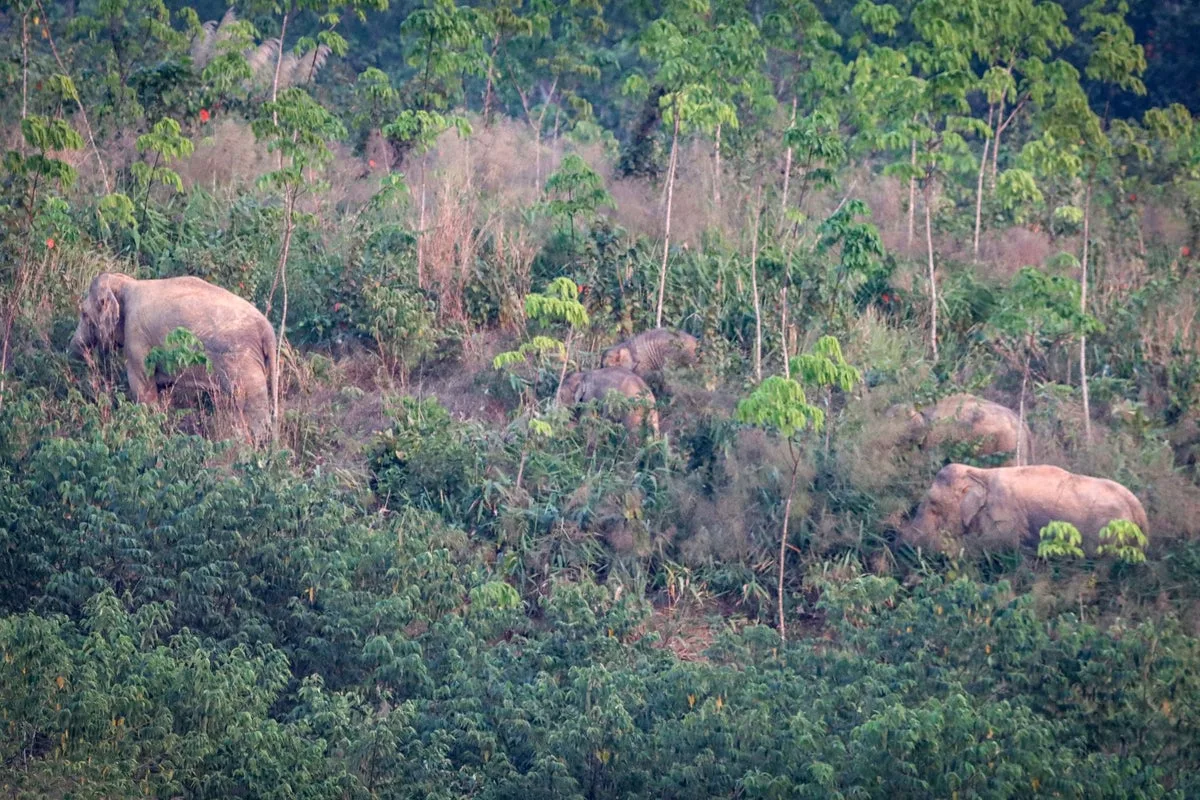
A wild bull elephant killed a tourist exercising near his tent on Monday at Khao Yai National Park in Thailand, marking the third fatal attack by the animal. The victim, identified as Jirathachai Jiraphatboonyathorn, 69, from Lop Buri province, was exercising with his wife at about 5.30am when he encountered the elephant, named Phlai Oiwan, feeding outside its forest boundary.
The elephant charged, grabbing the man with its trunk and slamming him to the ground. His wife escaped, but Jirathachai died at the scene, according to reports. The attack occurred at the Kho Yor 4 (Khlong Pla Kang) campground in Wang Nam Khieo district.
Park rangers confirmed that the same elephant had previously killed two local residents, though the timeline of those incidents remains unclear. Wanchai Kaenchantuek, head of the Khao Yai 4 park protection unit, said he heard the elephant and cries for help and alerted officials after finding the victim.
The body has been sent for postmortem, and park officials are coordinating with relevant agencies to provide assistance to the family and consider compensation under government rules. Chaiya Huayhongthong, chief of the national park, told AFP that officials will meet on Friday to decide the elephant's fate, stating, 'We will probably decide to relocate him or change his behaviour.'
Forest officials have increased patrolling and monitoring, urging tourists to exercise caution. According to Thailand's Department of National Parks, more than 200 people have been killed by elephants since 2012. The country's elephant population has surged from 334 in 2015 to 800 last year, prompting officials to administer contraceptives to control numbers.