
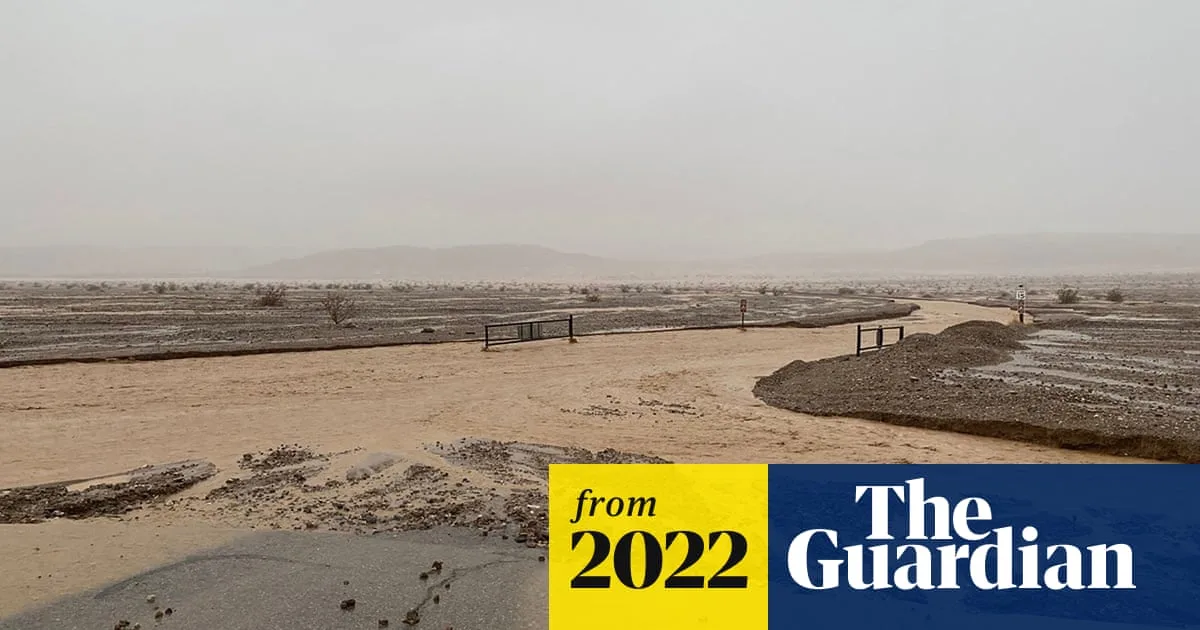
The likelihood of a catastrophic California megaflood has already doubled due to the climate crisis, according to a new study, which warns that such events will become both more common and more severe. Scientists behind the research, published as ARkStorm 2.0, combined climate and high-resolution weather models to assess present and future risks, concluding that a series of powerful storms could displace millions and cause over $1 trillion in losses.
“Societally, from a public policy and climate adaptation infrastructure building perspective we are falling behind,” said Dr Daniel Swain, a climate scientist at the University of California, Los Angeles and an author of the study. “Our goal in doing this work is to get ahead of the curve as much as we can when it comes to the risk of megaflood.” The research found that under a high-emissions trajectory, the annual likelihood of a 200-year event would increase by 683% by 2060.
The study builds on a 2010 analysis led by the US Geological Survey, which hypothesised that severe storms could pelt the state with enough rainfall to impair critical infrastructure and transport corridors. This hypothetical event, often called California’s “other Big One”, would exceed earthquake damages by a considerable margin. Floods are being exacerbated by wildfires and drought, which alter landscapes and make debris flows more likely when water rises.
California’s floods are typically driven by atmospheric rivers – strong storms that release large amounts of water. A long sequence of such storms could quickly overwhelm the landscape. “Atmospheric river storms in a warming climate are likely going to shift from being primarily beneficial to primarily hazardous – that’s a big shift,” Swain said. Across the US, extreme precipitation events have increased significantly since the 1950s, yet western states like California remain focused on drought and may be less prepared for rising waters.
Warming is both intensifying winter storms and increasing the atmosphere’s capacity to draw moisture from the soil, worsening droughts. It also leads to less snow and more rain, raising flood risks and reducing water availability. “It’s both juicing out the winter storms... and supercharging the capacity of the atmosphere to suck that water right back out of the landscape,” Swain added, noting that compounding disasters are already straining national resilience.




