
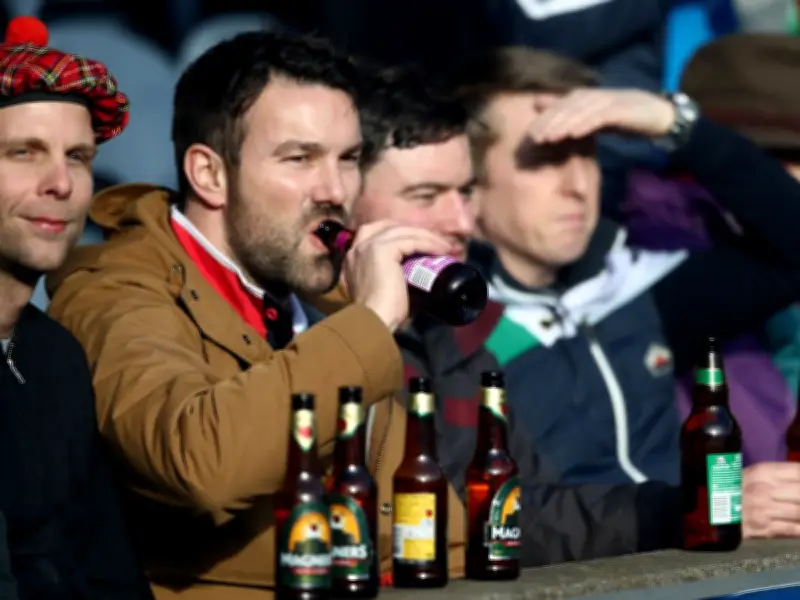
Andy Burnham has been criticised by Scottish health campaigners after he claimed a ban on football fans drinking alcohol in the stands is "wrong". The Labour MP, expected to replace Keir Starmer as Prime Minister later this month, is a keen Everton supporter and shared a video on social media of him visiting the club's Hill Dickinson Stadium last weekend for a rugby league match.
The venue saw Leigh Leopards defeat Warrington Wolves, and as rules on the sale of alcohol are different for rugby games, supporters were able to enjoy a beer while seated. Burnham was filmed with friends including Steve Rotheram, the metro mayor of Liverpool, enjoying a beer while watching the action.
"I've only got one question about this day today," Burnham said in the clip. "How come these lads can do that in my seat here when we can't do that at an Everton home game? Something wrong there. I think we need to look at that."
Scots Health Campaigners React
The sale and consumption of alcohol at football grounds has been banned in Scotland for more than 40 years and has become an emotive issue. Health campaigners insist any weakening of the controversial rules would send the wrong message. Alcohol Focus Scotland (AFS) has long argued the relationship between professional sport and alcohol needs to be reviewed, given the societal damage caused by problem drinking.
Sophie Bridger, AFS policy manager, said: "We're deeply disappointed to read Andy Burnham's comments on the sale of alcohol in football grounds, particularly given his previous Cabinet role as Health Secretary. Alcohol deaths in the UK remain near record highs. Increasing the availability of alcohol would not only likely increase those harms in the immediate term but would further increase children's exposure to alcohol and alcohol marketing – which we know leads to earlier onset drinking and increases the risk of future alcohol problems, sowing the seeds of still greater alcohol harm in the future."
"Rather than expanding the availability of alcohol in sport, it's time we started to question the relationship between sport – ostensibly an activity that should promote health and wellbeing – and alcohol," Bridger added.
Supporters' Groups Argue Ban is Discriminatory
But supporters' groups argue the ban is discriminatory and point out Scottish football grounds have changed beyond all recognition since the days of open terraces. The infamous 1980 Scottish Cup final – which saw Celtic and Rangers fans clash on the pitch at Hampden Park – prompted Margaret Thatcher's then Tory government to clamp down on boozing in stadiums north of the Border.
The only exceptions made in Scotland are for the small number of supporters in club hospitality suites, which are allowed to sell alcohol before kick-off, at half-time and after the match has finished. Before the 1981 ban, the widespread culture was for fans to bring their own carry-outs into grounds to drink on the terraces – a habit that would never be tolerated under strict 21st century licensing laws.
Instead, some argue Scotland should at least follow the example of grounds in England where fans are able to buy beer in plastic glasses in stadium concourses – but are not allowed to take drinks back to their seats. It's this practice that Burnham has suggested should be relaxed in England and Wales, with fans being able to enjoy a drink in the stands as well as concourses.
Union and Political Reactions
Hamish Husband, chair of the Association of Tartan Army Clubs, previously said: "If you go eight miles across the border you can buy alcohol in football stadiums. Up here we have this draconian attitude to alcohol, which was maybe necessary in the 80s. However, times have changed."
David Hume, GMB organiser in the drinks industry, insists the ban is outdated. He said: "This hypocrisy is a prejudice against working class people which demonises and criminalises ordinary football fans. This two-tier system for fans is outdated, unfair and unreasonable when most fans today were not even born when the ban was introduced. Fans have changed. Football has changed. Now the law must change."
However, Scottish First Minister John Swinney has suggested he is not in favour of changing the rules in Scotland. He said last year: "We've got a set of arrangements in place just now that work."




