The Arctic has just endured its hottest year on record, with scientists warning the unprecedented heating is already altering weather systems far beyond the polar region, impacting Europe and North America.
Record Temperatures and Vanishing Ice
According to the Arctic Report Card 2025 released by the US National Oceanic and Atmospheric Administration (NOAA), surface air temperatures across the Arctic from October 2024 to September 2025 were the highest recorded since at least 1900. The data reveals the region is now warming at more than twice the global average rate, with its ten warmest years all occurring within the last decade.
This milestone follows a Copernicus climate report indicating 2025 is set to be the second or third warmest year globally, potentially only surpassed by 2024's record heat. The planet is on course to complete its first three-year period where the average global temperature exceeded 1.5°C above pre-industrial levels.

Autumn 2024 was the warmest on record for the Arctic, while winter 2025 ranked as the second warmest. Precipitation during the report's timeframe also hit a record high, with winter, spring, and autumn each among the five wettest seasons since 1950.
Dramatic Environmental Transformations
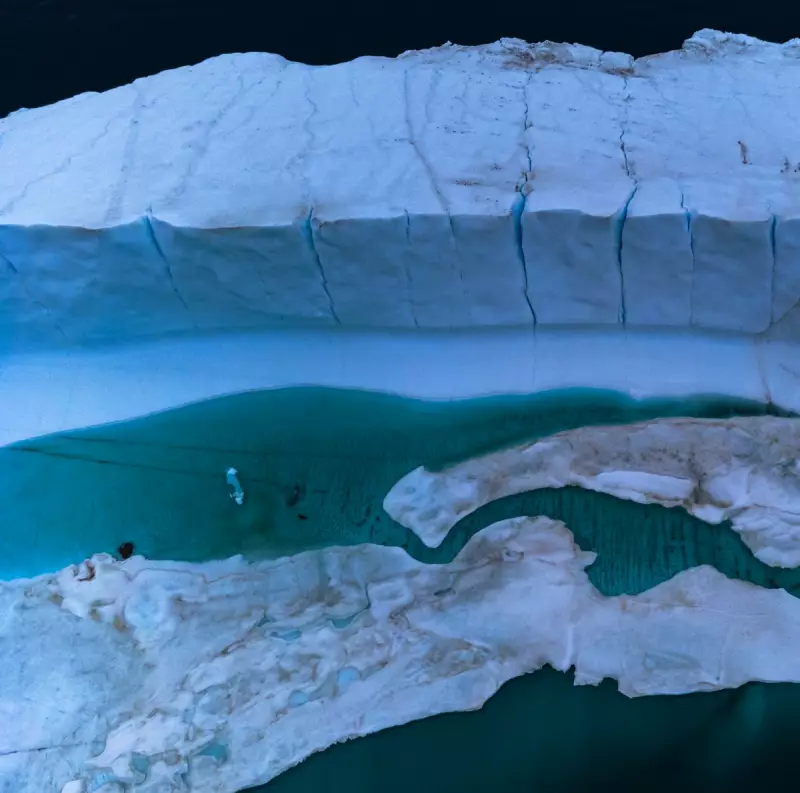
The environmental consequences are stark and accelerating. Arctic winter sea ice cover reached a new low in March 2025, the smallest maximum extent in the 47-year satellite record. By September, summer sea ice had shrunk to the tenth-lowest minimum ever observed.
The oldest and thickest multi-year sea ice has declined by over 95% since the 1980s, now largely confined to areas north of Greenland and the Canadian Arctic Archipelago. In a phenomenon known as "Atlantification," parts of the Arctic Ocean's Atlantic sector saw sea surface temperatures in August around 7°C above the 1991–2020 average, driven by warmer Atlantic waters pushing north.
On land, the impacts are equally severe. Glaciers in Arctic Scandinavia and Svalbard saw their largest annual ice loss on record between 2023 and 2024. The Greenland Ice Sheet lost an estimated 129 billion tonnes of ice in 2025, contributing to global sea-level rise.
A new and alarming phenomenon highlighted is the emergence of "rusting rivers" across more than 200 watersheds in Arctic Alaska. Thawing permafrost is releasing iron and other metals, turning waters orange, increasing acidity, and threatening drinking water and aquatic life.
Global Repercussions and Climate Feedbacks
Scientists stress that Arctic changes have worldwide implications. The loss of reflective ice exposes darker ocean, absorbing more heat and reinforcing warming—a feedback loop called Arctic amplification. Furthermore, the warming and freshening of Arctic waters can weaken major ocean circulation systems that influence weather patterns across Europe and North America.
Some researchers also link rapid Arctic warming to shifts in atmospheric circulation that may allow cold air to spill southwards more frequently, contributing to extreme winter weather in mid-latitude regions. The Arctic's hydrological cycle is intensifying, with more rain instead of snow, and June snow cover now roughly half of what it was sixty years ago.
The 2025 report marks 20 years of monitoring, painting an unequivocal picture of rapid, systemic change. While not every year sets a new record, the long-term trajectory is clear, signalling profound and ongoing disruption to a critical component of the Earth's climate system.