
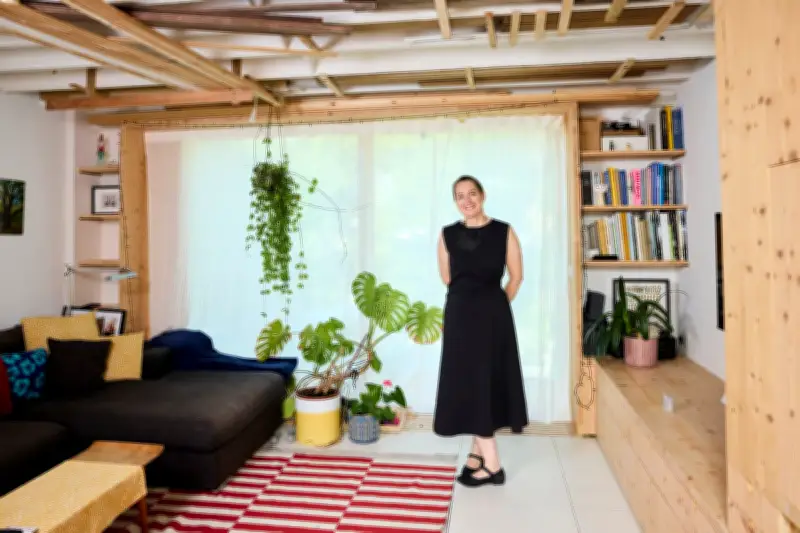
Marion Baeli and Robert Prewett, both architects specializing in retrofits, have turned their 1960s home in Sydenham, south London, into a cool oasis that never exceeded 26°C during the peak of the heatwave, while many London homes hit 34°C or more. The couple achieved this without air conditioning, using a combination of insulation, airtight construction, and external shading.
Insulation and Airtight Envelope
When they bought the rundown property in July 2014, they planned a staged renovation. The ground floor was insulated and tiled, a roof extension and triple glazing were added, and the leaky façade was replaced. They created a fully insulated and airtight envelope, gaining 15cm of floor space—unusual in retrofits where space is often lost. This envelope acts like a Thermos, retaining warmth in winter and maintaining cooler temperatures in summer.
External Shading as Key Strategy
“The secret is shading,” says Baeli. She recommends stopping the sun’s rays altogether rather than relying on internal curtains or blinds. For low-budget, semi-temporary external shading, she uses fabric curtains made from breathable material like a dust sheet, with eyelets and bungees hooked to window corners on sunny mornings. The plan is to install a curtain track for the large glazed garden door, allowing the covering to be folded away in winter.
Light Wells and Ceiling Fans
The couple cut through floors to create light wells, bringing daylight into the center of the house. These are currently shaded with white sheets slung across them, with remote-controlled blinds as a future investment. Ceiling fans with integrated lights are also on their wish list, now more widely available from high-street retailers.
Their approach combines aesthetics with function. “There’s thermal comfort but also the comfort of looking out over a nice view, so we have big sliding doors to connect inside with the garden,” says Baeli. She adds that comfort should be a key factor in property value, noting that estate agents do not price in overheating lofts.




