Comprehensive Flood Study Reveals 'Alarming' Risk for 17 Million Coastal Americans
A groundbreaking new study has uncovered what researchers describe as "alarming" flood risk levels for more than 17 million Americans living along the Atlantic and Gulf coasts. Published in the journal Science Advances, this represents one of the most comprehensive assessments of flood vulnerability ever conducted in the United States.
Unprecedented Scale of Coastal Vulnerability
The University of Alabama research team employed sophisticated methodology, analyzing 16 distinct factors including geographic hazards, exposed population and infrastructure, and social vulnerability. By integrating Federal Emergency Management Agency damage data with three different artificial intelligence tools, researchers mapped flood risks from Texas to Maine with unprecedented precision.
The findings reveal 17.5 million coastal residents face "very high" flood risk, with an additional 17 million categorized at "high" risk. When examining only the most extreme flooding events—the top 1% identified by FEMA—the study found 4.3 million people at the highest risk level and 20.5 million at high risk.
New York and New Orleans: Stark Contrasts in Vulnerability
New York City emerged as particularly concerning, with 4.75 million residents at the two highest risk levels for all flooding types. The research indicates more than 200,000 buildings would likely sustain damage during significant flood events.
New Orleans presents a different but equally troubling picture. While only about 380,000 residents face high flood risk, this represents 99% of the city's population. Study co-author Wanyun Shao, a climate scientist at the University of Alabama, clarified this doesn't mean 99% would be affected in every storm, but rather that nearly the entire population lives in areas vulnerable to flooding depending on specific storm paths and rainfall patterns.
Social Vulnerability Amplifies Risks
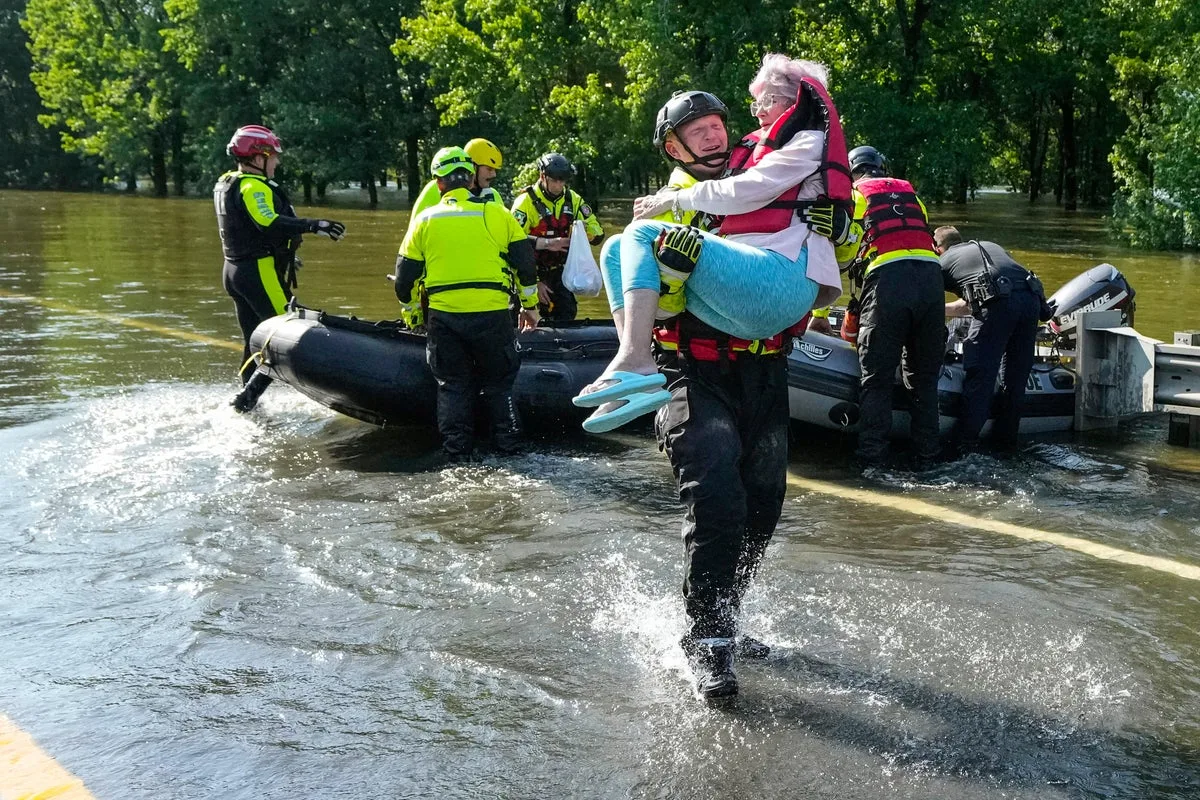
The research highlights how flood risks disproportionately affect socially vulnerable populations. "When the next big storm hits New York City, when the next Hurricane Katrina-like hurricane makes landfall in New Orleans, people will get hurt, especially those socially vulnerable populations," Shao emphasized, referring to the poor, elderly, children, and less educated residents.
What distinguishes this study from previous research is its comprehensive consideration of factors beyond simple geography. Researchers examined sinking land, impermeable pavement that prevents water absorption, and detailed social vulnerability metrics including poverty and age demographics.
Expert Reactions and Wider Implications
Independent experts expressed surprise at the scale of vulnerability revealed. "New York is known to be susceptible to floods and it has the largest population. But the fact that New York has nearly an order of magnitude more flood-exposed population than any other city is surprising," said Alex de Sherbinin, a geographer at Columbia University's Center for Integrated Earth System Information.
The study identifies eight particularly vulnerable cities: Houston (which experienced devastating flooding during 2017's Hurricane Harvey), New York (inundated during 2012's Superstorm Sandy), Jacksonville with 679,000 at high or very high risk, Houston with just under 600,000, plus Miami, Norfolk (Virginia), Charleston (South Carolina), and Mobile (Alabama).
Climate Change Intensifying the Threat
Researchers directly link increasing flood frequency in New York, New Orleans, and other coastal cities to human-caused climate change. University of Virginia engineering professor Venkataraman Lakshmi noted the methodology could be applied globally to cities like Manila, Philippines, and warned flooding problems will become more frequent and intense due to ongoing climate change.
Columbia University's Marco Tedesco, who wasn't involved in the study, observed that it "reinforces the crucial concept that future flood disasters are not just about water—they are about where people live, how cities are built, and who is least protected."
Calls for Comprehensive Solutions
Study lead author Hemal Dey, a geospatial scientist, hopes local officials will consider natural infrastructure solutions alongside traditional engineering approaches. "We need to look at not just building more dams and levees, but more natural infrastructure such as wetlands, grasslands, rain gardens and estuaries," Dey explained.
Former FEMA director Craig Fugate, while not part of the research team, acknowledged the study provides "solid confirmation of what emergency managers have been saying for years." He added, "The harder question is what we're actually going to do about it."
De Sherbinin emphasized the practical applications of the research: "The analysis of the flood risk factors is important for local planners, emergency managers, and even highway crews and utility providers. We all know that low lying areas are more flood prone, but the data they have assembled provide more insights into flood risk, particularly for flash floods."
As coastal populations continue to grow and climate change accelerates, this comprehensive study serves as a stark warning about the urgent need for both mitigation and adaptation strategies to protect millions of vulnerable Americans.






