Deep within the University of Kansas, a unique and irreplaceable global resource is fighting for survival. The International Collection of Vesicular Arbuscular Mycorrhizal Fungi (INVAM), the planet's most extensive living library of soil fungi, could be forced to shut its doors within a year following severe federal funding cuts.
A Living Library on the Brink
For nearly four decades, INVAM has meticulously preserved a living archive of more than 900 distinct strains of arbuscular mycorrhizal (AM) fungi, gathered from six continents. These microscopic organisms form symbiotic partnerships with roughly 70% of all land plants, delivering essential nutrients like phosphorus and nitrogen in exchange for sugars. They also help plants resist drought, disease, and store vast amounts of carbon underground.
"INVAM represents a library of hundreds of millions of years of evolution," said leading mycologist Professor Toby Kiers, executive director of the Society for Protection of Underground Networks (Spun). "Ending INVAM for scientists is like closing the Louvre for artists."

Established in 1985, the collection has always depended on federal grants. Its latest funding from the US National Science Foundation (NSF) ended in May 2024. With the Trump administration's proposed budget for 2026 threatening a 57% cut to the NSF, the future looks bleak. Curator Professor Jim Bever estimates the collection might survive another year on temporary grants and volunteer labour before facing closure.
The Delicate Art of Preservation
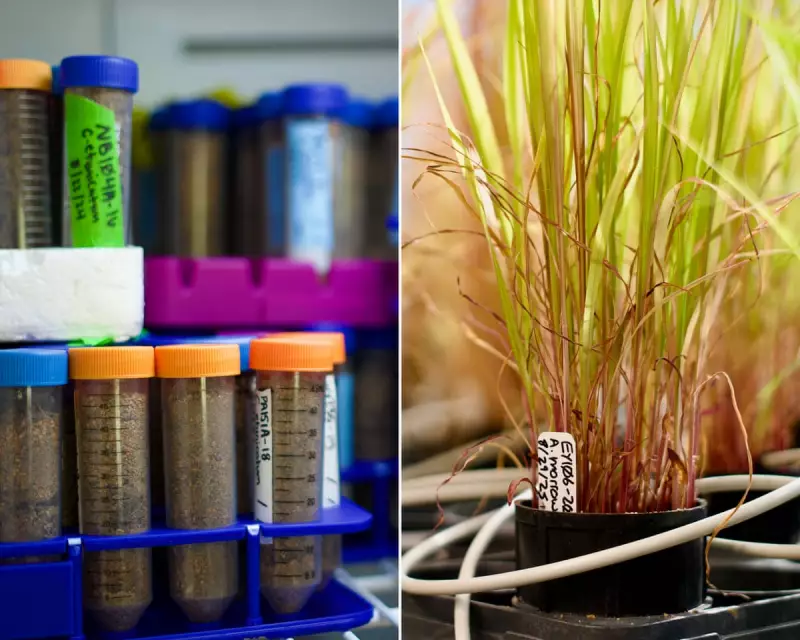
Maintaining this library is no simple task. Unlike seeds in a vault, these fungal spores cannot be stored indefinitely. They require constant, skilled cultivation. At INVAM, researchers like Dr Terra Lubin isolate glistening spores under a microscope before painting them onto the roots of sudan grass seedlings.
These host plants grow for 12 weeks in sterile greenhouses before being stressed to trigger spore production. The resulting millions of spores are then harvested and stored in a cold room. This intricate, year-long cycle must be repeated for every one of the 900-plus strains.
"The isolation and maintenance of AM fungi requires an arcane skillset," Bever emphasised. "There really isn't another lab in the US that has been doing this." The University of Kansas covers infrastructure, but not the critical staff needed for this painstaking work.
Broken Promises and Prairie Miracles
The potential loss of INVAM is especially poignant given the stark contrast between its proven science and the failing commercial biofertilizer market. A 2024 study by Bever and colleague Professor Liz Koziol analysed global research and found the majority of commercial AM fungus products are worthless, with 87% of tested products failing to colonise plant roots. Some even contained pathogens.
Yet, when applied correctly, these fungi have transformative power. Just outside Lawrence, Kansas, a nine-year experiment shows their incredible impact. A degraded hay field, once overrun by invasive grass, has been resurrected into a vibrant tall-grass prairie after being inoculated with native AM fungi from old-growth prairie fragments. Control plots without the fungi remain sparse and struggling.
Modern agriculture, with its fungicides, synthetic fertilisers, and ploughing, has decimated these natural underground networks. "We can barely even find the DNA [of AM fungi] in some of the soils that have been in intensive agricultural production," said fungal ecologist Professor Matthias Rillig.
This makes reintroduction via collections like INVAM essential for restoring ecosystems and building resilient agriculture. Koziol's spin-out company, MycoBloom, already supplies high-quality prairie fungus spores to vineyards, orchards, and organic farms with promising results.
"The benefits of mycorrhizal fungi are real," Bever stated, pointing to their potential in schemes like the US Conservation Reserve Program, which has enrolled over 20 million acres. "The return on that investment would be much greater if there was a national policy to reinoculate with native mycorrhizal fungi."

An Unimaginable Tragedy
Beyond immediate practical applications, INVAM is a cornerstone of basic scientific research. Mysteries about how these fungi function—such as why their cells contain thousands of nuclei—can only be solved with access to living cultures.
"The current administration has shifted funding away from basic science," Bever noted. "While there is always a hope that private donors could fill that void, I don't think there is a real substitute for federal investment."
For experts like Merlin Sheldrake, author of Entangled Life, the stakes could not be higher. "These organisms are vital ecosystem engineers that hold the key to so many problems we face," he said. "To lose this library would be an unimaginable tragedy." The world's largest repository of underground lifelines now hangs by a thread, its future dependent on the next federal budget.