
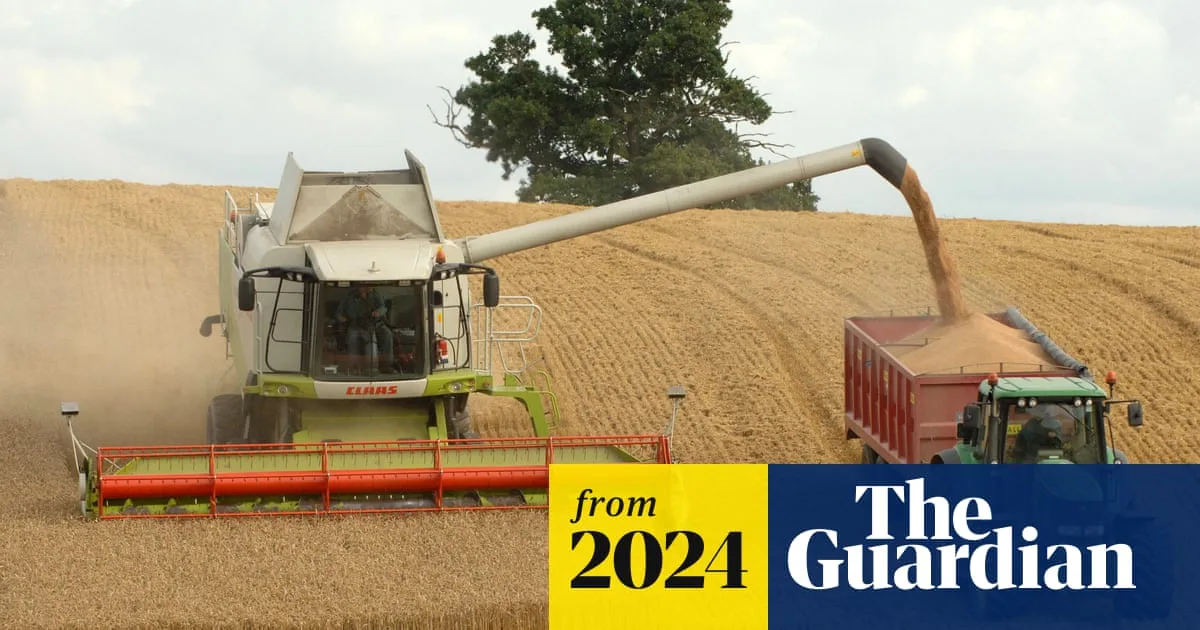
England has experienced its second worst harvest on record, with heavy rain last winter and a cold, damp spring and early summer severely impacting key crops and the burgeoning wine industry, new data shows.
The wheat harvest is estimated to be 10 million tonnes, down 21% on 2023, while winter barley and oilseed rape fell by 26% and 32% respectively, according to the Department for Environment, Food and Rural Affairs. The Energy and Climate Intelligence Unit (ECIU) estimates farmers could lose £600 million on five key crops, which saw production drop 15% overall.
The wine industry has been particularly hard hit, with harvests down between 75% and a third depending on the region. Duncan Schwab, head winemaker at Sandridge Barton in Devon, expects volumes to be 70% lower than last year, describing the situation as “hunt the grape out there.” Plumpton Wine Estate in Sussex is picking only half of last year’s harvest due to disease from constant rain.
Tom Lancaster, land analyst at the ECIU, blamed climate change, saying: “This year’s harvest was a shocker… and these impacts are only going to get worse until we reduce our greenhouse gas emissions.” Lincolnshire farmer Colin Chappell noted that autumn planting is becoming unviable due to flooding, while spring planting carries drought risks.
Lancaster urged the government to use the upcoming budget to support sustainable farming, warning that failure to act will worsen climate impacts on UK food security.




