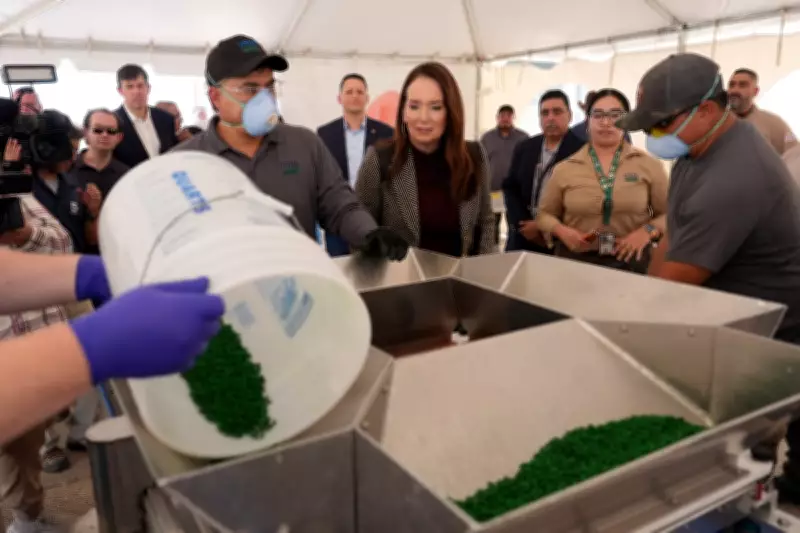
The United States has officially opened its first centre for dispersing sterile screwworm flies from American soil in decades, located in southern Texas. This strategic move forms a critical part of a broader initiative to halt the spread of a flesh-eating parasite spawned by these flies, which poses a severe threat to the nation's cattle industry if it crosses the Mexican border.
Facility Launch and Key Figures
U.S. Agriculture Secretary Brooke Rollins and Texas Governor Greg Abbott jointly unveiled the new facility on Monday, situated on a former Air Force base near Edinburg, Texas. The centre will enable the dispersal of millions of sterile male New World screwworm flies, bred in Mexico or Panama, on both sides of the U.S.-Mexico border.
Expansion and Funding Efforts
The U.S. Department of Agriculture is concurrently constructing a new $750 million factory nearby, dedicated to breeding sterile flies. However, Secretary Rollins noted that construction on this fly factory is not expected to be completed until the end of 2027. In a complementary effort, the USDA is allocating $21 million to convert a fruit fly breeding facility in far southern Mexico into one for breeding screwworm flies, with operations slated to begin this summer.

Biological Control Mechanism
The sterile male flies are designed to mate with wild females, who typically mate only once during their weekslong adult lives. This intervention ensures that eggs laid in open wounds or on mucous membranes do not hatch into the destructive flesh-eating maggots. These maggots are known to infest livestock, wild mammals, household pets, and even humans, causing significant harm.
Strategic Importance and Historical Context
"It's a real testament to the all hands on deck — federal, state, and local — the fact that we do not have the pest in our country yet," Rollins emphasised. In November, the USDA opened a similar facility in Tampico, central Mexico, for dispersing Panama-bred flies, though it is approximately 330 miles (530 kilometres) south of the U.S.-Mexico border.
Governor Abbott highlighted the urgency of the situation, stating, "We knew we needed a short-term, gap-filling solution, which is exactly what we are cutting a ribbon on today." The Mexican cattle industry has already been severely impacted by New World screwworm fly larvae infestations, prompting the U.S. to close its border since July to imports of cattle, bison, and horses.
Past Successes and Current Challenges
A previous program breeding sterile male flies had largely eradicated the pest from American soil by the early 1970s. Exceptions include a limited, short-lived outbreak in the Florida Keys in 2017 and a recent incident where officials blocked a horse being imported from Argentina into Florida until it was fully treated, as noted by Rollins. Following the eradication, the U.S. shut down its fly factories, with sterile males since bred only at a single facility in Panama, which produces about 117 million flies per week.
Future Production and Grant Initiatives
The new fly factory in Texas is designed to significantly boost production, aiming to produce 300 million sterile flies weekly. Additionally, the USDA announced last month that it is offering up to $100 million in grants for projects focused on improving fly breeding, developing new fly traps and lures, and creating treatments for infestations.
This comprehensive approach underscores the U.S. commitment to safeguarding its agricultural sector from invasive pests through innovative biological control methods and international cooperation.