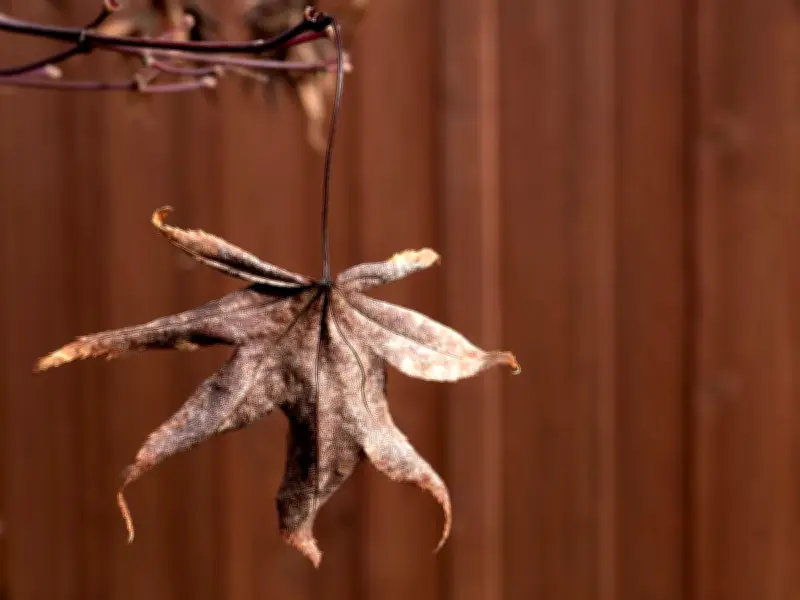
Japanese maples have become an exceptionally popular choice in British gardens owing to their striking foliage, though they do demand slightly more attention to thrive in the UK's climate. In their native Japan, these trees naturally flourish in woodland settings beneath larger trees, where they benefit from shade and the moisture retained by fallen leaves on the forest floor.
The Challenge of Shallow Roots in Summer Heat
The challenge in the UK stems from Japanese maples' shallow root systems, which means they can dry out quickly once temperatures rise, leading to browning foliage. This often manifests as leaves appearing wilted or crispy, and in more serious instances, they may drop prematurely and stop growing altogether for the rest of the season.
Fortunately, Tom Warren, a gardener known online as The Plant Doctor, has shared a simple technique to safeguard Japanese maples during hot spells — and it involves nothing more than pine straw, reports the Express.
Why Mulching Is Essential
Tom said: "One thing that will help your Japanese Maple out tremendously in high heat environments is mulch. When you mulch Japanese maples, I want you to use some sort of organic material. I prefer pine straw, it works great for me, or you can use pine bark nugget."
Mulching is a simple gardening practice that involves laying organic material around a plant, enriching the soil with nutrients while insulating the roots and keeping temperatures lower. It represents one of the most reliable ways to safeguard Japanese maple roots, which typically grow near the surface, by creating a protective shield against heat.
Mulch also minimises water evaporation, stopping the sun from completely parching the soil and helping it retain moisture for extended periods, which in turn reduces the frequency of watering required.
Pine Straw vs. Pine Bark
Pine straw is commonly championed as an ideal mulch for Japanese maples, as its light and airy structure, much like leaves, helps recreate the natural growing conditions found in Japan. However, it is important to note that pine straw decomposes more rapidly and therefore needs replacing more often, owing to its lightweight composition.
Pine bark, in contrast, is far more hard-wearing and will endure considerably longer. Pine straw tends to integrate more seamlessly into garden landscapes, which explains why many gardeners prefer it to pine bark, which can look chunkier — although both options work perfectly well.
How to Properly Mulch a Japanese Maple
Start by clearing the area around the Japanese maple, removing any weeds, loosening the topsoil with a gentle dig, and watering the ground if it looks dry. Then, distribute the mulch in a circular arrangement around the tree, making sure it does not touch the trunk. Where mulch makes contact with foliage or bark, it risks trapping excess moisture and promoting mould development.
The objective is to form a doughnut-shaped ring of mulch surrounding the tree's base. Make certain to water the mulch generously once applied to assist it in settling into the soil, which ought to maintain your Japanese maple in excellent condition for the rest of spring and summer.