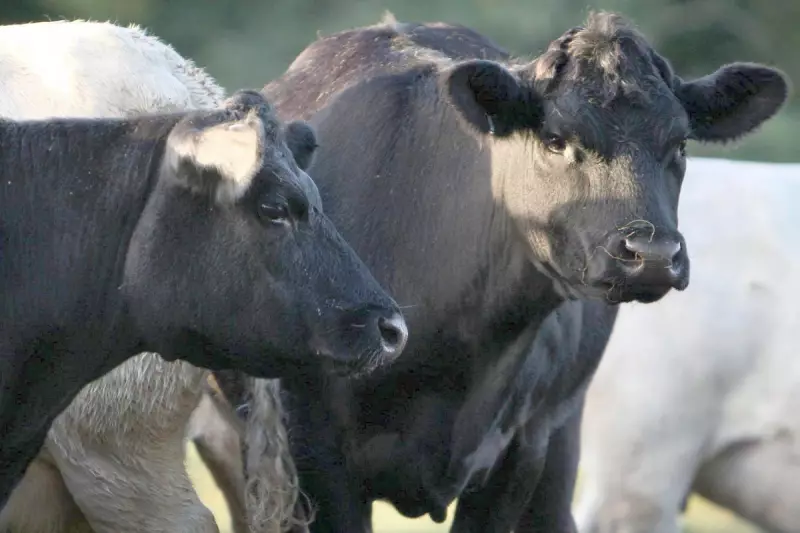
Northern Ireland's agriculture minister has explicitly ruled out a policy of widespread animal culling as the official response to the first confirmed outbreak of bluetongue in the region. The announcement came after two cases of the livestock disease were identified on a farm close to Bangor in County Down.
Outbreak Details and Immediate Response
Appearing before the Stormont Agriculture, Environment and Rural Affairs Committee on Thursday, 4th December 2025, Minister Andrew Muir provided an update on the developing situation. Alongside the two confirmed cases, a further 44 suspected cases are under investigation. A 20-kilometre temporary control zone (TCZ) has been established around the affected farm to restrict animal movements and contain the virus's spread.
Minister Muir was keen to reassure the public, emphasising that bluetongue poses no risk to human health or food safety. The disease, which affects ruminants like cattle, sheep, goats, and deer, is transmitted primarily by biting midges, not between animals or through food products.

"Not the Response": A Shift from Other Disease Strategies
In a significant statement, Minister Muir drew a clear distinction between bluetongue and other animal diseases, such as bovine TB. "Widespread culling is not the response to this," he told MLAs. This position was strongly supported by deputy chief veterinary officer David Kyle, who also addressed the committee.
Mr Kyle confirmed there is currently no veterinary or epidemiological rationale for culling the infected animals. He praised the biosecurity standards of the affected farm, describing it as "extremely well-managed" and "very, very biosecure." The core of the issue, he explained, lies with the midge population, which is impossible to control through livestock culling. "We think we need to avoid alarming herd keepers in the area," Kyle added.
Investigations and Midge Modelling Point to Source
Epidemiological work is ongoing in collaboration with authorities across the UK and Ireland. While the exact origin may be hard to pinpoint due to the role of windborne midges, officials have ruled out the disease being imported via an animal. David Kyle revealed that midge modelling data indicated intermittent high-density plumes in September and October, suggesting an initial incursion that multiplied locally.
Despite colder weather, midge traps have shown ongoing activity, indicating the potential for continued, though likely reduced, transmission risk. Minister Muir warned that if further cases are found beyond the current zone, a Northern Ireland-wide exclusion zone may need to be considered.
Farming Union Calls for Proportionate Measures
The Ulster Farmers' Union (UFU) stated it is in close contact with the Department of Agriculture, Environment and Rural Affairs (Daera). UFU president William Irvine echoed the official stance, calling the outbreak "highly localised" and driven by unusual midge activity. He acknowledged the frustration for farmers within the 20km zone but stressed the union's priority is ensuring any measures remain proportionate, practical, and science-based.
The government's current focus remains on surveillance, farmer vigilance, and strict adherence to movement restrictions, marking a distinct approach to animal disease management for Northern Ireland's agricultural sector.