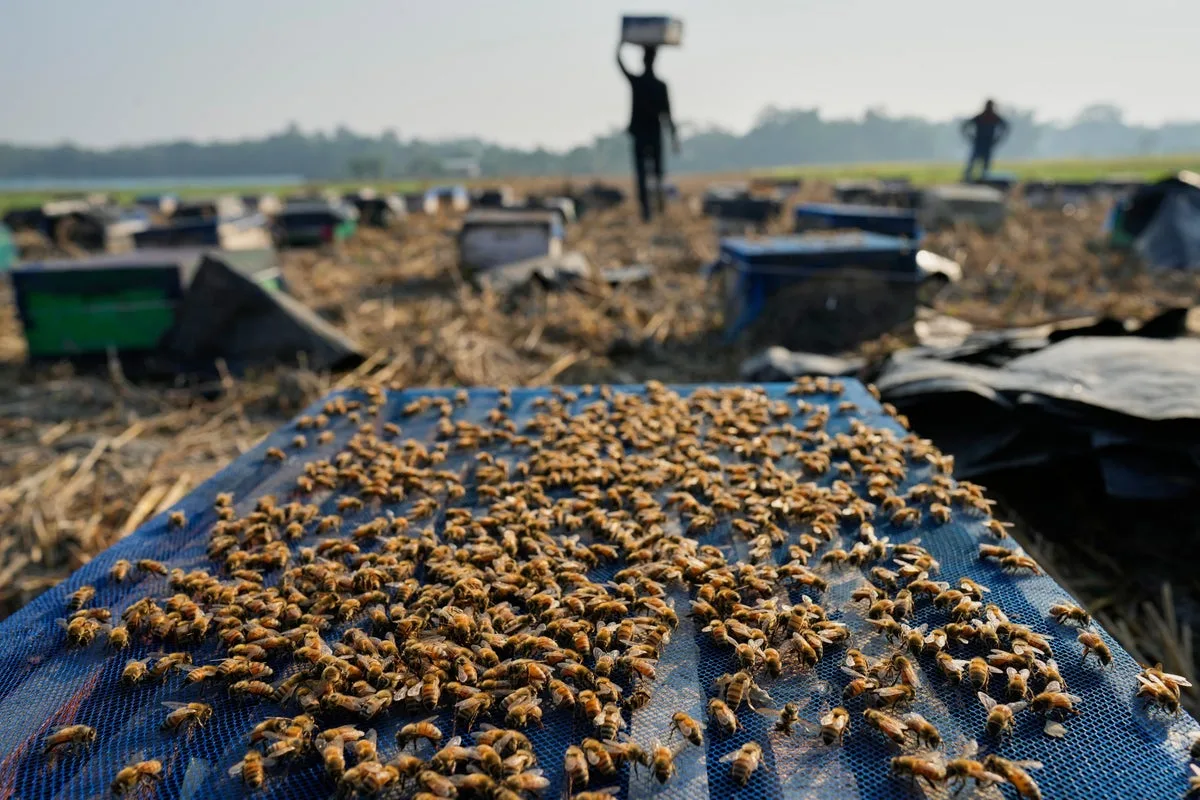
The mustard fields of Assam are a temporary home for migratory beekeepers like Karan Raj, who travels from Bihar to spend the winter months tending to his bee colonies. Rising before dawn, he and his workers check hives, smoke the bees, and collect honeycombs to sell overseas. It is a demanding life, with stings a constant risk and nights spent under tarpaulins, away from family for months at a time. 'I earn an income, that’s why I do business,' Raj said.
This practice, while new to Assam, is growing as local and migratory beekeepers respond to rising demand for honey. But climate change is posing increasing threats. Floods, more intense monsoons, extreme heat, and development are altering the landscapes bees depend on. Ranjeet Kumar, another beekeeper, noted, 'If the weather is fine, the production will be fine. If the weather spoils, then there is no production.'
Assam, located east of Bangladesh and south of the Himalayas, has already experienced climate-related disasters, including flooding and landslides in 2024 that killed over 100 people. Mukul Kumar Deka, who studies honeybees at Assam Agricultural University, explained that changing rainfall patterns reduce nectar availability, while extreme heat or rain keeps bees in their hives. Research shows Assam now has over 20 more heatwave days than a decade ago, with average temperatures rising by about 2°C.
Most migratory beekeepers use Western honeybees, unlike traditional growers who keep local species. Local bees are under greater threat from extreme weather and development, such as highways. 'The bees that are in the trees, the ones that are in the forest, those bees have reduced drastically,' Raj said. Western bees survive because they are fed sugar and cared for, but their introduction may create competition for indigenous species.
Despite challenges, beekeeping offers resilience for small farmers, especially those below the poverty line. Sujana Krishnamoorthy of the Under the Mango Tree Society trains farmers to manage climate events and notes that beekeeping provides extra income and improves crop yields through pollination. Deka remains optimistic: 'There may be ups and downs, but ultimately beekeeping will be sustained here,' aided by government subsidies for equipment.