In the sun-baked orchards of northern Jordan, a centuries-old tradition is facing an existential threat. Farmers are navigating a devastating harvest season after extreme heat and prolonged drought slashed the nation's olive yield by a staggering 70%.
A Parched Landscape and a Bleak Harvest
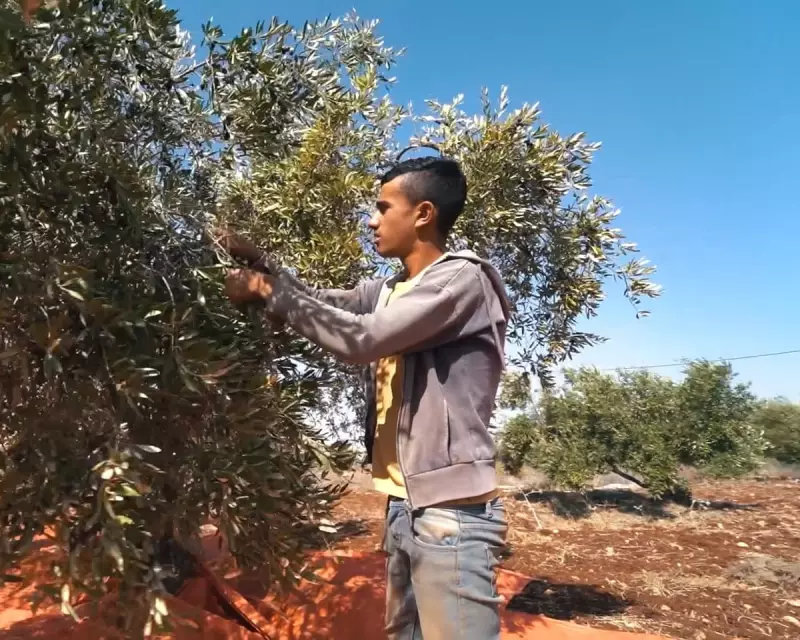
Abu Khaled al-Zoubi, 67, walks through his family orchard in Irbid, his feet disturbing the dust on land parched by months of relentless sun. He gestures towards ancient, gnarled trees whose branches stand nearly bare, a stark contrast to the heavy, fruit-laden boughs of a normal season. "I've never experienced anything like this before," he says, estimating more than half his crop was lost before picking could even begin.
His story echoes across Jordan's olive-growing heartlands. The country is enduring its weakest olive oil season in forty years. Typically beginning in late September, the 2025 harvest was delayed until early November due to the hostile conditions. According to the National Agricultural Research Center, this crisis imperils a sector that supports 80,000 families and contributes over $1.4 billion annually to the national economy.

Climate Records Shatter, Yields Collapse
Official data reveals the severity of the climatic assault. The Jordanian meteorological department recorded a historic 13-day extreme heatwave from 12-24 August, the longest in the kingdom's history. This was compounded by a severely deficient rainy season, with northern and central regions receiving only about 54% of their average precipitation.
Mahmoud al-Auran, director of the Jordanian Farmers Union, explains the direct impact: "Temperatures were 10-15C above average... Olive trees here depend on rain to grow." The heat and drought resulted in smaller fruits and inferior oil quality, with farmers unable to compensate despite extra watering and fertilisers.
The production figures are dire. In the worst-hit northern regions, output has fallen to just 10% of the typical 200,000-tonne harvest. This collapse has sent prices soaring, with a 20-litre container of olive oil now costing $190, up from $140.
Cultural Fabric and Livelihoods Unravel
The ramifications extend far beyond economics. Olive cultivation is the backbone of rural life for generations, with Jordan historically achieving 98% self-sufficiency in olive oil. This independence is now in jeopardy.
Amal al-Ghawanmeh of the al-Sendyan Land Association for Environmental Development states, "Olive oil is woven into the fabric of Jordanian life." As production plummets, households face disrupted traditions and costly imports. The social impact is profound: women, who form the core harvest workforce, face drastically reduced employment, and small groves that normally provide a $5,000 annual income are facing ruinous losses.
Faced with shortage, the Jordanian government has allowed visitors from the West Bank to bring in limited olive oil and has threatened to open imports if prices keep rising.
A Call for Action and an Uncertain Future
Jordanian farmers are urgently calling for support to adapt, including drought-resistant olive varieties, improved irrigation, and climate-smart agricultural practices. The situation presents a stark warning of how traditional cropping systems are vulnerable to climatic extremes.
For farmers like Abu Khaled al-Zoubi, the fear is deeply personal and generational. "I fear the day will come when I or my grandchildren will be forced to abandon olive farming," he confesses, surveying his struggling trees. "Without real support, these trees may not survive … and neither will our way of life." The future of Jordan's ancient olive heritage now hinges on the response to this escalating climate crisis.