Greens Push for Council Powers Over Berry Farm Expansion
The Greens in New South Wales are taking legislative action to address what they describe as a significant exemption for the berry industry from standard planning regulations. Cate Faehrmann, a Greens member of the NSW Legislative Council, will introduce a private member's bill next week aimed at granting local councils enhanced authority to oversee blueberry and other berry farms. This move comes as the industry experiences rapid growth along the mid-north coast, sparking tensions with residents and environmental advocates.
Environmental and Community Impacts Under Scrutiny
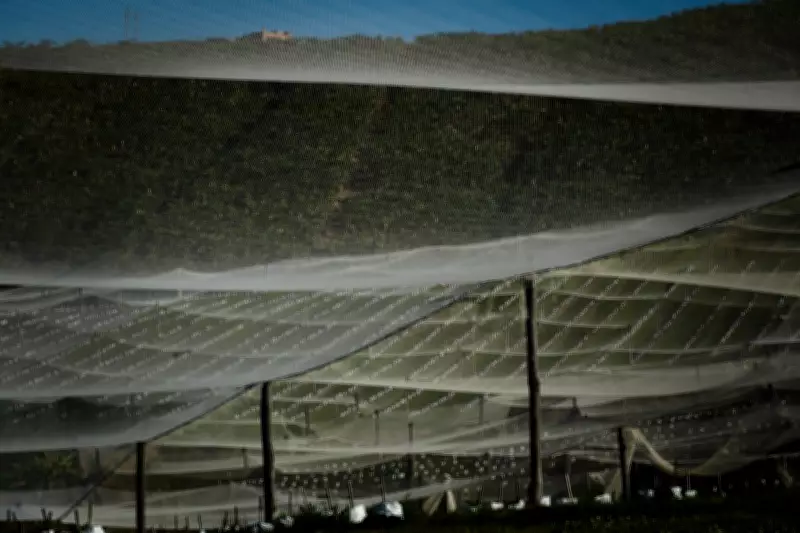
Faehrmann highlights the profound environmental and social consequences of intensive berry farming, which she argues operates under a "deliberate massive carve-out" from planning laws. She points out the irony that while residents must seek approval for minor structures like carports, large-scale berry farms can establish hectares of infrastructure, including poles and netting, without notifying neighbours or obtaining council consent. This discrepancy, she claims, stems from historical National party influence on agricultural policy.
The proposed bill mandates several key measures to mitigate these issues. It calls for established buffer zones between intensive horticulture operations and residential areas or waterways. Additionally, it seeks stricter controls on chemical spraying, agricultural runoff, and irrigation practices, alongside increased monitoring of produce for pesticide residues. Faehrmann emphasises that these steps are crucial to protect local ecosystems and community wellbeing.

Legal and Regulatory Challenges in Local Governance
Recent legal proceedings have underscored the complexities of regulating berry farms under current planning frameworks. The Coffs Harbour council recently faced a setback in the NSW Land and Environment Court, where it contested two raspberry farmers over polytunnels constructed without development approval. The court ruled in favour of the farmers, determining that the structures, which are disassemblable, do not qualify as farm buildings requiring consent under the local environment plan.
This case illustrates the broader regulatory gap, as the court noted that if councils wish to impose such requirements, they must explicitly classify intensive plant agriculture as subject to development consent. In response, the Nambucca Valley council has attempted to amend its local environment plan to include development approval for blueberry farms, but the NSW planning department rejected the initial proposal, citing insufficient evidence.
Community Voices and Environmental Worries
Local residents express deep concerns over the expansion of berry farming, particularly regarding environmental degradation and property devaluation. Zahn Pithers, a photographer from the region, describes the arrival of blueberry farms as "devastating," noting that it drives away long-standing farming families and lowers land values due to proximity to industrial-scale operations. Specific worries include pesticide spray drift and runoff affecting waterways like Warrell Creek, which borders the South Beach National Park and is used for fishing and crabbing.
While the Environment Protection Authority has conducted some monitoring, detecting low levels of pesticides in local creeks, ongoing investigations are pending. The community fears that without stricter regulations, these environmental hazards could escalate, compromising water quality and ecosystem health.
Government Stance and Industry Perspectives
State Planning Minister Paul Scully acknowledges that councils have the option to modify their local environment plans to require development approvals for horticulture. However, he cautions against blanket mandates, arguing that overly restrictive regulations could hinder modern farming practices, deter investment, and create uncertainty for landowners. The current standard local environment plan permits intensive agriculture in primary production zones without approval, though councils can regulate rural landscape zones differently.

Rachel Mackenzie, chief executive of Berries Australia, supports the status quo, noting that the planning department's rejection of development application requirements validates the industry's position. She emphasises the need for balanced policies that support agricultural innovation while addressing community concerns.
Broader Context and Future Directions
Beyond planning issues, the NSW Labor government is considering an inquiry into alleged worker exploitation in the berry industry, particularly involving seasonal labour under schemes like the Pacific Australia Labour Mobility programme. Reports of underpayment and poor living conditions highlight additional social challenges tied to the sector's growth.
As the Greens' bill moves forward, it aims to foster a more sustainable and regulated approach to berry farming, balancing economic development with environmental stewardship and community interests. The outcome will likely influence not only local planning practices but also broader debates over agricultural policy and rural governance in New South Wales.