
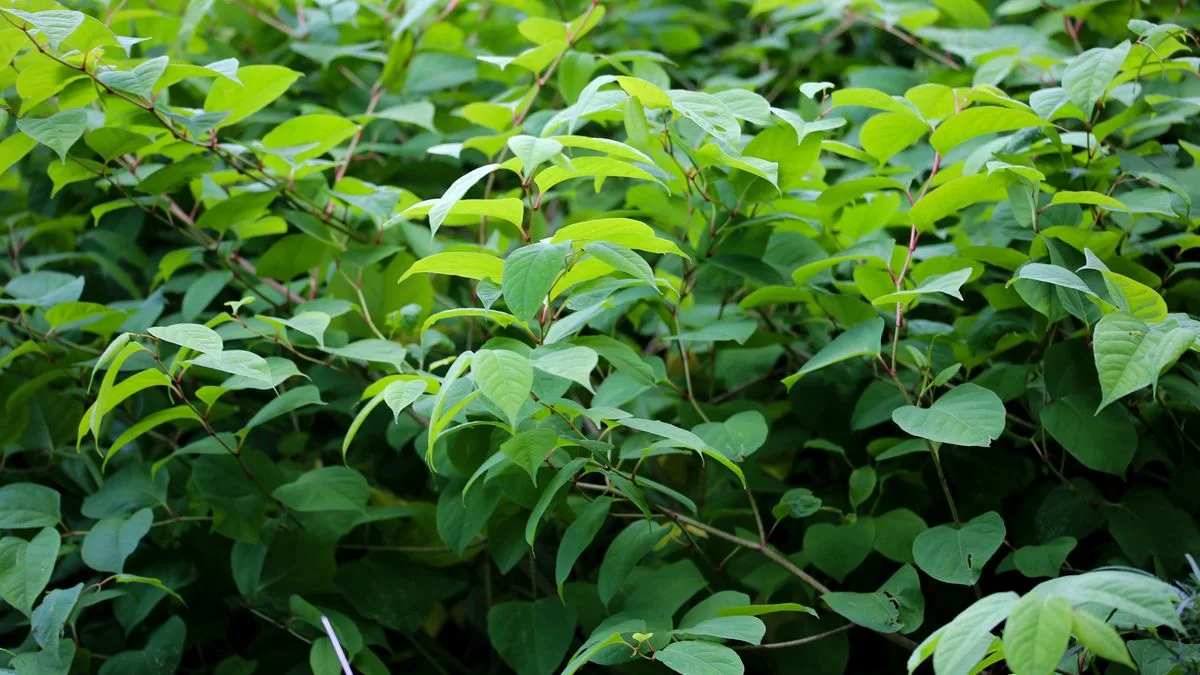
Gardeners have been issued a warning about Japanese knotweed, an invasive plant that can cause significant environmental damage and reduce property values by up to 15%, according to studies. The plant, first introduced to the UK in the 19th century as a garden plant, is now classified as an invasive non-native species by the Royal Horticultural Society (RHS). Its aggressive root system outcompetes native flora, damages hard surfaces, and can erode riverbanks.
The Non-Native Species Secretariat (NNSS) provides guidance on identifying Japanese knotweed, which features spade-shaped green leaves growing in a zigzag pattern on bamboo-like stems. The plant can be identified year-round by its leaves, stems, persistent dead canes, and distinctive underground rhizomes. It is an offence to cause Japanese knotweed to grow in the wild, making early detection crucial.
The presence of Japanese knotweed can severely impact property sales. Propertymark warns that it is 'virtually impossible to secure finance on land or property with Japanese knotweed on or adjacent to it,' often derailing deals until the problem is resolved. Environet adds that sellers have a duty to declare the plant, and failure to prevent its spread to neighbouring properties can lead to civil nuisance claims.
While homeowners are not legally required to remove Japanese knotweed unless it causes a nuisance, they must prevent it from spreading off their property. The Environment Agency advises against DIY treatment and recommends hiring specialists. Contaminated soil or plant material may be classified as controlled waste, and strict disposal rules apply.




