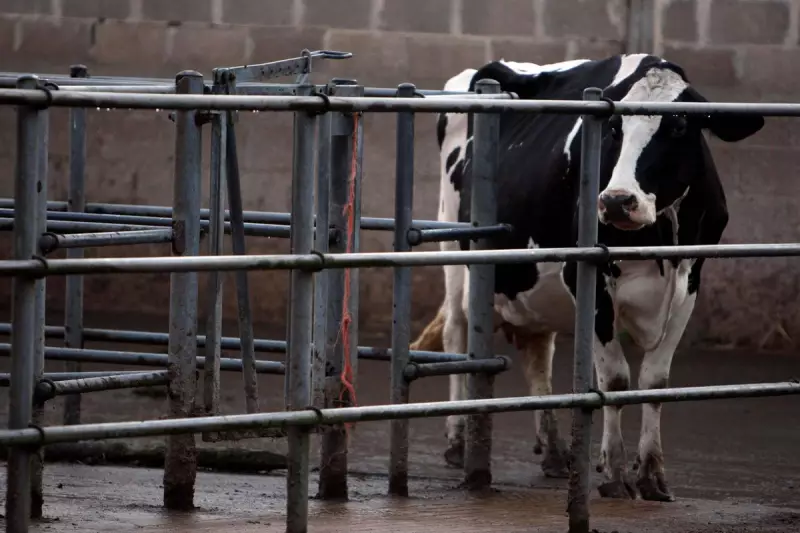
Northern Ireland's agricultural authorities have confirmed the detection of further cases of bluetongue within a single herd of cattle in County Down. The development comes after initial cases were identified on a farm close to Bangor earlier in the week.
Outbreak Details and Official Response
The Department of Agriculture, Environment and Rural Affairs (Daera) announced the confirmation on Friday, 5th December 2025. Laboratory analysis at the National Reference Laboratory has identified the specific strain as BTV-3 Bluetongue virus.
A 20-kilometre Temporary Control Zone (TCZ) remains enforced around the affected holding. Within this zone, movement restrictions for livestock are strictly in place, and Daera has confirmed that testing of animals on nearby farms is ongoing.

No Threat to Public, No Cull Planned
Senior officials have moved to reassure the public and the farming community. Appearing before the Stormont Agriculture Committee, Agriculture Minister Andrew Muir emphasised that bluetongue poses no risk to human health or food safety.
David Kyle, the deputy chief veterinary officer, provided further clarity by stating that there is currently no intention to cull affected animals. The disease, which impacts ruminants like cattle, sheep, goats, and deer, is primarily spread by midges and is not transmissible to humans.
Call for Vigilance and Future Considerations
Daera has issued a direct appeal to farmers outside the immediate control zone. They are urged to monitor their livestock closely for clinical signs of bluetongue, which can include fever, swelling, and lesions. Any concerns must be reported to a private veterinary surgeon, the local Divisional Veterinary Office, or the DAERA helpline on 0300 200 7840.
Looking ahead, Minister Muir indicated on Thursday that if the outbreak continues to spread, authorities may need to consider implementing a wider exclusion zone, potentially encompassing all of Northern Ireland. The situation continues to be monitored closely by officials.