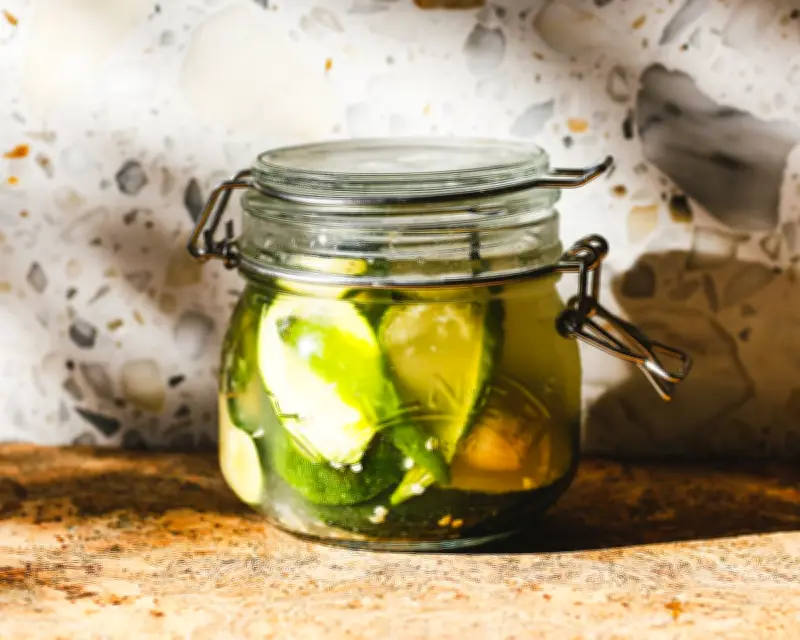
Tom Hunt shares a recipe for lacto-fermented spicy courgette pickles, inspired by Mountain Feed, a garden nursery in Ben Lomond, California. This method transforms surplus courgettes into a fizzy, sour condiment that complements burgers, cheddar sandwiches, and other savoury dishes.
Why Lacto-Fermentation?
Lacto-fermentation is an age-old technique that preserves vegetables while enhancing flavour and adding probiotics. Unlike sweet chutneys, these pickles are tangy and spicy, making them a versatile addition to meals. The recipe uses a 2% brine to encourage beneficial bacteria while preventing spoilage.
Ingredients and Preparation
- Courgettes (sliced into 5-10mm rounds)
- Sea salt (2% of total weight of courgettes and water)
- Optional: herbs (dill, thyme, fennel tops), spices (coriander, caraway, fennel seeds), chillies, garlic clove
- 1 bay leaf (or oak or blackberry leaf) for tannins to keep courgettes firm
- Fermentation weight or folded cabbage leaf
To sterilise a jar, wash in hot water, place in a cold oven, heat to 150C (130C fan)/300F/gas 2, then turn off and leave inside until filling. Sterilise the lid by boiling in water.

Step-by-Step Process
Place a clean jar on scales, zero it, and fill with courgette slices. Add water to the neck, leaving 1-2cm air gap. Note total weight, divide by 100, multiply by 2 to get salt amount. Add salt and optional extras, then a tannin-rich leaf. Press vegetables under brine with a weight or cabbage leaf. Cover loosely and ferment at room temperature, out of sunlight, for 2-3 days (1 day if active, 2 in summer, 3-4 in winter) until effervescent. Refrigerate immediately to stop fermentation and keep firm; consume within two weeks.
Tips for Success
Courgettes tend to soften, so tannins from bay, oak, or blackberry leaves help maintain crunch. Mountain Feed also adds a teaspoon of green tea. If courgettes do go soft, they can be used as a probiotic stirred into dressings, soups, or stews. To prevent mould, ensure vegetables are fully submerged under brine.