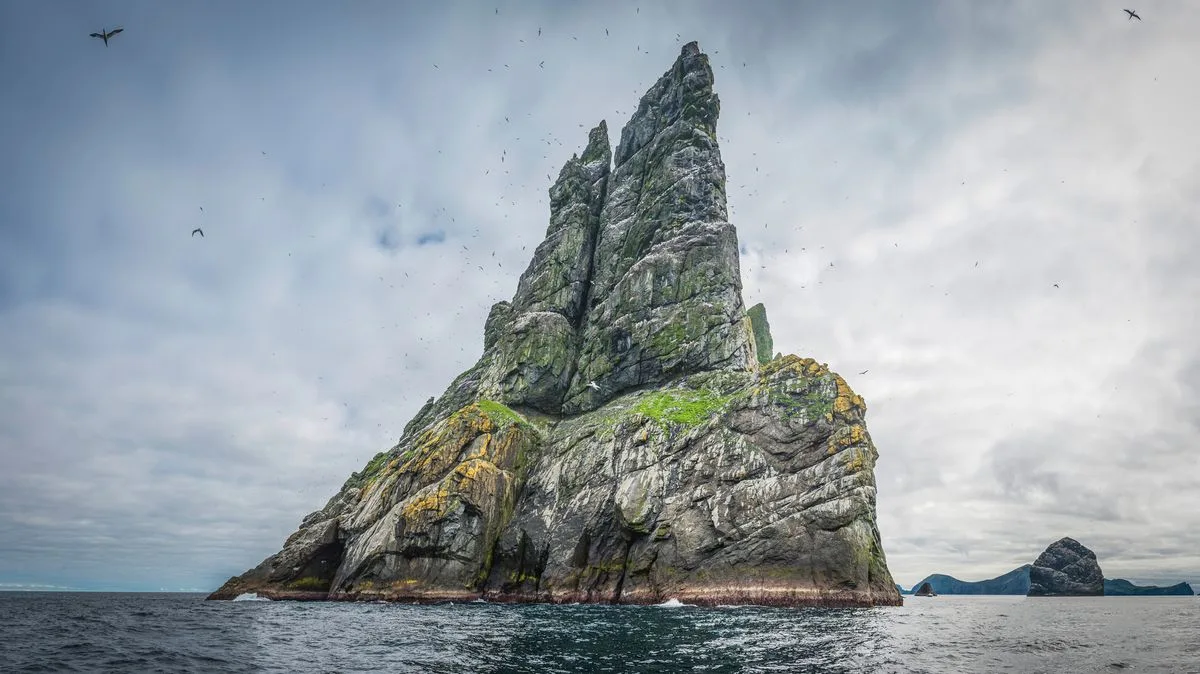
The remote Scottish island of St Kilda remains eerily intact more than nine decades after its last inhabitants fled the harsh Atlantic outcrop. In 1930, the final 36 residents—13 men, 10 women, eight girls and five boys—were evacuated, leaving behind a village that has since stood empty. For thousands of years, archaeologists believe, a population never exceeding 180 survived on the island, enduring ferocious winds, dark winters and freezing sea mist.
Today, reaching St Kilda is a daunting challenge. The island lies 40 miles from the nearest Hebridean island, and visitors must charter a boat costing several hundred pounds per person. A single campsite on Hirta, the main island, offers the only accommodation, but there is no shop, no mobile signal and no internet. The sole permanent residents are a remarkable flock of Soay sheep, left to roam wild since the 1930s, occasionally studied by scientists marveling at their hardiness.
Life for the St Kildans was unique and isolated. With gales blowing for 75 days a year and waves reaching 16 metres, few outsiders made the crossing. Locals avoided fishing in the rough seas, instead eating sheep, cheese, crops, and seabirds such as gannets, fulmars and puffins, which they caught by scaling the island's towering sea cliffs, the tallest in Britain. Oil from the birds fuelled their lamps, and a freshwater spring provided water.
The islanders also held a daily 'parliament' each morning, where men gathered to pray and discuss the day's plans without any designated leader. For communication with the mainland, they would carve wooden boats, attach sheepskin bladders to keep them afloat, and send messages in bottles. On north-westerly winds, two-thirds of these unmanned boats reached Norway or the Western Isles.
Despite their isolation, the St Kildans encountered outsiders. When British Red Coats arrived chasing rumours that Bonnie Prince Charlie had fled there after the Battle of Culloden, they found the village deserted, locals having hidden in caves fearing pirates. The soldiers were astonished to discover the islanders had no knowledge of the Jacobite uprising—or even of King George II. The first steamship anchored in Village Bay in 1834, bringing 'excitement and astonishment', and by the 1870s, steam ships regularly included St Kilda on their itineraries, with passengers enjoying ornithological displays and the islanders' lives increasingly observed. The village, once home to six of its 16 cottages in use at the end, now crumbles as a haunting reminder of a lost way of life.