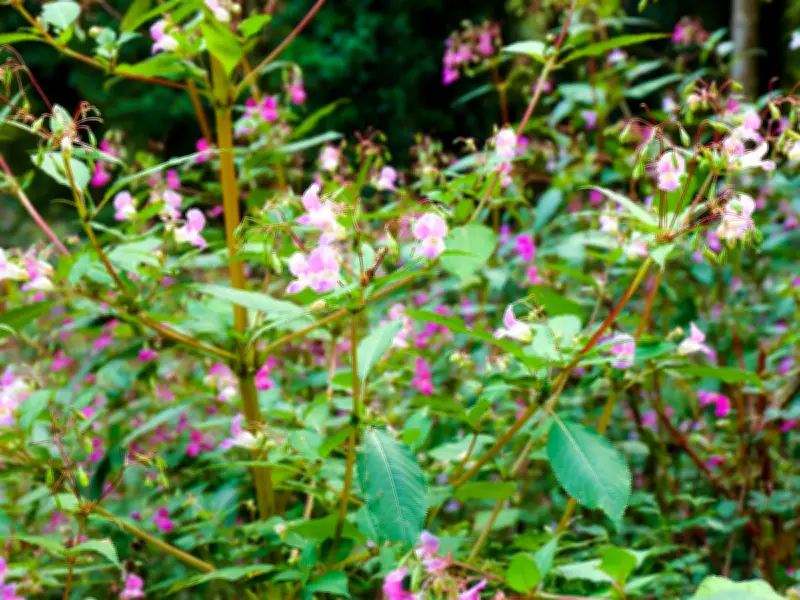
A warning has been issued to households in Bolton after the borough was named among the 'UK's worst' areas for invasive plants. Property specialists SAM Conveyancing analyzed records of 20 common invasive plants to identify where homeowners are most at risk, ranking local authorities by the number of recorded invasive plants per km².
Bolton Tops Greater Manchester as Invasive Plant Hotspot
The research revealed that Bolton is Greater Manchester's invasive plant capital and the second most affected area in England, Wales, and Scotland, ranking second out of 349 local authorities. Bolton has 51.4 invasive plants per km², second only to Chesterfield nationally. Himalayan balsam is the greatest threat, with 3,994 records, followed by Japanese knotweed (1,805) and giant hogweed (981), totaling 7,196 occurrences in the borough.
Other Greater Manchester Boroughs Affected
Bury ranks 26th nationally with 18.1 occurrences per km², where Himalayan balsam again leads with 876 records. Manchester ranks third among the 10 boroughs and 43rd nationally with 14.3 occurrences per km². Japanese knotweed is especially prominent in Manchester with 436 records, the second-highest count in Greater Manchester after Bolton, behind only Himalayan balsam (531). Stockport (13.4 per km², 49th nationally) and Salford (10.4 per km², 69th) complete the top five, with Himalayan balsam as the most recorded plant in both. Wigan, Tameside, Trafford, and Rochdale follow, while Oldham is the least affected borough with 3.4 occurrences per km² and a national rank of 185th.
Impact on Property Values and Mortgages
Across Greater Manchester, the 10 boroughs record 17,894 invasive plant sightings, making it the fifth most densely affected sub-regional area in the UK. Himalayan balsam is the most commonly recorded species with 8,831 sightings, ahead of Japanese knotweed on 4,071. Japanese knotweed is the species most likely to impact a home's value and mortgage. A property affected by Japanese knotweed can be devalued by 5 to 20 percent and can be difficult to mortgage without a professional management plan.
Andrew Boast, founder of SAM Conveyancing, commented: "Before you let the stress take over, it's important to look at the actual data. While an invasive plant isn't necessarily a deal-breaker, it is a game-changer. Whether you are worried about your mortgage being declined or the sheer cost of digging it out, the first step is knowing exactly what you're up against."
Advice for Homebuyers and Surveyors
Boast added: "A hotspot doesn't mean that invasive plant is present in every property in the area, but you'll want to keep your eyes peeled during the viewing. A known invasive plant occurrence near your home is often just a prompt for better due diligence. Your surveyor also needs a heads-up. If you know you're in a high-risk area, you can ensure your RICS surveyor pays extra attention to the boundaries."
He continued: "In the world of conveyancing, this means lenders will be more cautious. Most banks won't lend on a property with knotweed, for example, unless there is a professional management plan and a 10-year insurance-backed guarantee in place. The mortgage valuer will either state the valuation is nil until a specialist surveyor has provided a report with a treatment plan, or reduce the valuation or insist on a retention until treatment has begun. It may be tempting to avoid telling the lender if your survey report flags the issue. However, it is important to note that if you are aware of the presence of certain invasive plants like Japanese knotweed and fail to inform your mortgage lender, then you are in breach of your mortgage terms and your home may be repossessed."