Beaulieu Estate Accused of 'Trojan Horse' Planning Scheme in New Forest
One of Britain's most prestigious estates has come under fierce criticism from local villagers for attempting to push through what they describe as a 'Trojan Horse' planning project within a protected area of the New Forest National Park. Residents of Beaulieu, the Hampshire village renowned for housing the National Motor Museum, have launched serious allegations against the Beaulieu Estate, accusing it of engaging in 'developmental creep' to construct a new car park for private events adjacent to ancient woodland.
The Controversial Planning Application
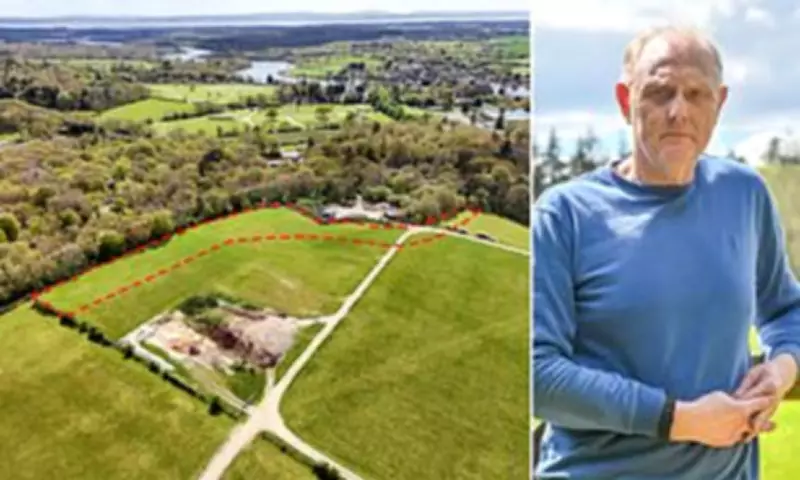
The proposed development involves converting agricultural grassland, currently used by the Countryside Education Trust (CET) for parking approximately ten vehicles, into a gravel-surfaced car park with capacity for 46 spaces. This site sits mere meters away from the estate's existing 1,000-space car park, leading locals to question the genuine necessity of the additional parking. The application also includes plans for a new gravel track connecting to the proposed facility.
Stephen Rigby, a 62-year-old business consultant and Beaulieu resident, has emerged as a vocal opponent. He argues that the application represents a strategic move by the estate to gradually change the use of Hides Field, the agricultural land in question, from its historical agricultural purpose to commercial activities. "What they're doing is a Trojan horse," Rigby stated. "They're using the charity—it's a very good charity—they say it needs the space for parking. But we can't understand why the charity is going from ten parking spaces to 46 spaces."

Environmental and Community Concerns
Residents have raised multiple environmental alarms regarding the proposed development. The site's proximity to a Site of Special Scientific Interest (SSSI) has sparked fears about potential oil and chemical runoff from parked vehicles contaminating nearby watercourses. Andrew Dykes, a local resident, highlighted in his formal objection that the car park lies within a sensitive water catchment area currently free from contamination, warning that "oil and other residues from parked cars will inevitably seep into the water table."
Additional concerns include increased light pollution, traffic congestion, and noise disruption that would compromise the area's cherished tranquility. Christina Dykes pointed to statements from estate employees suggesting the car park might host "burger vans" for events like the Beaulieu Wilderness Day in May 2026, which could attract up to 500 attendees. "Such use is dramatically different in degree to simple parking," she noted, arguing it represents a significant shift toward commercialisation.
Historical Context and Estate Background
The 9,000-acre Beaulieu Estate has been under the ownership of the Montagu family for over four centuries, currently managed by Lord Douglas-Scott-Montagu, the fourth Baron Montagu of Beaulieu. The estate includes the Countryside Education Trust's treehouse study centre, opened by Alan Titchmarsh in 2008, which hosts educational programs and a limited number of weddings to fund its operations.
The planning application justifies the car park by citing accessibility issues for visitors who cannot easily walk from the main museum car parks, particularly families with young children, elderly individuals, and those with mobility challenges. However, opponents counter that the existing 1,000-space facility provides ample parking nearby.
Pattern of 'Developmental Creep'
Residents allege this application follows a established pattern of incremental development on the estate. Stephen Rigby referenced previous projects including a 4x4 track, a ropes centre, and "multiple attempted commercialisation events" as evidence of what he termed a "proven record of developmental creep in the area."
Paula Blackeby echoed these concerns, suggesting the estate often seeks planning permission for small areas before later expanding their use based on the initial precedent. "The estate's application is symptomatic of their continuous developmental spread into agricultural land," she stated.

Decision Pending and Broader Implications
The New Forest National Park Authority is scheduled to make a decision on the planning application on Tuesday, April 21. The outcome will have significant implications not only for Hides Field but potentially for how protected areas balance conservation with limited development.
Beaulieu itself holds the distinction of being recently named the most expensive village in England, Scotland, and Wales by Savills, with average property prices exceeding £2 million. This affluent context adds another layer to the conflict between preserving rural character and accommodating estate activities.
As the planning meeting approaches, residents remain hopeful that authorities will reject what they view as a thinly veiled attempt at commercial expansion in a protected national park landscape.