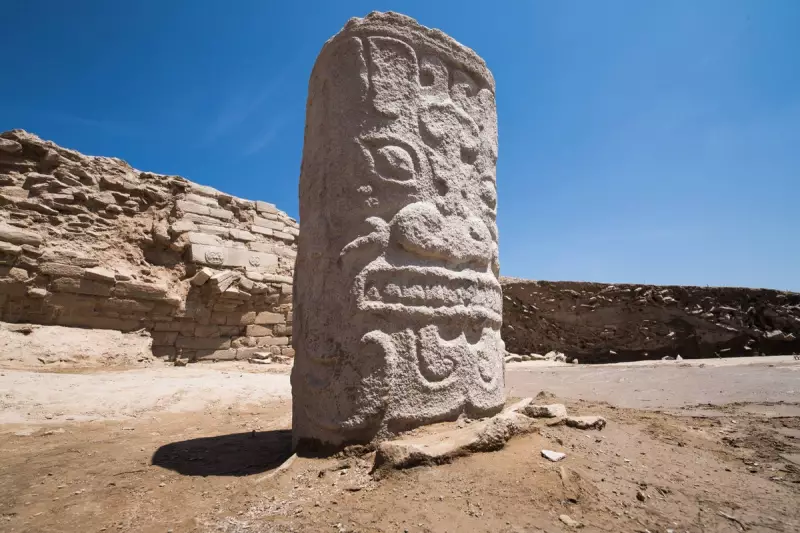
Archaeologists have uncovered startling evidence of a highly gendered society in Stone Age China, where men and women were selected as sacrificial victims for starkly different ritual purposes. The discovery, centred on the vast Shimao settlement, pushes back the timeline for such practices in the region by thousands of years.
A Society Built on Hierarchy and Ritual
The research, led by scientists from the Chinese Academy of Sciences, focused on a large, late Stone Age settlement in northwestern China's Shaanxi Province. This stone-walled city, covering about 4 square kilometres, showed clear signs of a hierarchical social structure. The study, published in the journal Nature, analysed DNA from 169 human remains found across seven sites in Shaanxi and neighbouring Shanxi province.
Findings indicate the society at Shimao, which thrived between 3,800 and 4,300 years ago, operated with strong gendered norms and a patrilineal descent structure. Crucially, the archaeological evidence points to a deeply ingrained gender bias in the community's most solemn rites: human sacrifice.

Two Distinct Forms of Sacrificial Practice
The investigation revealed two clear, gender-specific types of sacrificial ritual. Female victims were predominantly found as attendants in elite burials, ritually killed and entombed alongside high-status individuals. This practice was not thought to emerge in China until the early Iron Age, nearly two millennia later.
Conversely, the study provides the first evidence of male mass burials linked to human sacrifice in the region. These male sacrifices were concentrated at the settlement's East Gate, suggesting they served a public, possibly communal, ritual function rather than a private funerary one.
Overturning Previous Assumptions
This genetic evidence has challenged long-held theories about sacrifice at Shimao. Prior assumptions, based on earlier archaeological work, suggested most sacrificial victims were female. However, DNA analysis from the East Gate site showed that 9 out of 10 burials there were male, revealing a clear and previously unrecognised sex-specific pattern.
The separation was physical as well as symbolic: male sacrifices were linked to the city's gate, while female remains were almost exclusively associated with elite cemeteries. This indicates a highly structured system where the victim's gender was tied to a specific ritual purpose and location.
Further genetic work showed the Shimao people were mainly descended from local groups inhabiting the area roughly 1,000 years earlier. Researchers also found close genetic links to southern rice-farming communities, highlighting extensive interactions across prehistoric China.
Scientists hope continued study in the region will shed more light on the complex social and political origins of early East Asian states, built on foundations of craft production, large fortifications, and deeply ritualised violence.