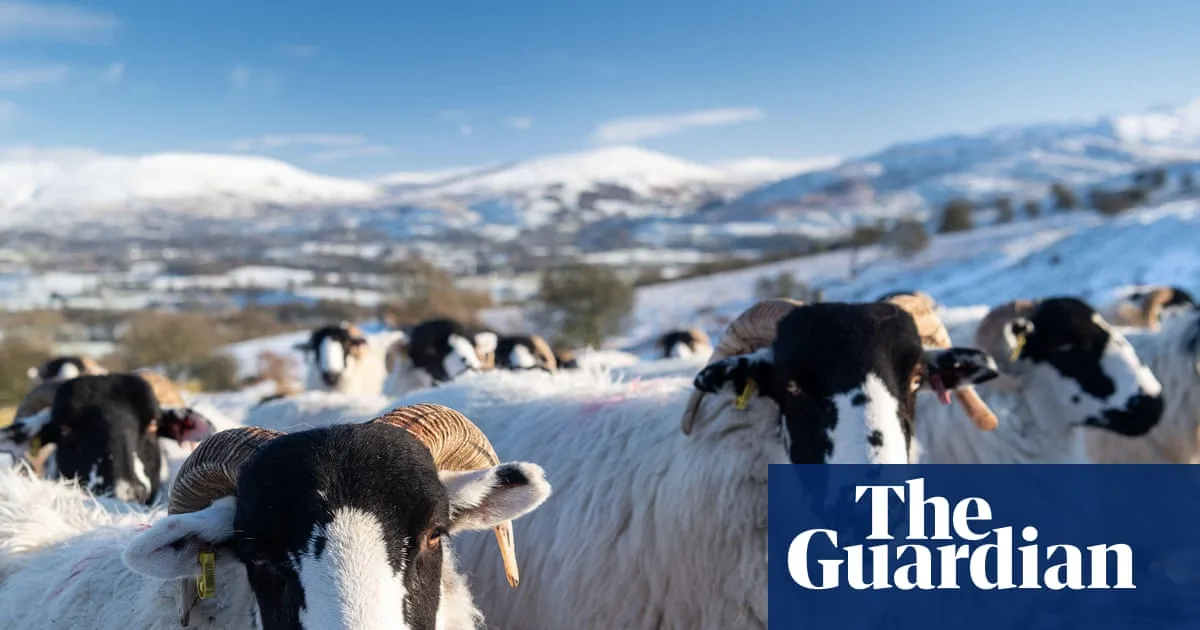
On a crisp January day in 1951, a skier's descent through the larches near a Westmorland farm offered a glimpse of remarkable rural resilience. Peering over a weathered dry-stone wall, the observer witnessed a scene of quiet adaptation as a flock of Rough Fell ewes endured a heavy snowfall.
A Landscape Transformed by Snow
The date was 8 January 1951, and the location was the moorland near Sedbergh in the Yorkshire Dales. Against the vast white expanse, a dozen black-faced Rough Fell ewes – the traditional mountain sheep of the area – stood motionless, resembling dark boulders. Their stillness was deceptive, born not of hardship but of ingenious strategy.
Each ewe was contentedly grazing on a small patch of grass at the bottom of a self-made refuge. They had dug individual holes into the snow for shelter, creating a network of personal caves across the field.
Hoof-Prints and Snow Caves
The evidence of their activity was etched across the landscape. The snow was crisscrossed with perfectly straight lines of little hoof-prints, described as resembling railway lines at a busy junction. Each line led directly to one of these tell-tale caves in the snow.
This behaviour was their key to surviving the harsh conditions. The diary noted that if the snowfall intensified that evening, these snow holes would become their overnight shelters. Even if the entrances were "overblown" with fresh drifts, the interior would remain surprisingly warm and cosy for the hardy sheep.
The farmer, John, could be reassured that his expectant mothers, or lambing ewes, would take no harm from the severe weather, protected by their own instinctive engineering.
The Legacy of a First Diary Entry
This evocative account was not written by just any observer. It was the very first Guardian Country Diary entry penned by Harry Griffin. From this initial contribution on that snowy January day, Griffin embarked on a monumental writing journey.
He went on to write his column from the Lake District every other Monday for the next 53 years, with his final diary published on 12 July 2004. This simple observation of sheep in a snowstorm marked the beginning of a beloved half-century chronicle of rural life, nature, and the changing seasons in one of Britain's most iconic landscapes.