
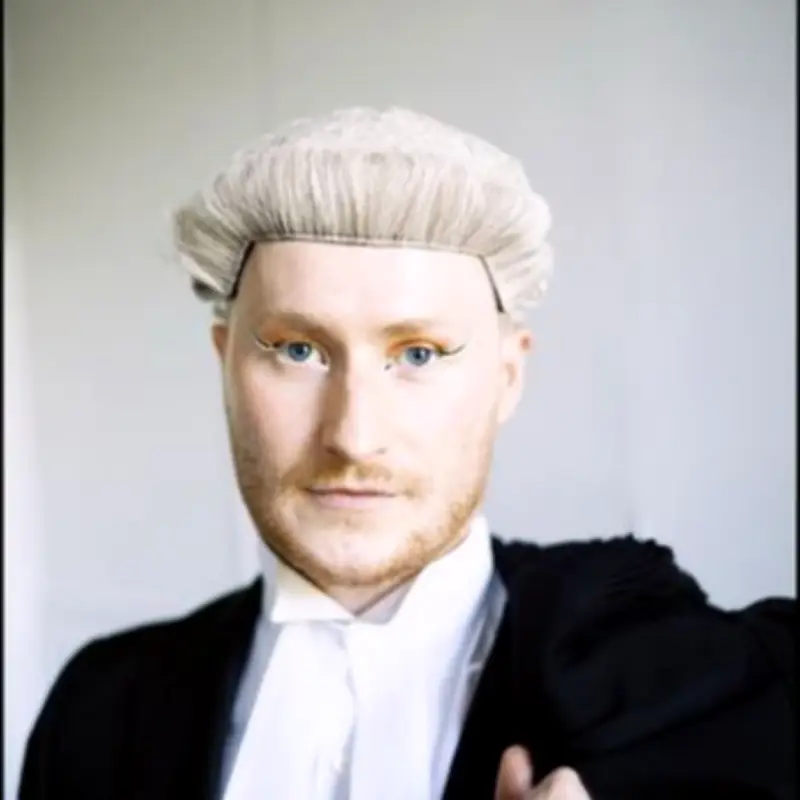
Oscar Davies, the UK's first publicly recognised non-binary barrister, has criticised Britain's “toilet wars”, claiming that extreme examples involving trans people are often used to stigmatise the entire community. The make-up-wearing lawyer, who works in discrimination law with a focus on trans rights, said some judges do not take them seriously in court.
Extreme examples used to tar trans community
Speaking exclusively to the Daily Star, Oscar said: “People often put an extreme example as an average on trans people. But if that was used for anything else, there would be uproar.” The comments follow the case of Paula Stanton, 62, a transgender woman jailed after masturbating in a hospital waiting room. Oscar argued such incidents are not representative of trans people.
Sharp rise in trans cases
Oscar reported a 150% increase in trans-related cases over the past year. “In the last year, I would say it’s probably gone up by like 150% in terms of the trans cases that have come to me,” they said. The real-world impact, they explained, is that trans people feel unable to safely participate in ordinary life.
Toilet access issues
A recurring issue is trans people being blocked from using toilets aligned with their gender. Instead, they are often directed to a “third space”, which in practice can be an accessible toilet that is far away, locked, or broken. Oscar gave an example: “My employer has said that I have to use the men’s toilets or the third space, but the third space is an accessible toilet which is 200m across from the office, and it’s out of order, and it’s locked. So then this trans person is not drinking any water because they’re too scared.”
The UK Supreme Court ruled on April 16, 2025, that “sex” in the Equality Act 2010 means biological sex at birth, meaning single-sex rules apply by birth sex, even with a gender recognition certificate. Oscar insisted the central demand is simple: “Let trans people pee in peace. That’s all they want to do.”
Broader implications for cis women
Oscar warned the panic could also affect cis women who look masculine, as “there’s no way to prove your sex” in a public loo. They argued that the debate is not about toilets but about whether trans people can participate in ordinary life.
Barriers in court
In court, Oscar said their identity can sometimes be a barrier. “I’ve had some judges who don’t take me seriously… so yeah, it can be harder to convince judges.” They joked that the traditional courtroom uniform can feel like a costume, saying: “It’s kind of draggy to be honest.”
Using platform to cut through misinformation
Oscar is determined to use their platform to counter misinformation. “Trans people are not a danger to your kids. They’re just trying to live their lives simply,” they said. “People are kind of hypnotised by this toilets issue. This is not about toilets. It’s about whether trans people can participate in ordinary life. This is what happens when law is made through panic rather than principle. The law should protect people from humiliation, not provide a script for it.”




