
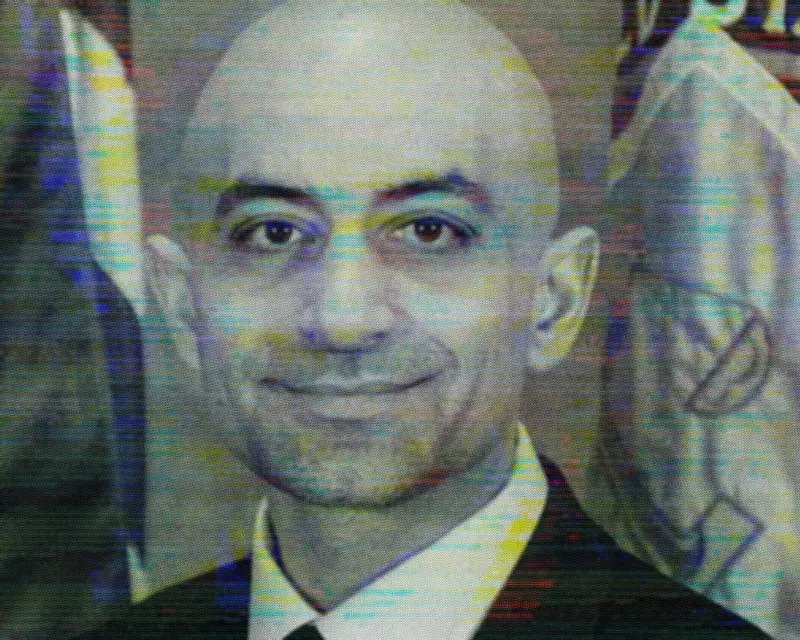
FTC Consumer Chief Defends Record Amid Challenges
Chris Mufarrige, the director of the Federal Trade Commission's consumer protection bureau, has taken aim at Facebook scams and junk fees, but consumer advocates say he has an uphill climb. The Trump administration's push to defund and dismantle the Consumer Finance Protection Bureau, carve-outs for Trump-friendly companies, pardons of white-collar criminals, and the firing of FTC commissioners raise doubts about how effective his agency can be. Recent data about Donald Trump's stock trading and crypto windfalls also undermine the anti-corruption push.
Mufarrige told the Guardian that doubters should look at his agency's record, and expect more tough consumer-friendly moves this summer. Since taking the job in early 2025, he has pledged to expand oversight of finance companies and settled with Amazon, StubHub, Instacart, Shutterstock, and others on deceptive subscriptions and pricing. An April FTC report spotlights the role Meta's Facebook, WhatsApp, and Instagram play in scams that cost consumers $2.5bn in 2025. This week, the FTC joined five states to force Deere & Co to allow farmers to repair tractors and other equipment, a push started by the Biden administration.
FTC's Authority and Staffing Concerns
Woodrow Wilson signed the Federal Trade Commission Act into law in 1914, creating an agency with dual anti-trust and consumer-protection mandates to tackle "unfair methods of competition in or affecting commerce and unfair or deceptive acts or practices in or affecting commerce." The FTC's five-member commission is down to just two Republican members, after Trump fired two Democrats in 2025, a move the supreme court backed. The agency has cut 287 employees overall since the end of 2024, according to government data.
When asked whether the administration's siding with business over consumers impacts his effectiveness, Mufarrige responded: "It has not impacted my job one bit. I would put our last 15 to 16 months, our record, up against anybody's. We've been extremely active with cases against LA Fitness, Live Nation, Ticketmaster, Uber, Amazon."
Contrast with Predecessors and Market Power
Mufarrige contrasted his approach with predecessors in the Biden administration, stating: "My predecessors viewed their role as … replacing consumer choice. They oftentimes either didn't like the product or the service that the consumer was purchasing or didn't like the way the industry worked, in terms of products and services being offered. I don't think that that's our role. Our role is to reinforce markets and ensure that consumers have meaningful choice."
Regarding whether companies have too much power, Mufarrige said: "I think that's why it's critical the FTC has both a competition and consumer protection authority. Competition is the first line of defense in consumer protection, insofar as competition … restricts the ability of companies from getting too powerful, whether it is business-to-business or business-to-the-consumer."
Scams and Platform Responsibility
A recent FTC report shows Meta companies led the proliferation of online scams that cost Americans $2.5bn in 2025. Mufarrige commented: "I can't speak to non-public information, but online scams are a critical focus for us. We're seeing a significant amount of impersonation of other businesses online. Particularly when it comes to search engines." He added: "The tech companies, the Facebooks of the world, they have a responsibility here to deal with that type of clearcut fraud on their platforms. We're actively thinking about ways to prevent that type of fraud from happening."
When asked about the platforms' argument that they are "merely the platform," Mufarrige said: "When it comes to advertising, which is what we're talking about here, the question for the social media companies and the search engines becomes: what is their role in the advertising that you're seeing? This is not just simply a situation where you and I are on Facebook and you're telling me that I'm ugly. This is a situation where a car dealership is putting an advertisement on the platform, and the platform's interacting with the dealer. So it's a different dynamic that we're talking about. And the consumer is suffering some sort of measurable harm."
Privacy and Kids Focus
Mufarrige outlined the FTC's next steps for privacy and data-protection regulation: "We have an intense focus on kids in particular. We're actively focused on some of the major platforms where kids are participating online, kids and teenagers. I can't speak to non-public information, but that's really our investigative focus right now. We're also focused on age verification." He added: "We're looking at in particular how AI is interacting with kids and teenagers. The plan is hopefully early next year to have something to go public with."
Regarding White House support, Mufarrige noted: "A lot. Obviously, the chairman is on the fraud taskforce [which Trump created in April], which I think speaks volumes." He described the FTC's interaction with the fraud taskforce as: "You know, we're kind of doing our own thing like we always do. The fraud taskforce is more a DoJ thing. We might send things their way or vice versa."
How Consumers Can Report Issues
Mufarrige urged consumers to view the FTC as a resource: "I want consumers to see us, as the chairman describes us frequently, as a cop on the beat. We're here if there are law violations. We want to hear about them and we will investigate and we will take action real quick. Use reportfraud.FTC.gov."




