Looking at my friend beside me, I could see the pain etched across his face. He had just been hit by one of the rubber bullets sprayed in our direction by Israeli forces. It certainly was not going to be the last moment of violence inflicted on us after we were taken from our boat, held hostage and tortured – but even then I knew that no matter what we were going through, it was not a fraction of the trauma people in Palestine are enduring.
I have always been involved with activism, but I had never planned to be part of the Global Sumud Flotilla, a convoy of vessels crossing the Mediterranean to deliver aid to the people of Gaza. As a student at King’s College London, I had followed their missions via the news, and when a few of my friends participated in one last year, I decided to join their land crew team. After that, getting on a boat seemed the next inevitable step.
The Mission Begins
Our mission began when I flew out to Greece at the end of April. I underwent maritime training alongside other activists from all walks of life. We were taught how to care for one another and how to stay safe in case of any accident. From Greece, we travelled to Turkey, where we finally set sail from Marmaris port to Gaza.
Stepping onto our boat, I was aware that interception was a possibility. Greta Thunberg had been detained in past missions, but I also knew that the authorities did not care who was onboard. It did not matter whether they were a well-known activist or a famous person. I simply knew that if we were confronted, they would do anything to stop aid from reaching Palestinians.
However, the chances seemed low, considering we had almost 50 vessels with approximately 400 activists and civilians inside. It was on our fourth day at sea that I remember squinting my eyes and spotting a ship in the distance. At first, I was unsure whether it was an oil rig, a container ship, or a livestock boat, but within minutes, as another came into view, it was clear they were Israeli military vessels moving toward us.
The Attack
Seconds later, speedboats were launched and quickly surrounded the flotilla. The forces yelled: ‘We will shoot if you do not comply with our instructions.’ Suddenly, fires were shot, and I was hit by shrapnel, while my friend took a bullet to his face. I was horrified. I genuinely questioned why they would shoot innocent and unarmed civilians. We were not a violent group, nor did we have weapons. We were carrying baby formula, milk, food, and eggs, and our only agenda was to deliver them safely to the shores of Gaza.
Despite all this, the soldiers dragged us from our boat onto a speedboat, where the only thing we could hold onto for safety was a rope as the sea violently hit us in our faces. At first, we were held captive on a warship. We had no idea where it was going. It was one of the most awful things I have ever experienced. Seventy of us were crammed into a room that should only hold about 40, and the stench of excrement and bodily fluids filled the air. As desperate as it was, I refused to lose hope.
Torture and Imprisonment
After two days, we were moved to a prison in the Gaza Strip, where I was punched in my ribs, in my face, elbowed, and kicked in the knee. With each attack, I remember thinking how I just wanted the torture to stop. The way we were treated was inhumane. All the activists held hostage, including myself, were tied with our hands behind our backs while kneeling. I still have the tie marks across my wrists. We were also told to keep our heads downward, looking at the floor.
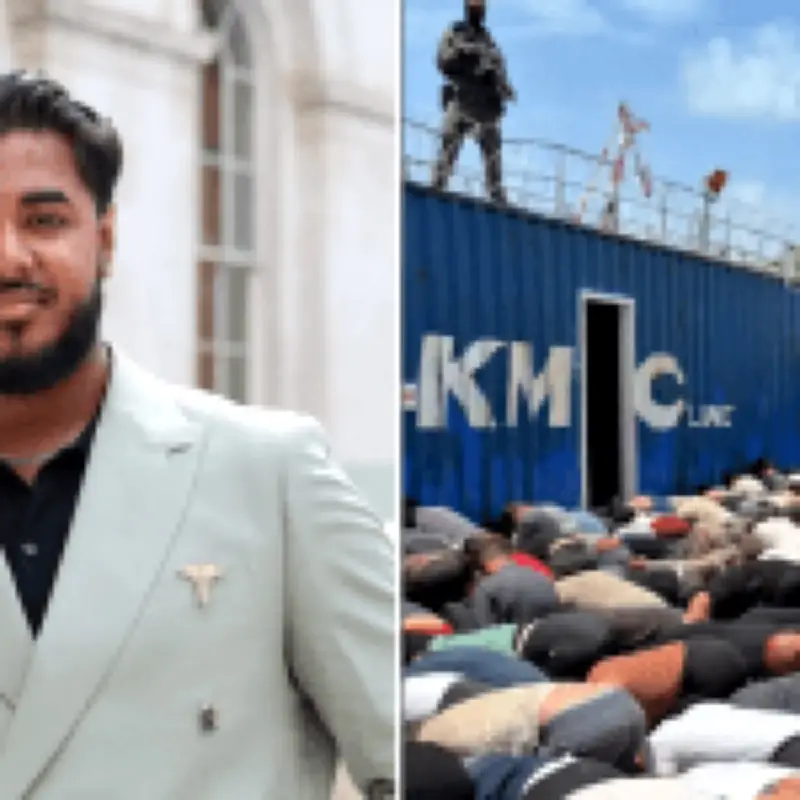
It was all documented in a video released by Israel’s national security minister, Itamar Ben-Gvir, for the world to see, showing all the flotilla attendees with their hands tied and heads down. I am actually in that video. Right after it shows an activist being dragged down, there is someone with their hand down. That is me.
Deportation and Reflection
After four days in the prison, we were forced to sign papers to be deported to Turkey. When I arrived back in the UK, I realised how blessed I was to have such a strong support system. But at the same time, it feels like a double-edged sword, as I know that the people I was trying to help have no support system, no alternative.
Despite everything, some of our aims were met. While not all the aid reached the shore of Gaza, some of the boats had wrapped items that were actually let into the sea a couple of days after we were deported, which did eventually reach them. So, do I think we were successful? Absolutely. Not only were the people of Gaza able to get something, but the like-mindedness of that beautiful space while we were in the flotilla reminded me of the beauty in trusting others to commit to a cause.
I know some people must wonder if I regret it – but I do not. All of us in this mission gave our humanitarian aims a shot, and I will always be grateful for that perseverance and sense of community that I will never find anywhere else.
Metro has been unable to verify Hasnain’s allegations and are yet to hear back from the IDF after reaching out for comment. In a statement to the BBC, Israel’s prison service said: ‘All prisoners and detainees are held in accordance with the law, with full regard for their basic rights and under the supervision of professional and trained prison staff. Medical care is provided according to professional medical judgment, and in accordance with ministry of health guidelines.’ The Israel Defense Forces (IDF) said: ‘IDF orders require respectful and appropriate treatment of flotilla participants on the intercepted vessels, and there are clear and established procedures in this regard. No specific incidents of deviation from these binding procedures are known within the IDF. Any concrete complaints submitted to the IDF on the matter will be examined thoroughly.’ As told to Bella Steiner.