Beautiful Little Fool Review: Fitzgerald Musical Fails to Capture Jazz Age Dazzle
Southwark Playhouse Borough in London is currently hosting Beautiful Little Fool, a new musical that attempts to dramatise the turbulent lives of literary icons F. Scott Fitzgerald and his wife Zelda. Despite a vocally talented cast and direction from Michael Greif of Rent and Dear Evan Hansen fame, the production struggles to deliver more than a superficial portrait of the legendary Jazz Age couple.
Ambitious Concept with Limited Execution
The musical, with music and lyrics by actor Hannah Corneau, joins a long line of attempts to reinterpret Zelda Fitzgerald's legacy beyond her traditional depiction as the "mad, bad wife" of her famous husband. Recent years have seen her recast as a feminist icon—a creative force constrained by a patriarchal society. Previous stage adaptations, including Craig Revel Horwood's 2004 West End production Beautiful and Damned, have similarly grappled with capturing the Fitzgeralds' dramatic relationship.
Beautiful Little Fool employs a narrative framework following the couple's rise and fall through the perspective of their daughter, Scottie, as she explores their archive. Shankho Chaudhuri's set design, featuring shelves and stacks of books, will particularly delight bibliophiles. Lauren Ward delivers a moving performance as Scottie, interacting with her parents at different stages of their lives. However, this framing device feels underexplored, leaving unanswered questions about Scottie's purpose within the story.
Vocal Prowess Overshadowed by Weak Material
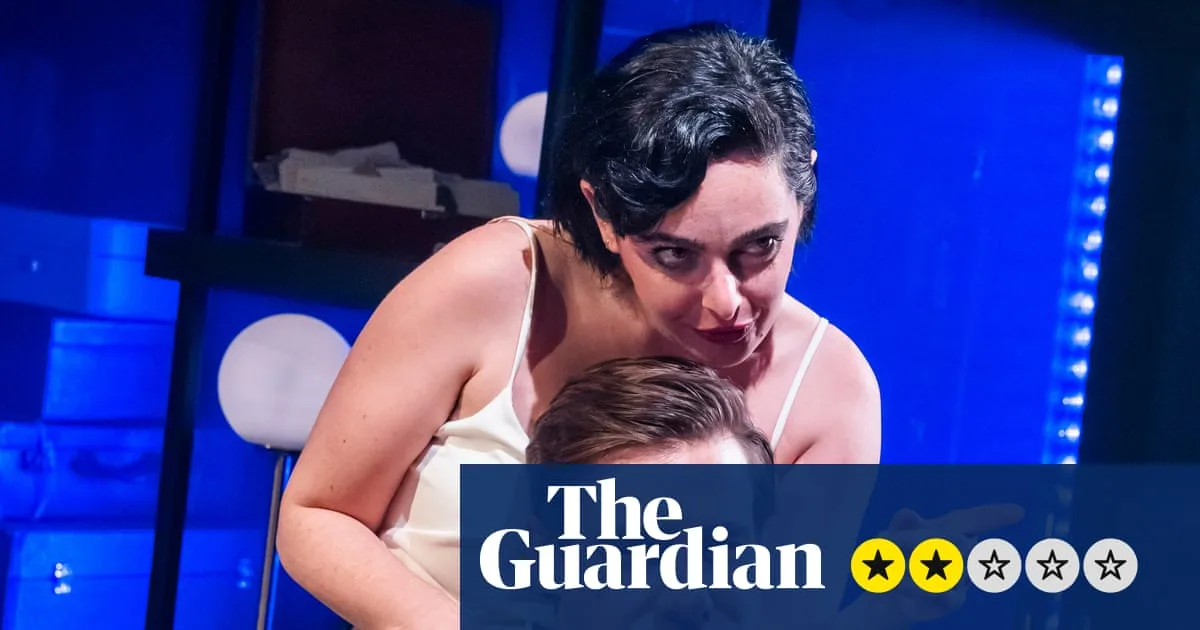
Director Michael Greif has assembled a cast capable of impressive vocal performances, who pour considerable bravura into Corneau's predominantly pop-influenced score. David Hunter effectively portrays F. Scott Fitzgerald's blend of arrogance and vulnerability, while Amy Parker—who stepped in for Corneau on opening night—powerfully conveys Zelda's emotional intensity, notably during scenes enhanced by dramatic lighting effects.
Yet, the show's substance falters. Between Mona Mansour's book and Corneau's often corny, repetitive lyrics—such as the line "Trust is a funny thing / You have it one day and then it's gone"—the central couple never evolves beyond a two-dimensional sketch. The production fails to convey why the Fitzgeralds were both dazzling and deeply troubled, missing the essential spark of their intellectual and personal collision.
Missing Depth and Lasting Melodies
While there are moments of tender romance, such as the Alabama meeting depicted in One Night in July, the numerous ballads lack memorable melodies that linger with the audience. The script offers only fleeting glimpses of the couple's famed wit, largely confined to a single waspish argument on the Riviera. Notably, the musical sidesteps Zelda's well-documented mental health struggles, opting instead for a sudden, polemical climax that condemns patriarchal oppression.
This omission feels particularly significant given the historical context of Zelda's life and the ongoing cultural re-evaluation of her legacy. For those seeking a more comprehensive portrayal, another Zelda-focused musical, The Fitzgeralds of St Paul, is scheduled for a New York launch this spring.

Beautiful Little Fool continues its run at Southwark Playhouse Borough until 28 February, offering audiences a visually and vocally competent but ultimately shallow exploration of one of literature's most fascinating power couples.