The Battle for Best Picture: Why One Battle After Another Should Triumph
It is widely considered the safe bet to take home the major awards this Sunday, but do not assume that means Paul Thomas Anderson's darkly funny thriller plays it safe. Annabel Nugent argues that backing the favourite can be a passionate, well-founded stance when the film in question is this exceptional.
A Powerhouse Contender Beyond Predictability
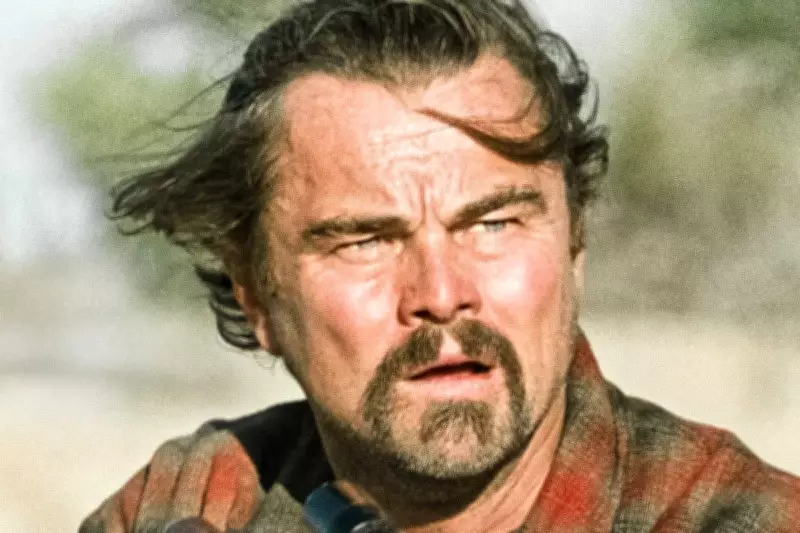
First, setting aside industry politics and awards history, the film on its own merits is a powerhouse Oscar contender. The story follows a washed-up revolutionary, played by Leonardo DiCaprio, on the run with his skeptical daughter, portrayed by Chase Infiniti. It unfolds like a magician's endless string of handkerchiefs, with subplots of wildly different tones masterfully knotted together by Anderson's unique cinematic sensibility and Jonny Greenwood's manic score.
While bookmakers have it as the safe bet this weekend, One Battle After Another is anything but a safe film. Its mood is so disparate and shifting that it defies easy categorization: is it a father-daughter epic, a political satire, a screwball comedy, or an action thriller? The answer is all of the above and more. It is a minor miracle that financing was secured for a project so expensive and peculiar, featuring a secret society of Christmas-themed white supremacists whose members greet each other with a "Hail, St Nick!"

Stellar Production and Performances
With a reported budget of $130 million, this was a steep ask for an auteur like Anderson, who lacks the box office pull of a Christopher Nolan. Enter Leonardo DiCaprio, one of the few global stars bankable enough to get such an ambitious project off the ground. The investment was well spent. The action set pieces, shot on location across California, are utterly thrilling, particularly a masterful car chase scene over cresting hills that is both tense and visually stunning.
The film boasts the raw, gritty texture of a vintage thriller, achieved through Anderson's insistence on using the VistaVision camera, a 35mm format that died out in the 1960s. DiCaprio delivers a top-form performance as the ragged, tartan robe-wearing ex-revolutionary "Bob Ferguson," whose drug-addled mind cannot recall the password that might save his daughter's life.
As with any deserving Best Picture winner, the supporting cast fortifies the film's case. Teyana Taylor as Bob's erratic ex, Benicio del Toro as his fiercest ally, and Sean Penn as his self-loathing pursuer all deliver watermark performances, each earning Supporting Oscar nominations. Regina Hall, known for comedic roles in the Scary Movie franchise, delivers a transformative dramatic turn as a long-standing revolutionary, devouring the role with conviction.
A Debut to Celebrate and a Director Overdue
The film also features a superb debut from Chase Infiniti, who is excellent and clear-eyed as Bob's teenage daughter, Willa. Anderson and his casting team have done the industry a favour by introducing Infiniti to the world, and awarding the film Best Picture would be a fitting recognition of this discovery.
Remarkably, this would be the first Best Picture win for the director of masterpieces like Magnolia, There Will Be Blood, Boogie Nights, and Phantom Thread. While there is a pervading sense that an Anderson triumph is overdue, this would not be a mere retroactive gesture. Unlike Martin Scorsese's 2007 Best Director win for The Departed, which some saw as compensation for past snubs, Anderson winning for One Battle After Another would be entirely warranted and just.
The Greater Good of Oscar Recognition
This brings us to the broader impact of an Oscar win. For better or worse, winning or losing an Oscar can shape a filmmaker's future work. Consider Steven Spielberg, whose later output was influenced by the lack of formal recognition for early classics like Jaws and ET, leading him to pursue weightier fare like Schindler's List to secure industry validation.

In Anderson's case, One Battle After Another is not a film made in response to years of snubs, and his artistic output is unlikely to change significantly regardless of the outcome. However, awarding him the top Oscar prize would be a meaningful acknowledgment of his bold vision and contribution to cinema, celebrating a film that defies conventions and delivers on every front. It would be a victory not just for Anderson, but for ambitious, genre-defying filmmaking itself.